
Natural · Risk index 7/9 (Quebec) · 7/9 (France)
Severe storms and windstorms
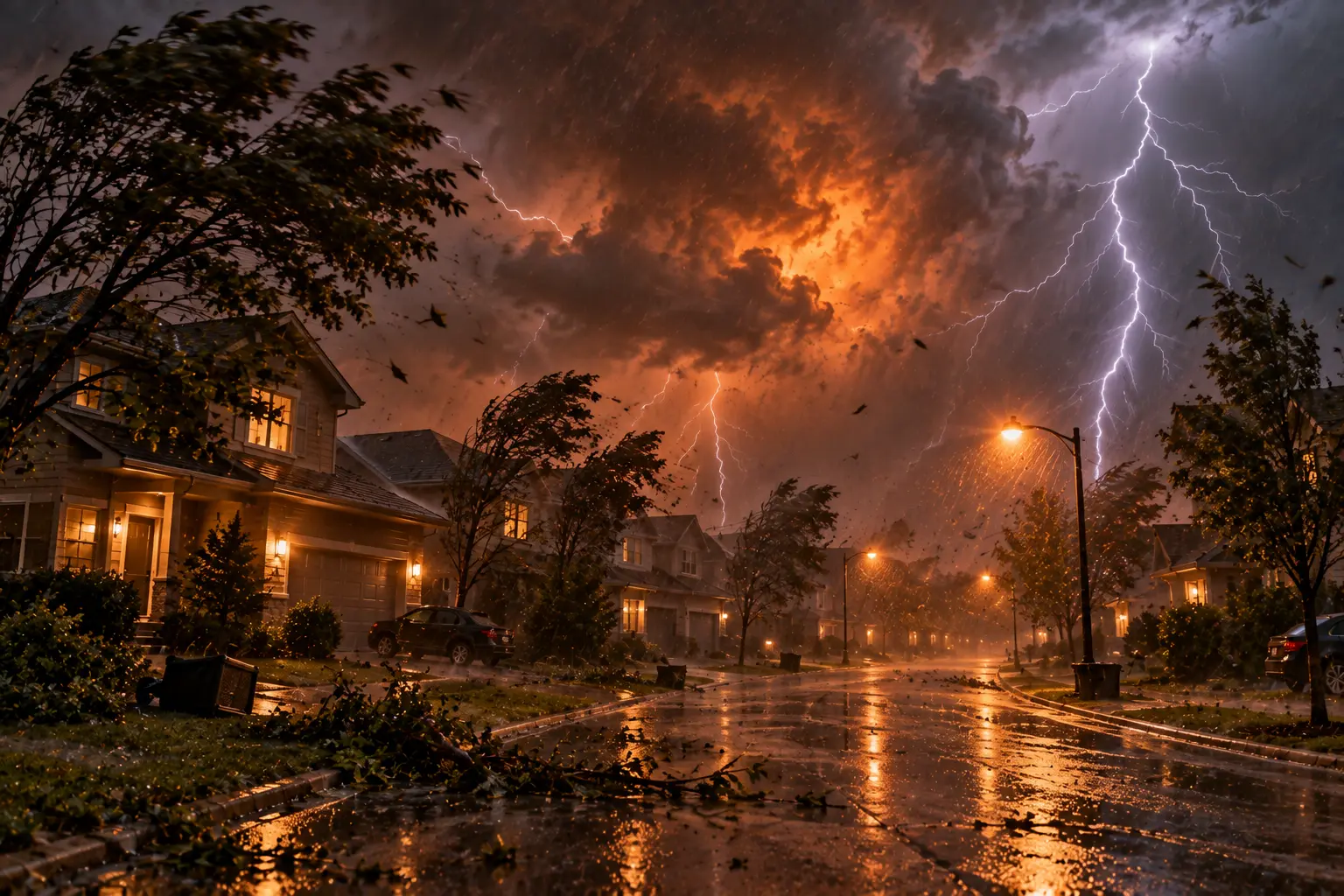
Damaging winds, hail, lightning, torrential rain: thunderstorms and windstorms are frequent, often brief, but can cut power to hundreds of thousands of homes in one night.
Quebec / Canada
France
If you only do three things
- 1Take shelter as soon as you hear thunder (the 30-second rule)
- 2Prune trees and secure anything the wind can throw
- 3Have enough to last 72 hours in an outage
Lasting collapse?
Key figures
Frequent events, sometimes extreme.
Understanding the risk
Lightning, wind, hail and rain: four hazards in one.
A severe thunderstorm combines several hazards: lightning, downbursts that can exceed 90 km/h (55 mph), hail, intense rain and, more rarely, tornadoes. It forms within hours, often in the afternoon and evening on hot, humid days.
Windstorms are much larger systems, typical of autumn and winter in Western Europe and Eastern Canada. In France, the 1999 storms Lothar and Martin (92 deaths, 3.5 million households without power) and Ciarán in 2023 are the most striking examples.
Severity
Most victims are hit by falling trees or branches, flying objects, downed power lines, lightning outdoors or road accidents. Damage to roofs, vehicles (hail) and power outages are common.
Lightning mostly strikes people outdoors: hikers, golfers, swimmers, boaters, workers. Someone struck by lightning may have burns and heart or neurological problems even if they feel fine: they must see a doctor.
In detail
Where to shelter during a thunderstorm?
| Place | Safe? | Why |
|---|---|---|
| Enclosed building with plumbing and wiring | Yes | The building carries lightning to the ground; stay away from windows |
| Hard-topped car, windows closed | Yes | The metal body protects you; don’t touch metal parts |
| Tent, picnic shelter, open shed | No | Offers no protection from lightning |
| Under a lone tree | No, dangerous | Lightning strikes high points; risk of side flash |
| Water, boat, open field | No, dangerous | You are the highest point; get out of the water at the first thunder |
Assess your exposure
Are you more exposed than average?
Tick what applies to your situation.
Get prepared
Your preparedness checklist
Tick items as you go: your progress is saved on this device.
Suggested kits and plans
Before, during, after
The right actions, before, during and after the storm.
Before
- Weather alerts on
- Outdoor items secured
- Trees pruned
- 72-hour supplies
- Electronics protected
During
- Shelter in a building or car
- Stay away from windows, unplug electronics
- Avoid showers, baths and corded phones
- Don’t drive in intense rain or on a flooded road
- Outdoors with no shelter: crouch, feet together, away from trees and water
After
- Wait 30 minutes after the last thunder before going out
- Stay away from downed power lines
- Photograph damage for insurance
- Have anyone struck by lightning examined by a doctor
- Check roof, gutters and basement
In Quebec, Canada and France
What changes depending on where you live.
Quebec / Canada
Environment and Climate Change Canada issues severe thunderstorm watches and warnings, also broadcast to phones by Québec En Alerte in the most serious situations.
- Emergency
- 911
- Alerts
- WeatherCAN, Environment Canada
- Outages
- Hydro-Québec Info-pannes
- Downed line
- Hydro-Québec or 911
France
In France, Météo-France issues thunderstorm and high-wind warnings from yellow to red, and FR-Alert sends alert messages to phones.
- Emergency
- 112 or 18
- Warnings
- Météo-France
- Outages
- Enedis
- Alerts
- FR-Alert
Domino effect
This risk often triggers others
Frequently asked questions
Frequently asked questions
Can lightning strike inside a house?
Rarely, but it can travel through wiring, plumbing and phone lines. Avoid showering or touching plugged-in appliances during the storm.
Does a car really protect against lightning?
Yes, a hard-topped metal car with the windows closed. The body protects you, not the tires. Convertibles and motorcycles offer no protection.
How long should I wait before going back out?
At least 30 minutes after the last thunder.
What should I do during hail?
Take shelter, protect your head, stay away from windows and, if possible, shelter your car. Don’t go out to protect property while hail is falling.
Sources
Sources
Data checked on November 18, 2026. Figures come from the organizations cited; consult them for updates.
- Environment and Climate Change Canada, Lightning in Canada (French version)
- Government of Quebec, Thunderstorms: what to do (French)
- L’info durable, Ciarán devastated north-western France (French)
- MoneyVox (French), Storms Ciarán et Domingos : insurers estimate €1.3 billion in damage
- Notre-planète.info, The December 1999 storms in France (French)
This page provides general preparedness information. It does not replace instructions from the authorities: in an emergency, call 911 in Canada or 112 in France.

Start with the basics.
Our free “Be Prepared” guide: 72-hour kit, family plan and your own risk assessment.
Severe storms and windstorms
Index Quebec/Canada 7/9 · France 7/9
If you only do three things
- Take shelter as soon as you hear thunder (the 30-second rule)
- Prune trees and secure anything the wind can throw
- Have enough to last 72 hours in an outage
During
- Shelter in a building or car
- Stay away from windows, unplug electronics
- Avoid showers, baths and corded phones
- Don’t drive in intense rain or on a flooded road
- Outdoors with no shelter: crouch, feet together, away from trees and water
After
- Wait 30 minutes after the last thunder before going out
- Stay away from downed power lines
- Photograph damage for insurance
- Have anyone struck by lightning examined by a doctor
- Check roof, gutters and basement
Emergency numbers: 911 (Canada) · 112 (France)
prepacivile.com/en/risks/severe-storms/