
In this article
Check your preparations before a storm and monitor the expected effects in your area rather than a one-time cyclone condition.
Understand the risk and its consequences
Check your preparations before a storm and monitor the expected effects in your area rather than a one-time cyclone condition.
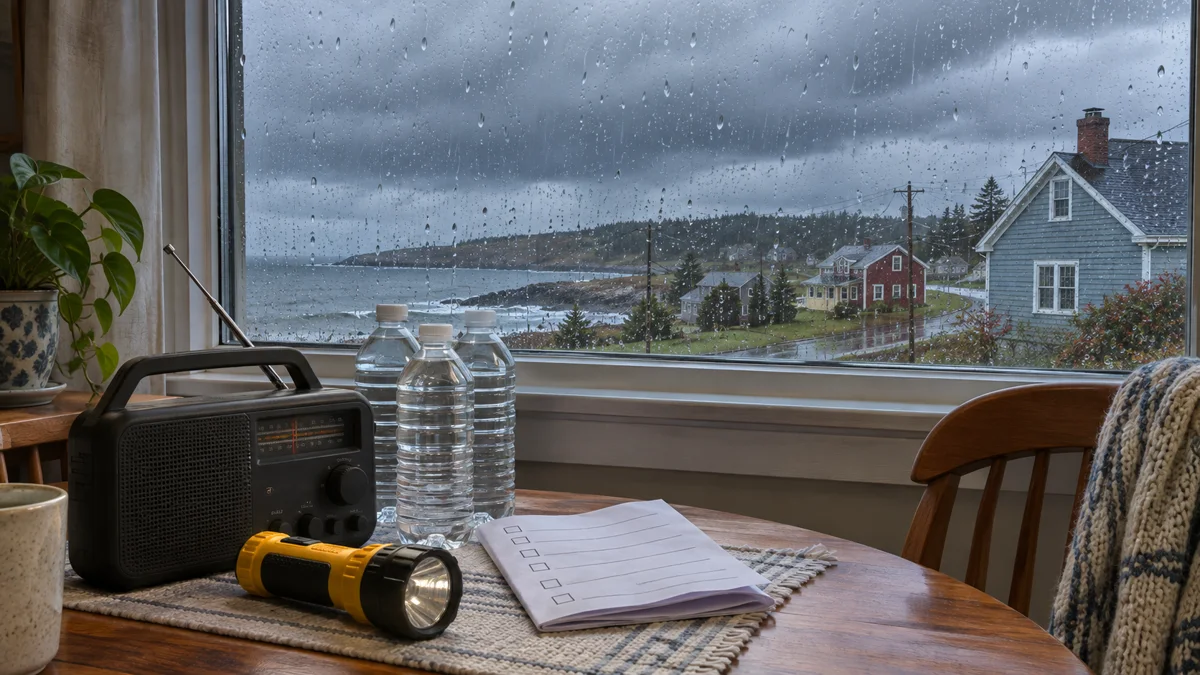
A quiet period allows to check reserves, communications and starting needs. These preparations are also used for other weather phenomena. They must be adapted to housing, people and territory.
Key lessons for households and communities
Lesson 1: Quiet periods are opportunities
The absence of an immediate threat makes it possible to check the preparations without pressure. It does not guarantee the absence of a subsequent storm and does not justify planning a specific event without a bulletin.
Lesson 2: Weather vigilance is a daily duty
Even out of the critical season, Environment and Climate Change Canada’s (ECCC) forecasts are becoming a safety habit. Weather alerts allow us to anticipate and adapt our activities.
Lesson 3: Regional preparation goes beyond the tropics
In Quebec, winter storms, summer tornadoes and floods are major threats. A versatile preparation protects the family against several emergency scenarios.
Keep in mind: prepare for the needs of the home during quiet periods and follow local alerts during the event. A season or general trend does not replace the forecast.
Reflexes to adopt
- View Environment and Climate Change Canada (ECCC) alerts and Météo-Média regional bulletins daily
- Use MétéoCAN and your municipality’s citizen alerting services where they exist. Check the settings and keep multiple channels of information.
- Check the status of drinking water, non-perishable food and essential medical supplies
- Testing family emergency communication systems: central emergency number, meeting point, external contact
- Revise the condition of the household: inspection of gutters, nearby trees, cover and insulation in the event of a severe storm
Prepare now
Concrete actions:
- Make a kit for at least 72 hours adapted to the home. For water, plan on three days 6 liters per person to drink and 6 extra liters for food and hygiene, plus animals.
- Establish a written evacuation plan and post it at home; ensure that all residents are aware of it
- Check home and auto insurance coverage, including clauses related to water damage and storms
- Participate in family simulation exercises or consult the training resources of the Canadian Red Cross and Québec Emergency Preparedness
Frequently asked questions
Why talk about tropical cyclones if none are currently active?
Remains of tropical systems can bring rain and wind to Quebec. Local consequences and instructions matter more than the name of the system or its initial remoteness.
How often should the emergency kit be revised?
It is recommended to check the kit at least twice a year: once in the spring (before the summer storm season) and once in the fall (before winter). Check the expiration dates of food, medicine and batteries. Test the flashlight and replace the batteries if necessary.
What are the reliable resources to track weather alerts in Quebec?
Check Environment and Climate Change Canada, MeteoCAN and municipal official channels for alerts. Book 911 at the emergency room; don’t call it for a weather forecast.
Emergency preparedness is never a waste of time: it’s an investment in family safety and resilience. Take advantage of this quiet time to strengthen your ability to cope with future storms. Together, we build a more resilient community.
Sources and Updates
Document verification: November 3, 2026. The official instructions in force in your area take precedence in real situations.