
Natural · Risk index 5/9 (Quebec) · 3/9 (France)
Tornado
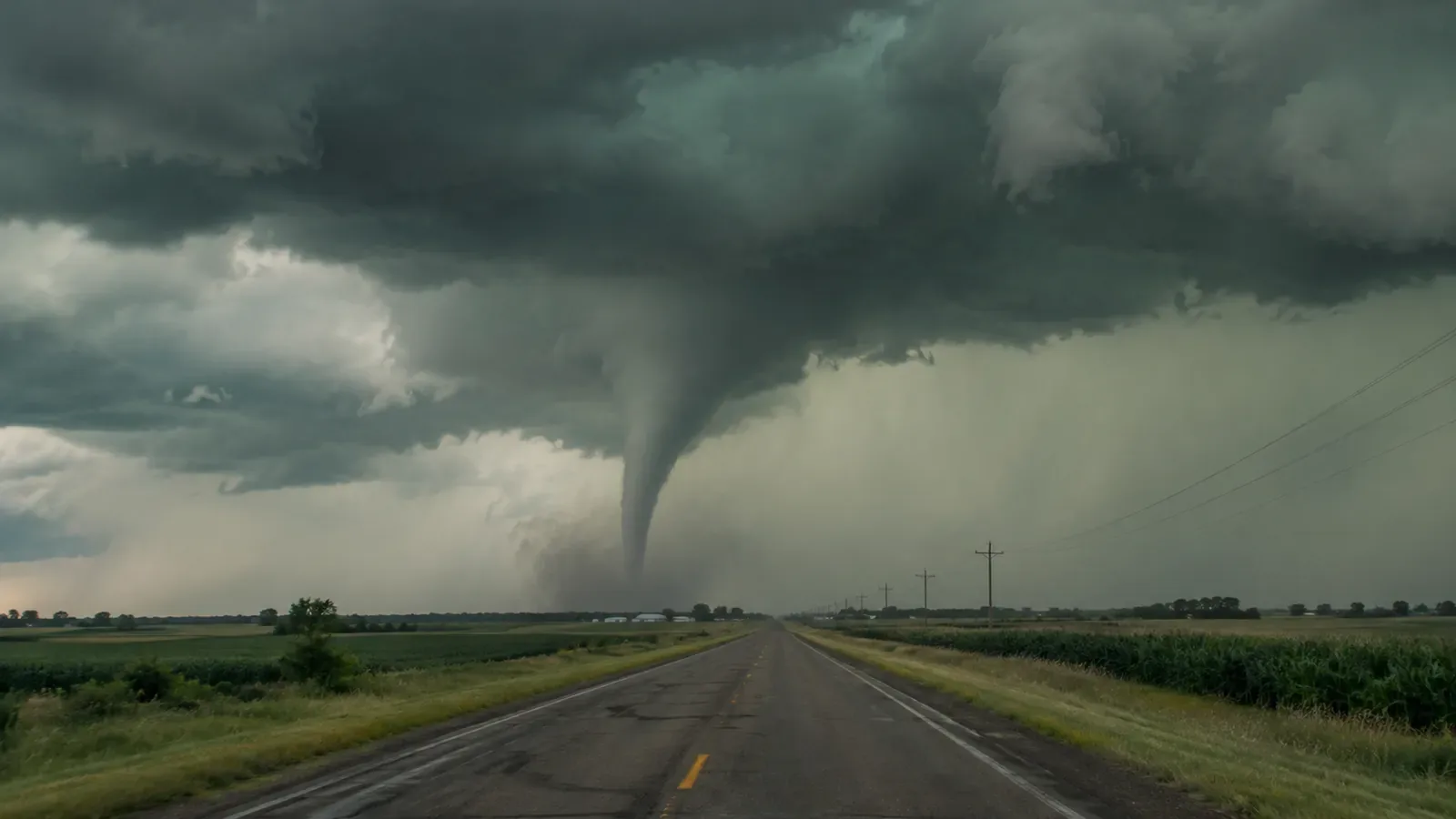
A tornado forms within minutes and destroys everything along a narrow path. Canada sees more than a hundred in some years, France several dozen. Knowing where to shelter ahead of time can save a life.
Quebec / Canada
France
If you only do three things
- 1Pick your shelter ahead: basement or windowless interior room
- 2Get alerts on your phone
- 3Shelter immediately, protect your head, away from windows
Lasting collapse?
Key figures
More frequent than you think.
Understanding the risk
A column of air that strikes within minutes.
A tornado is a violently rotating column of air, connected to the base of a thunderstorm cloud and touching the ground. Its strength is measured on the Enhanced Fujita scale, from EF0 (light damage) to EF5 (total destruction). In Quebec, they mostly occur from May to August.
In Canada, the average season runs from mid-April to mid-September, but 2024’s lasted 240 days. In France, the most affected areas stretch from Poitou-Charentes to Brittany, Normandy and Nord-Pas-de-Calais, with waterspouts on the Mediterranean coast too.
Severity
Most tornadoes are weak and brief, but a strong one can tear off roofs, flip cars and level houses. Injuries come mostly from flying debris and collapses.
Mobile homes, trailers, vehicles and large wide-roofed buildings (gyms, churches, barns) offer very poor protection.
In detail
Where to shelter depending on where you are.
| You are… | What to do | Avoid |
|---|---|---|
| In a house | Basement or windowless interior room on the ground floor | Windows, doors, outside walls |
| In a mobile home or trailer | Get to a nearby solid building | Staying inside |
| In a large building | Interior hallway on the lowest floor | Elevators, large halls, gyms |
| In a car | Drive to a solid building; otherwise park, handbrake, hazard lights | Trying to outrun it, sheltering under an overpass |
| Outdoors with no shelter | Lie face down in a ditch, hands over your head | Trees, poles, power lines |
Assess your exposure
Are you more exposed than average?
Tick what applies to your situation.
Get prepared
Your preparedness checklist
Tick items as you go: your progress is saved on this device.
Suggested kits and plans
Before, during, after
The right actions, before, during and after.
Before
- Shelter chosen
- Alerts on
- Kit near the shelter
- Family drill
- Outdoor items secured
During
- Shelter immediately in a solid building
- Go to the basement or an interior room
- Stay away from windows and outside walls
- Protect your head and neck
- Leave a mobile home for a solid building
After
- Make sure the building is safe before entering
- Never approach a downed power line; call 911
- Pick up debris carefully (sheet metal, glass)
- Photograph damage, keep receipts
- Ask for help: Info-Social 811
In Quebec, Canada and France
What changes depending on where you live.
Quebec / Canada
Environment and Climate Change Canada issues tornado watches and warnings. The most serious are sent to phones through the Alert Ready public alerting system.
- Emergency
- 911
- Alerts
- WeatherCAN, Environment Canada
- Downed line
- Hydro-Québec or 911
- Support
- Info-Social 811, option 2
France
In France, there is no tornado-specific warning: tornadoes are covered by Météo-France’s thunderstorm warnings. Keraunos, the French observatory of tornadoes and severe storms, records events.
- Emergency
- 112 or 18
- Warnings
- Météo-France (thunderstorms)
- Alerts
- FR-Alert
- Outages
- Enedis
Domino effect
This risk often triggers others
Our guides on this topic
Frequently asked questions
Frequently asked questions
Should I open windows during a tornado?
No. It’s a myth: it doesn’t protect the house and wastes precious time. Take shelter immediately.
Is an overpass a good shelter?
No. Wind speeds up there and debris is funnelled through. Get to a solid building or lie in a ditch.
What’s the difference between a watch and a warning?
A watch means conditions favour tornadoes: stay alert. A warning means a tornado is observed or imminent: take shelter now.
Do tornadoes strike at night?
Yes, and they’re more dangerous then because they’re hard to see. Keep your phone’s sound on to receive alerts.
Sources
Sources
Data checked on November 18, 2026. Figures come from the organizations cited; consult them for updates.
- Western University, Northern Tornadoes Project 2024 review
- Government of Quebec, Tornado: what to do (French)
- Keraunos, Tornadoes in France: key figures (French)
- Keraunos, Tornado frequency and risk in France (French)
- The Connexion, France sees dozens of tornadoes a year
This page provides general preparedness information. It does not replace instructions from the authorities: in an emergency, call 911 in Canada or 112 in France.
Start with the basics.
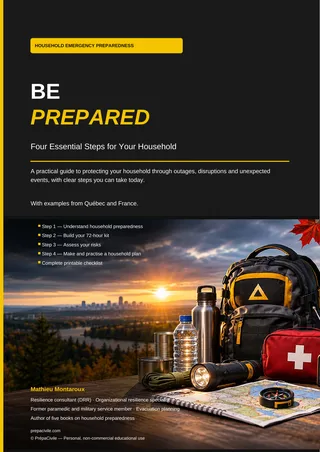
Our free “Be Prepared” guide: 72-hour kit, family plan and your own risk assessment.
Tornado
Index Quebec/Canada 5/9 · France 3/9
If you only do three things
- Pick your shelter ahead: basement or windowless interior room
- Get alerts on your phone
- Shelter immediately, protect your head, away from windows
During
- Shelter immediately in a solid building
- Go to the basement or an interior room
- Stay away from windows and outside walls
- Protect your head and neck
- Leave a mobile home for a solid building
After
- Make sure the building is safe before entering
- Never approach a downed power line; call 911
- Pick up debris carefully (sheet metal, glass)
- Photograph damage, keep receipts
- Ask for help: Info-Social 811
Emergency numbers: 911 (Canada) · 112 (France)
prepacivile.com/en/risks/tornado/