
Natural · Risk index 5/9 (Quebec) · 2/9 (France)
Hurricane and post-tropical storm
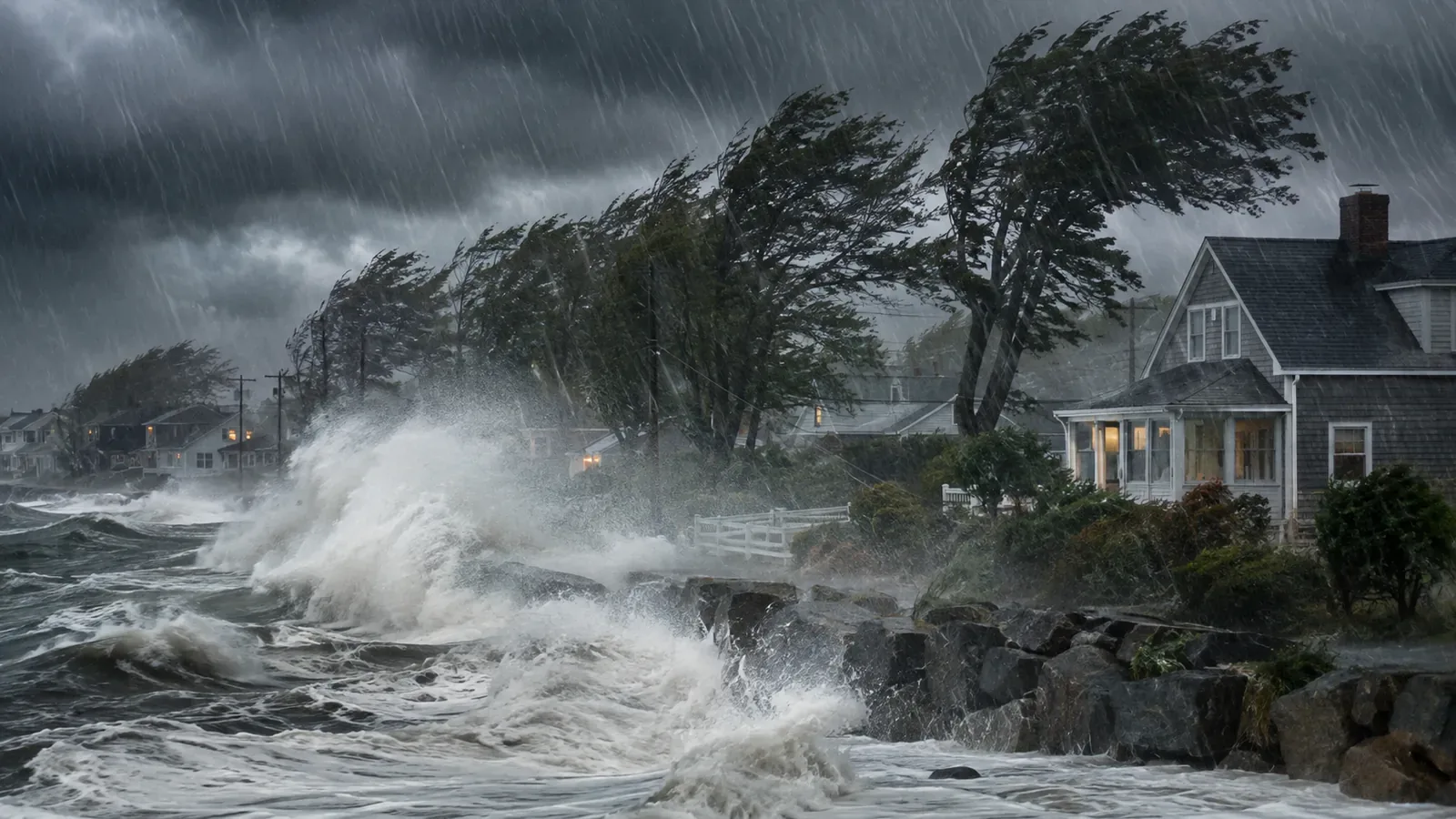
Hurricanes weaken as they move north, but their remnants can still hit Eastern Canada very hard. In France’s overseas territories, they remain one of the deadliest risks.
Quebec / Canada
France
If you only do three things
- 1Follow forecasts as soon as a hurricane approaches: you have several days
- 2Secure or store anything that can blow away and prepare 72 hours of self-sufficiency
- 3Evacuate without delay if authorities ask, especially on the coast
Lasting collapse?
Key figures
Storms from far away.
Understanding the risk
From hurricane to post-tropical storm.
A hurricane is a tropical storm with sustained winds over 118 km/h (74 mph). It forms over the warm waters of the Atlantic, from June to November. As it moves north, it often becomes a post-tropical storm: it loses its structure, but its wind and rain field spreads out.
In Quebec, the Gaspé Peninsula, North Shore, Magdalen Islands and the south of the province are mostly affected, by violent winds, torrential rain and storm surges. In the Indian Ocean they are called cyclones: Cyclone Chido devastated Mayotte in December 2024.
Severity
Three hazards combine: wind, which tears off roofs and trees and cuts power; rain, which makes rivers overflow; and storm surge, a sudden rise in sea level that floods coasts. Water kills more than wind.
In the Caribbean, Irma killed eleven people in 2017, mostly on Saint-Martin. In Atlantic Canada, Fiona killed two people and caused $660 million in insured damage.
In detail
What causes damage and how to protect yourself.
| Hazard | Effect | Protection |
|---|---|---|
| Wind | Roofs torn off, trees and lines down, flying objects | Secure or store items, close shutters, stay away from windows |
| Torrential rain | Floods, flooded basements, roads cut | Move belongings upstairs, don’t drive through water |
| Storm surge | Coasts and wharves submerged | Evacuate low coastal areas when asked |
| Prolonged outages | Power and telecoms out for days | 72 hours of self-sufficiency, battery radio |
| After the storm | Misused generators, downed lines | Generator outdoors only, stay away from lines |
Assess your exposure
Are you more exposed than average?
Tick what applies to your situation.
Get prepared
Your preparedness checklist
Tick items as you go: your progress is saved on this device.
Suggested kits and plans
Before, during, after
The right actions, before, during and after.
Before
- Follow forecasts
- Outdoor items secured
- Windows protected
- Full tank and cash
- 72 hours of supplies
During
- Stay inside, away from windows
- Evacuate if authorities ask
- Don’t drive on flooded roads
- Stay sheltered if the wind drops (eye)
- Follow local radio
After
- Wait for the all-clear before going out
- Stay away from downed power lines
- Use a generator outdoors only
- Photograph damage for insurance
- Check on isolated neighbours
In Quebec, Canada and France
What changes depending on where you live.
Quebec / Canada
Environment Canada’s Canadian Hurricane Centre tracks storms threatening Canada and issues bulletins. Serious alerts are sent to phones by Québec En Alerte.
- Emergency
- 911
- Forecasts
- Canadian Hurricane Centre
- Outages
- Hydro-Québec Info-pannes
- Support
- Info-Social 811, option 2
France
In mainland France, hurricane remnants are rare and treated as storms. In the Caribbean, Réunion and Mayotte, Météo-France runs a dedicated cyclone alert system, with levels and mandatory instructions (sheltering, travel bans).
- Emergency
- 112 or 18
- Cyclone alerts
- Météo-France overseas, prefecture
- Alerts
- FR-Alert
- Information
- Your territory’s prefecture
Domino effect
This risk often triggers others
Frequently asked questions
Frequently asked questions
When is hurricane season?
In the Atlantic, from June 1 to November 30, peaking from mid-August to October. That’s also when hurricane remnants reach Quebec.
Should I tape an X on my windows?
No. It doesn’t strengthen the glass and can create larger shards. Shutters or plywood panels actually protect.
Is a post-tropical storm less dangerous?
Not necessarily. Its winds are often weaker, but it covers a larger area and can bring extreme rain, like Fiona in 2022.
Where can I find reliable forecasts?
In Canada, from Environment Canada’s Canadian Hurricane Centre; in French overseas territories, from Météo-France and the prefecture.
Sources
Sources
Data checked on November 18, 2026. Figures come from the organizations cited; consult them for updates.
- MétéoMédia, Quebec’s most notable hurricanes (French)
- MétéoMédia, Fiona: a monster with impressive characteristics (French)
- Insurance Bureau of Canada, Hurricane Fiona causes $660 million in insured damage
- Outremers360, Deadliest natural disasters in French overseas territories since 1900 (French)
This page provides general preparedness information. It does not replace instructions from the authorities: in an emergency, call 911 in Canada or 112 in France. Insurance coverage for wind, water and sewer backup varies by policy: check with your insurer.
Start with the basics.
Our free “Be Prepared” guide: 72-hour kit, family plan and your own risk assessment.
Hurricane and post-tropical storm
Index Quebec/Canada 5/9 · France 2/9
If you only do three things
- Follow forecasts as soon as a hurricane approaches: you have several days
- Secure or store anything that can blow away and prepare 72 hours of self-sufficiency
- Evacuate without delay if authorities ask, especially on the coast
During
- Stay inside, away from windows
- Evacuate if authorities ask
- Don’t drive on flooded roads
- Stay sheltered if the wind drops (eye)
- Follow local radio
After
- Wait for the all-clear before going out
- Stay away from downed power lines
- Use a generator outdoors only
- Photograph damage for insurance
- Check on isolated neighbours
Emergency numbers: 911 (Canada) · 112 (France)
prepacivile.com/en/risks/hurricane/