
Health · Risk index 4/9 (Quebec) · 4/9 (France)
Medication shortage
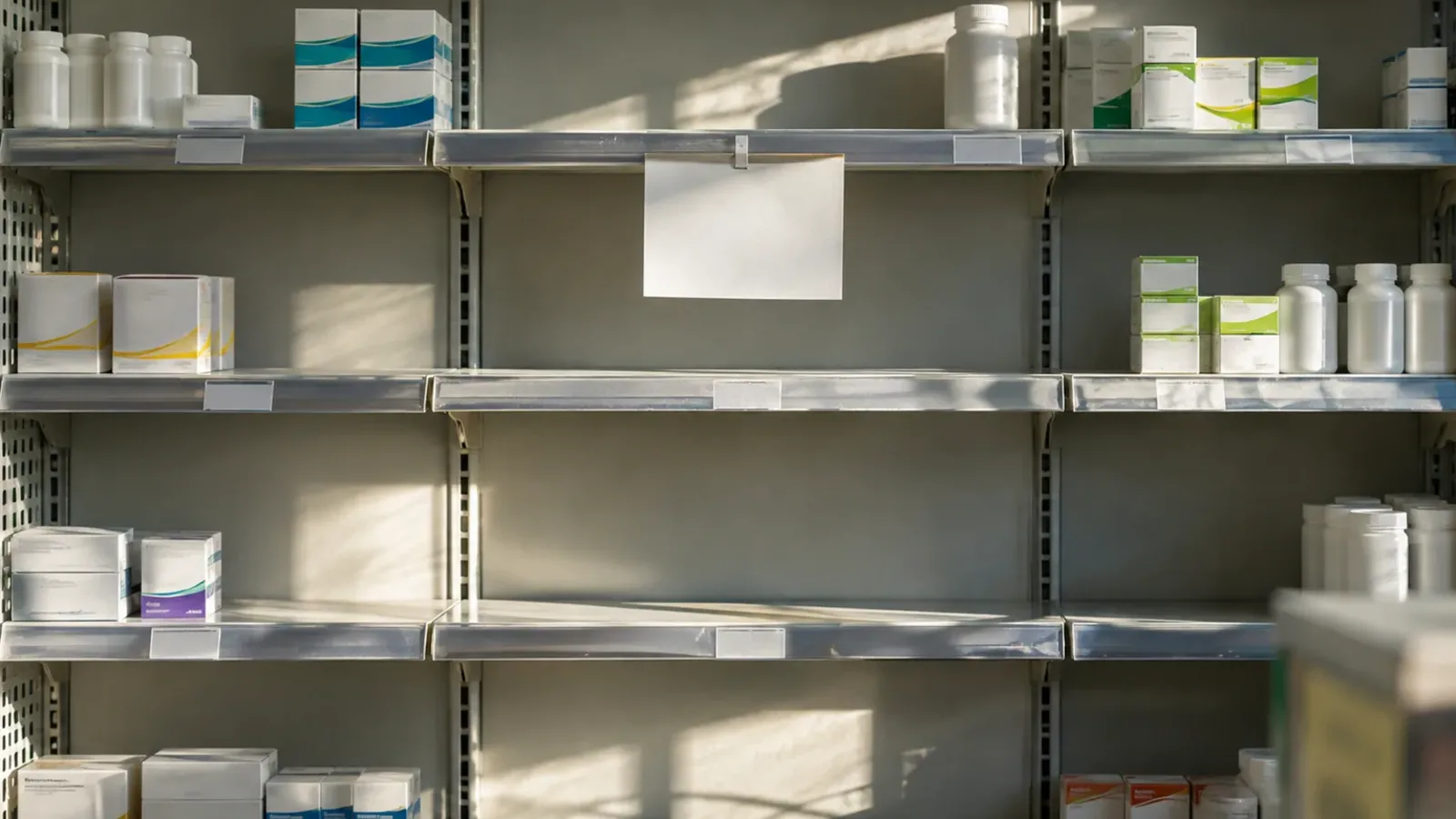
Children’s antibiotics, insulin, heart medication: every year, thousands of products face a shortage. Most are managed without affecting patients, but for someone who depends on a treatment, a few days without it can matter.
Quebec / Canada
France
If you only do three things
- 1Renew prescriptions before you run out
- 2Keep an up-to-date list of your medications and doses
- 3Ask your pharmacist for an alternative rather than waiting
Lasting collapse?
Key figures
A problem that has become chronic.
Understanding the risk
Why the shelves run empty.
A shortage occurs when the supply of a drug can no longer meet demand. Causes are often industrial: a manufacturing problem, a single plant for the whole world, a lack of raw materials, a sudden surge in demand (as with some antibiotics in busy winters) or a low-profit product being discontinued.
In France, a stock-out (the manufacturer can’t supply) is distinguished from a supply disruption (the pharmacy can’t dispense the drug within 72 hours). In Canada, Health Canada classifies shortages into three tiers by potential impact.
Severity
For most shortages, the pharmacist finds another format, strength or equivalent. The risk is real for people who depend on a treatment with no simple alternative: epilepsy, diabetes, heart disease, transplants, cancer.
A shortage can also result from another crisis: a pandemic, conflict, cyberattack on a distributor or transport disruption.
In detail
If your medication is unavailable: options to discuss with a professional.
| Option | Who decides | Good to know |
|---|---|---|
| Another pharmacy or supplier | Pharmacist | They can check other pharmacies’ stock |
| Different strength or format | Pharmacist, doctor | For example two lower-dose tablets |
| Equivalent drug (generic or other brand) | Pharmacist, doctor | Same substance, different presentation |
| Different molecule | Doctor | Treatment change to monitor |
| Temporary importation | Health authorities | Used for the most serious shortages |
Assess your exposure
Are you more exposed than average?
Tick what applies to your situation.
Get prepared
Your preparedness checklist
Tick items as you go: your progress is saved on this device.
Suggested kits and plans
Before, during, after
The right actions, before, during and after.
Before
- Medication list
- Prescriptions renewed early
- Alternatives known
- Basic kit
- Emergency plan updated
During
- Tell your pharmacist as soon as a drug is unavailable
- Never stop a treatment without medical advice
- Don’t buy medication of unknown origin
- Check official shortage notices
- Buy only what you need
After
- Return to your usual treatment with your doctor
- Update your list
- Note which alternatives worked
- Rebuild your small lead
- Report any side effects
In Quebec, Canada and France
What changes depending on where you live.
Quebec / Canada
In Canada, manufacturers must report shortages to Health Canada, which publishes notices on the Drug Shortages Canada website. In Quebec, pharmacists can in some cases extend a prescription or offer a substitution.
- Health advice
- Info-Santé 811
- Shortage notices
- Drug Shortages Canada
- Side effects
- Health Canada, MedEffect
- Emergency
- 911
France
In France, the ANSM publishes the list of medicines in shortage or under strain. Manufacturers must keep a safety stock, two months for medicines of major therapeutic interest.
- Life-threatening emergency
- 15 or 112
- Information
- ANSM, stock-outs
- On-call doctor
- 116 117
- On-call pharmacy
- 3237
Domino effect
This risk often triggers others
Frequently asked questions
Frequently asked questions
Can I stockpile medication?
A small lead of a few days is reasonable, agreed with your doctor and pharmacist. Hoarding months of treatment causes shortages and your medication may expire.
What if my pharmacist is out of my medication?
Ask them to check other pharmacies and possible alternatives. Never stop a treatment on your own: contact your doctor.
Is a generic as effective?
A generic contains the same active substance at the same dose. Some narrow-therapeutic-range drugs need monitoring though: talk to your pharmacist.
Where can I check whether a drug is in shortage?
In Canada, on the Drug Shortages Canada website; in France, on the ANSM website.
Sources
Sources
Data checked on November 18, 2026. Figures come from the organizations cited; consult them for updates.
- Health Canada, Health product shortages in Canada: 2024-2025 review (French)
- Health Canada, Drug shortages: information for consumers (French)
- Vidal, Managing medicine shortages (French)
This page provides general preparedness information. It does not replace instructions from the authorities: in an emergency, call 911 in Canada or 112 in France. This fiche does not replace medical or pharmaceutical advice. Never change a treatment without a health professional’s advice.

Start with the basics.
Our free “Be Prepared” guide: 72-hour kit, family plan and your own risk assessment.
Medication shortage
Index Quebec/Canada 4/9 · France 4/9
If you only do three things
- Renew prescriptions before you run out
- Keep an up-to-date list of your medications and doses
- Ask your pharmacist for an alternative rather than waiting
During
- Tell your pharmacist as soon as a drug is unavailable
- Never stop a treatment without medical advice
- Don’t buy medication of unknown origin
- Check official shortage notices
- Buy only what you need
After
- Return to your usual treatment with your doctor
- Update your list
- Note which alternatives worked
- Rebuild your small lead
- Report any side effects
Emergency numbers: 911 (Canada) · 112 (France)
prepacivile.com/en/risks/medication-shortage/