
Malicious acts and conflict · Risk index 3/9 (Quebec) · 3/9 (France)
Conventional armed conflict
A major armed conflict on Canadian or French soil remains unlikely, but its indirect effects could reach us: outages, cyberattacks, shortages, rising prices, disinformation. In 2025, France published a guide asking every household to prepare.
Quebec / Canada
France
If you only do three things
- 1Build 72 hours of self-sufficiency, then aim longer
- 2Keep a battery radio and check your information sources
- 3Keep essential documents and an up-to-date family plan
Lasting collapse?
Key figures
Prepare, without panic.
Understanding the risk
What a conflict would change day to day.
For most Canadians and French people, armed conflict would first be felt indirectly: cyberattacks on infrastructure, energy cuts, supply disruptions, rising prices, mass disinformation, mobilized public services.
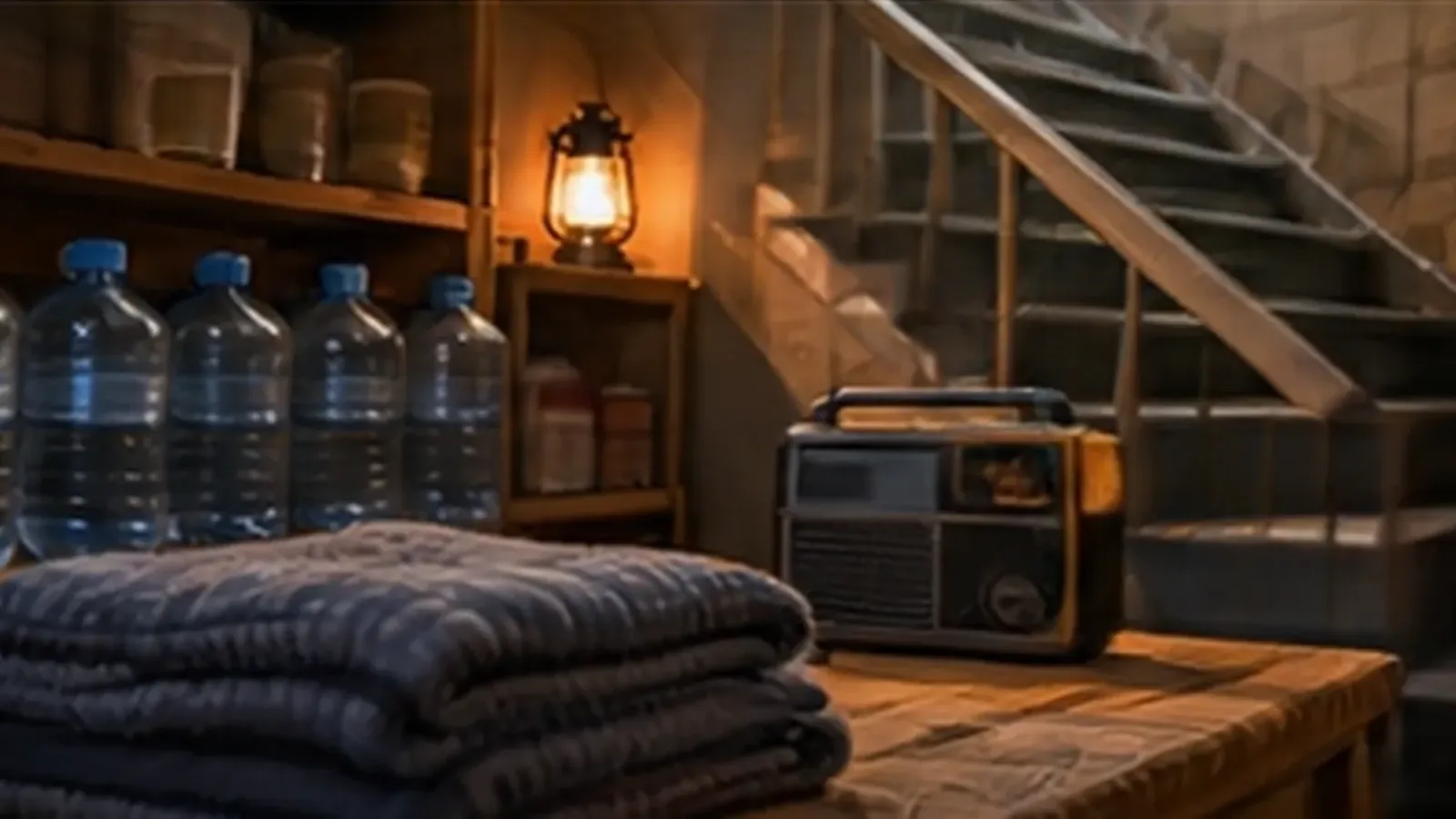
That’s why recommended preparation looks like that for other crises: water, food, medication, lighting, a radio, documents and a family plan. In France, the “Tous responsables” guide, published in late 2025 by the General Secretariat for Defence and National Security, reminded every household of this.
Severity
Severity depends on the nature and distance of the conflict. The most likely effects on a household are economic and logistical: prices, availability of some goods, disruption of digital services.
In an extreme scenario, strikes could target infrastructure. Shelter, alert and evacuation instructions from authorities would then become essential.
In detail
Possible effects and how to prepare.
| Effect | Example | Preparation |
|---|---|---|
| Energy outages | Grid targeted or rationed | Lighting, backup heat, 72 hours of supplies |
| Cyberattacks | Banks, telecoms, public services | Cash, paper documents |
| Shortages and price rises | Fuel, medication, food | Rotating supplies, prescriptions up to date |
| Disinformation | Rumours, fake alerts | Official sources, radio, verification |
| Alerts and sheltering | Sirens, phone messages | Know the signals and shelters |
Assess your exposure
Are you more exposed than average?
Tick what applies to your situation.
Get prepared
Your preparedness checklist
Tick items as you go: your progress is saved on this device.
Suggested kits and plans
Before, during, after
The right actions, before, during and after.
Before
- 72 hours of supplies
- Battery radio
- Documents gathered
- Family plan
- Alerts on
During
- Follow official instructions
- Check information before sharing
- Save fuel, water and batteries
- Shelter when alerted
- Check on vulnerable relatives
After
- Restock supplies
- Review what was missing
- Look after your mental health
- Help neighbours
- Stay alert to instructions
In Quebec, Canada and France
What changes depending on where you live.
Quebec / Canada
In Canada, Public Safety Canada and Get Prepared recommend every household be able to manage at least 72 hours. Emergency alerts reach phones through Alert Ready.
- Emergency
- 911
- Preparedness
- Get Prepared (Canada.ca)
- Alerts
- Alert Ready, Québec En Alerte
- Support
- Info-Social 811
France
In France, the SGDSN’s “Tous responsables” guide sets out major risks, including armed conflict, and preparedness steps. The siren network and FR-Alert broadcast alerts.
- Emergency
- 112
- Guide
- Tous responsables (SGDSN)
- Alerts
- Sirens, FR-Alert
- Information
- Prefecture
Domino effect
This risk often triggers others
Frequently asked questions
Frequently asked questions
Should I build a shelter?
For a household, the priority is basic self-sufficiency and knowing the instructions. A basement or interior room is enough for most sheltering.
Why did France publish this guide?
To strengthen public resilience to all crises, including armed conflict, by asking every household to manage 72 hours.
How do I avoid disinformation?
Favour official sources, cross-check information and be wary of messages playing on fear or urgency.
Should I keep cash?
A small amount for a few days helps if electronic payments fail. No need to keep a lot at home.
Sources
Sources
Data checked on November 18, 2026. Figures come from the organizations cited; consult them for updates.
- Journal du Geek, With its survival guide, the government wants to prepare the French (French)
- Government of Canada, Nuclear and radiological emergencies: get prepared (French)
This page provides general preparedness information. It does not replace instructions from the authorities: in an emergency, call 911 in Canada or 112 in France.
Start with the basics.
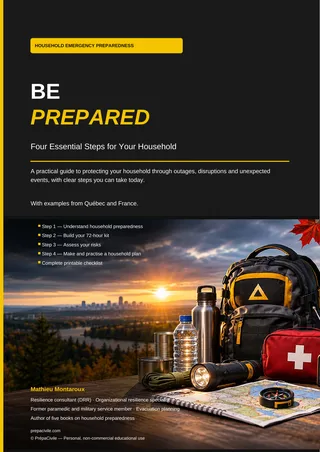
Our free “Be Prepared” guide: 72-hour kit, family plan and your own risk assessment.
Conventional armed conflict
Index Quebec/Canada 3/9 · France 3/9
If you only do three things
- Build 72 hours of self-sufficiency, then aim longer
- Keep a battery radio and check your information sources
- Keep essential documents and an up-to-date family plan
During
- Follow official instructions
- Check information before sharing
- Save fuel, water and batteries
- Shelter when alerted
- Check on vulnerable relatives
After
- Restock supplies
- Review what was missing
- Look after your mental health
- Help neighbours
- Stay alert to instructions
Emergency numbers: 911 (Canada) · 112 (France)
prepacivile.com/en/risks/armed-conflict/