
In this article
Conflicts affect civilian populations through injuries and displacement, but also through the degradation of water, electricity, healthcare and communications. Understanding these dependencies helps prepare useful solutions in multiple crises, without predicting a war or automatically transposing an alien experience to one’s neighborhood.
Starting from concrete consequences
A mobile network failure does not have the same severity for a person with multiple proximity contacts as for someone who depends on a remote assistance. An interruption of transport may prevent a consultation, refueling or the replacement of a caregiver. So start with people’s needs, and then identify the services they depend on.
For each need, note an alternative and its limit. A charged phone is not enough if the network is unavailable. A filter does not transform all water into drinking water. A food reserve does not solve the problems of swallowing or the lack of water necessary for its preparation.
| Need | Dependence to be examined | Solution to prepare |
|---|---|---|
| Drinking and eating | Water network, shops, cooking | Accessible drinking water, adapted meals, manual can opener |
| Continued care | Pharmacy, electricity, transportation | Medical list, contacts and compatible reception |
| Stay informed | Phone, connection, power supply | Contacts on paper and receiving radio |
| Join a host | Roads, public transport, mobility | Confirmed destination and accessible options |
Maintaining actionable information
Identify a few distinct sources: local authorities, recognized broadcaster, humanitarian organization and trusted contact. Record the time of the last confirmed information. The volume of messages received does not measure their reliability.
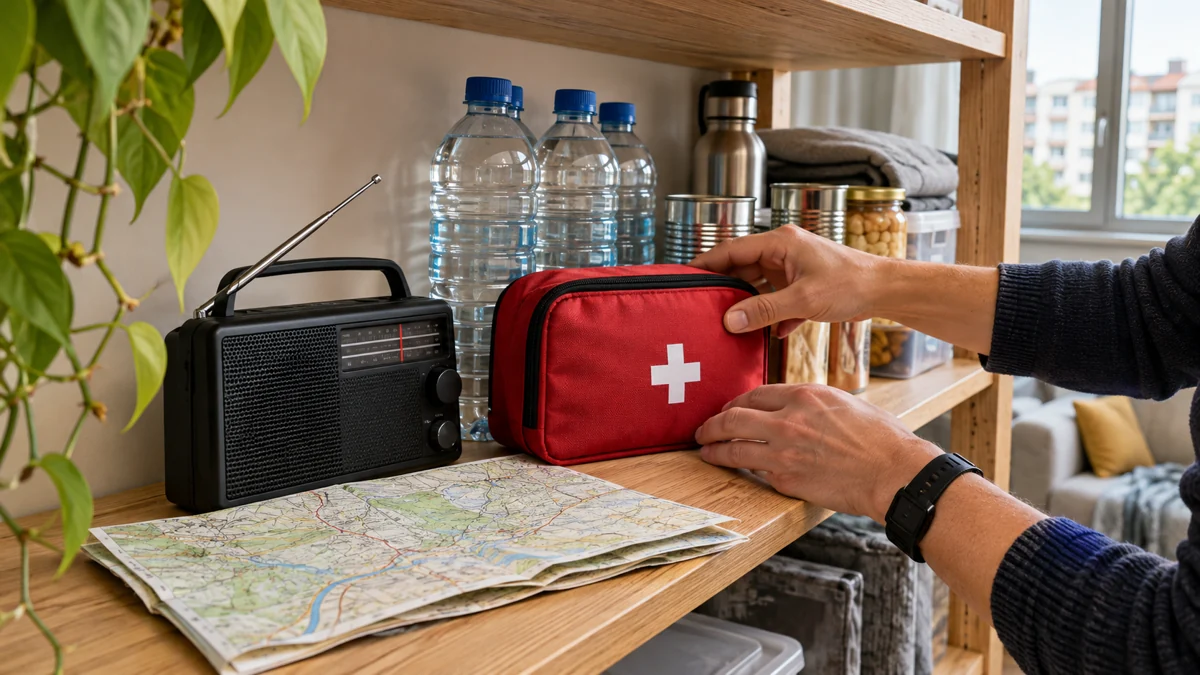
A stand-alone AM/FM radio can complete the phone for still available broadcasts. Shortwaves do not guarantee an international reception or information adapted to your location. Try it before you depend on it.
To exchange between relatives, distinguish reception and broadcast. In Canada, eligible FRS or GMRS aircraft are subject to specific conditions. PMR446 radios used in Europe do not automatically become licensed in Canada. Choose a device approved for the territory and check the applicable regulations before purchase.
Preparing for travel without making it mandatory
Evacuation depends on the threat, instructions and possible reception. Plan contacts and routes, but never consider a paper-drawn route as a guaranteed passage. A secondary road may be closed, damaged or inaccessible to a person with reduced mobility.
A sober and comfortable bag should contain what its wearer can actually move. Test it on an ordinary ride and adjust the weight. Water, personal care and priority documents must remain accessible. Provide transportation aids rather than charging someone who can’t carry.
Keep an accessible lamp to read, move around in a dark home and find business. Very bright modes consume faster energy; check the useful range and compatible batteries or cables.
Organizing water and first aid
Bottled water or water stored in a container intended for drinking water is a simple starting point. On the move, a filter can complete this reserve under the conditions provided by its manufacturer. Its limits include viruses, chemicals and salt water depending on the model. Water exposed to an industrial spill requires a confirmed alternative source.
Adapt the first aid kit to the group’s skills. Bandages, gloves and means of alert are useful; a suture kit is not a common equipment to recommend to a family. Learning gestures and access to medical evacuation remain essential.
Preserving the human organization
Keep flexible schedules for meals, rest, tasks, and news. Divide the responsibilities and plan a succession: the same person can not monitor, care for and organize without interruption.
Keep in touch with isolated people with their consent. Agree on a simple message to confirm that everything is going well and a procedure to follow if this message is missing. A lack of response can have several causes: it must lead to verification, without immediately spreading an alarming narrative.
After a disturbance, look at what has actually been missing. Feedback can reveal that a cable, a paper number or an agreement with a neighbor was more useful than an additional purchase. Integrate these findings into the home plan and the Community Resilience Citizen Network.
References and extensions
- ICRC: protection of civilians.
- ISED: Radio licences and exemptions in Canada.
-
RCRC Citizen Guide, version 25.4 of 2025 - PDF, 56 pagesOriginal PDF · source language preserved.