
Natural · Risk index 3/9 (Quebec) · 6/9 (France)
Coastal flooding and erosion
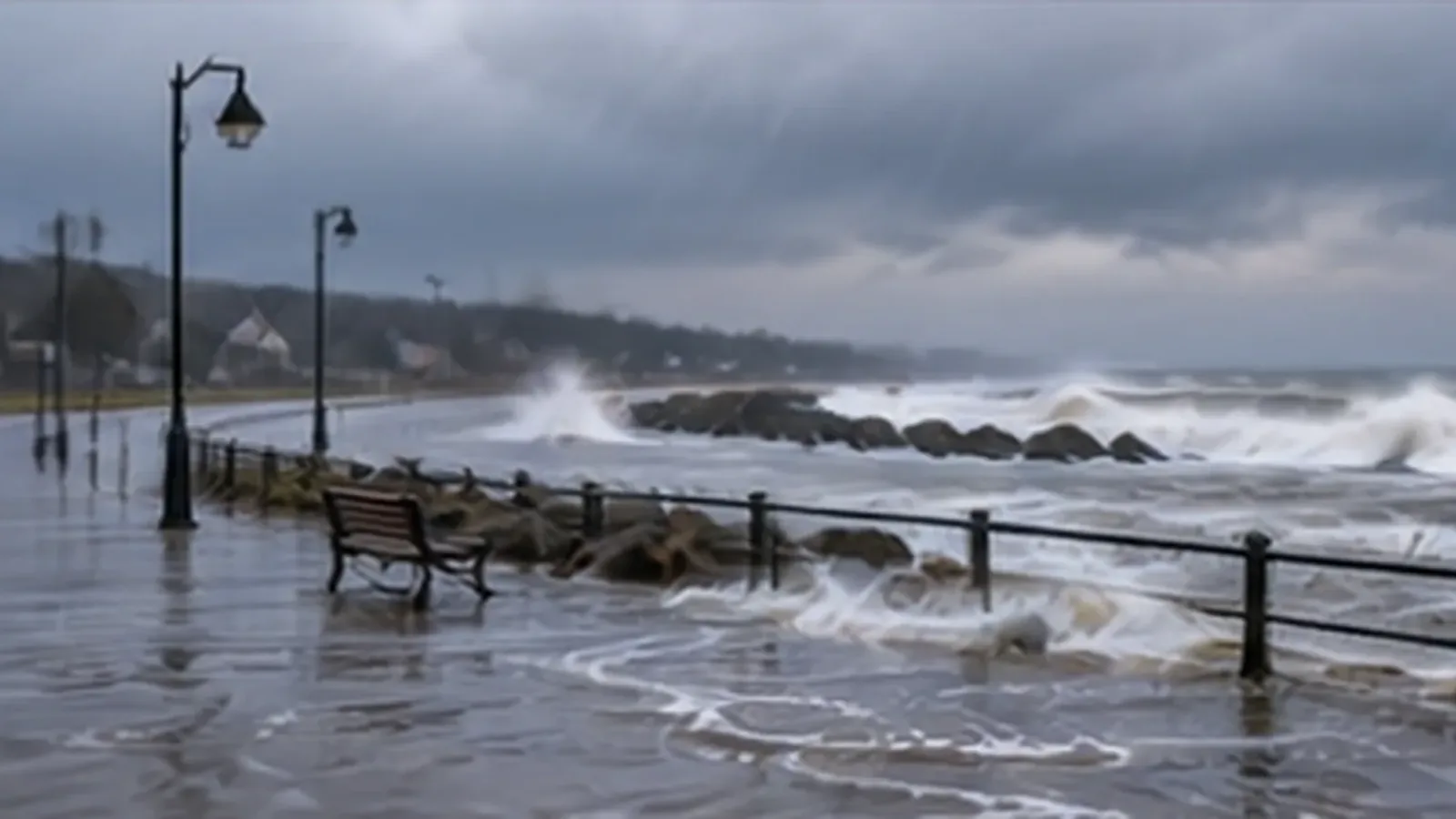
A storm, a high tide and wind-driven waves: the sea can flood a neighbourhood in one night. And slowly, year after year, erosion eats away at the coast. Two linked risks affecting Eastern Quebec and the French coast.
Quebec / Canada
France
If you only do three things
- 1Know whether your home is in a flooding or erosion zone
- 2Follow tides and alerts when a storm approaches
- 3Evacuate early if authorities ask, especially at night
Lasting collapse?
Key figures
The sea is gaining ground.
Understanding the risk
Two risks, one coastline.
Coastal flooding is a temporary flooding of the coast by the sea. It happens when a storm, low pressure and strong winds push water above normal levels, especially at high tide, with large breaking waves. In Quebec, it’s called a storm surge or wave overtopping.
Erosion is the gradual retreat of the shoreline. Each storm takes away a bit of beach, cliff or embankment. Less winter sea ice, which used to shield the Gulf coasts, and rising sea levels speed it up.
Severity
Coastal flooding mostly kills at night, when water rises fast in single-storey homes behind a dike. That’s what happened in La Faute-sur-Mer, where more than 600 houses were destroyed.
Erosion rarely endangers lives, but it can make a house uninhabitable, cut roads and utilities, and wipe out a property’s value.
In detail
Flooding or erosion: what sets them apart.
| Coastal flooding | Erosion | |
|---|---|---|
| Speed | A few hours | Years, with sudden losses during storms |
| Main danger | Drowning, flooded homes | Loss of land and buildings |
| When | Storm at high tide, mostly fall and winter | Continuous, sped up by storms |
| Response | Alerts, evacuation, moving things up | Planning, protection, relocation |
Assess your exposure
Are you more exposed than average?
Tick what applies to your situation.
Get prepared
Your preparedness checklist
Tick items as you go: your progress is saved on this device.
Suggested kits and plans
Before, during, after
The right actions, before, during and after.
Before
- Zone checked
- Tides and alerts followed
- Windows protected
- Belongings up high
- Bag ready
During
- Stay away from the shore, wharves and marinas
- Evacuate if authorities ask
- Don’t try to recover things swept away
- Don’t walk or drive through water
- Go upstairs if water gets in
After
- Return only with authorities’ approval, in daylight
- Report flooding to your municipality
- Photograph the damage
- Have the wiring checked
- Info-Social 811 if you’re in distress
In Quebec, Canada and France
What changes depending on where you live.
Quebec / Canada
In Quebec, the Lower St. Lawrence, North Shore, Gaspé and Magdalen Islands are most exposed. The government supports municipalities through a coastal erosion and flooding project office, and Environment Canada issues storm surge warnings.
- Emergency
- 911
- Alerts
- Environment Canada
- Report
- Your municipality
- Support
- Info-Social 811, option 2
France
In France, Météo-France issues wave-submersion warnings. Since Xynthia, coastal risk prevention plans regulate building, and the “Le littoral de ma commune” app covers over 1,000 towns.
- Emergency
- 112 or 18
- Warnings
- Météo-France, wave-submersion
- Information
- Géorisques
- Alerts
- FR-Alert
Domino effect
This risk often triggers others
Frequently asked questions
Frequently asked questions
When is coastal flooding risk highest?
During fall and winter storms that coincide with spring tides. Check tide tables when a storm is forecast.
Does a dike fully protect me?
No. A dike can be overtopped or fail, and neighbourhoods right behind it can be the most dangerous, as in La Faute-sur-Mer.
What if erosion threatens my home?
Contact your municipality about rules and support. Don’t build protection without approval: it can worsen erosion next door.
Does insurance cover coastal flooding?
In Canada, overland flood coverage is often an add-on. In France, coastal flooding is covered if a natural disaster decree is issued. Gradual erosion is generally not insurable.
Sources
Sources
Data checked on November 18, 2026. Figures come from the organizations cited; consult them for updates.
- Government of Quebec, Storm surge or wave overtopping (French)
- Ouranos, Coastal erosion and submergence
- L’info durable, 15 years after Xynthia (French)
- French Ministry of Ecological Transition, Coastal erosion: national scenarios and mapping (French)
- Service-Public.fr, Coastal erosion (French)
This page provides general preparedness information. It does not replace instructions from the authorities: in an emergency, call 911 in Canada or 112 in France. Insurance coverage varies by policy and country: check with your insurer.

Start with the basics.
Our free “Be Prepared” guide: 72-hour kit, family plan and your own risk assessment.
Coastal flooding and erosion
Index Quebec/Canada 3/9 · France 6/9
If you only do three things
- Know whether your home is in a flooding or erosion zone
- Follow tides and alerts when a storm approaches
- Evacuate early if authorities ask, especially at night
During
- Stay away from the shore, wharves and marinas
- Evacuate if authorities ask
- Don’t try to recover things swept away
- Don’t walk or drive through water
- Go upstairs if water gets in
After
- Return only with authorities’ approval, in daylight
- Report flooding to your municipality
- Photograph the damage
- Have the wiring checked
- Info-Social 811 if you’re in distress
Emergency numbers: 911 (Canada) · 112 (France)
prepacivile.com/en/risks/coastal-flooding/