
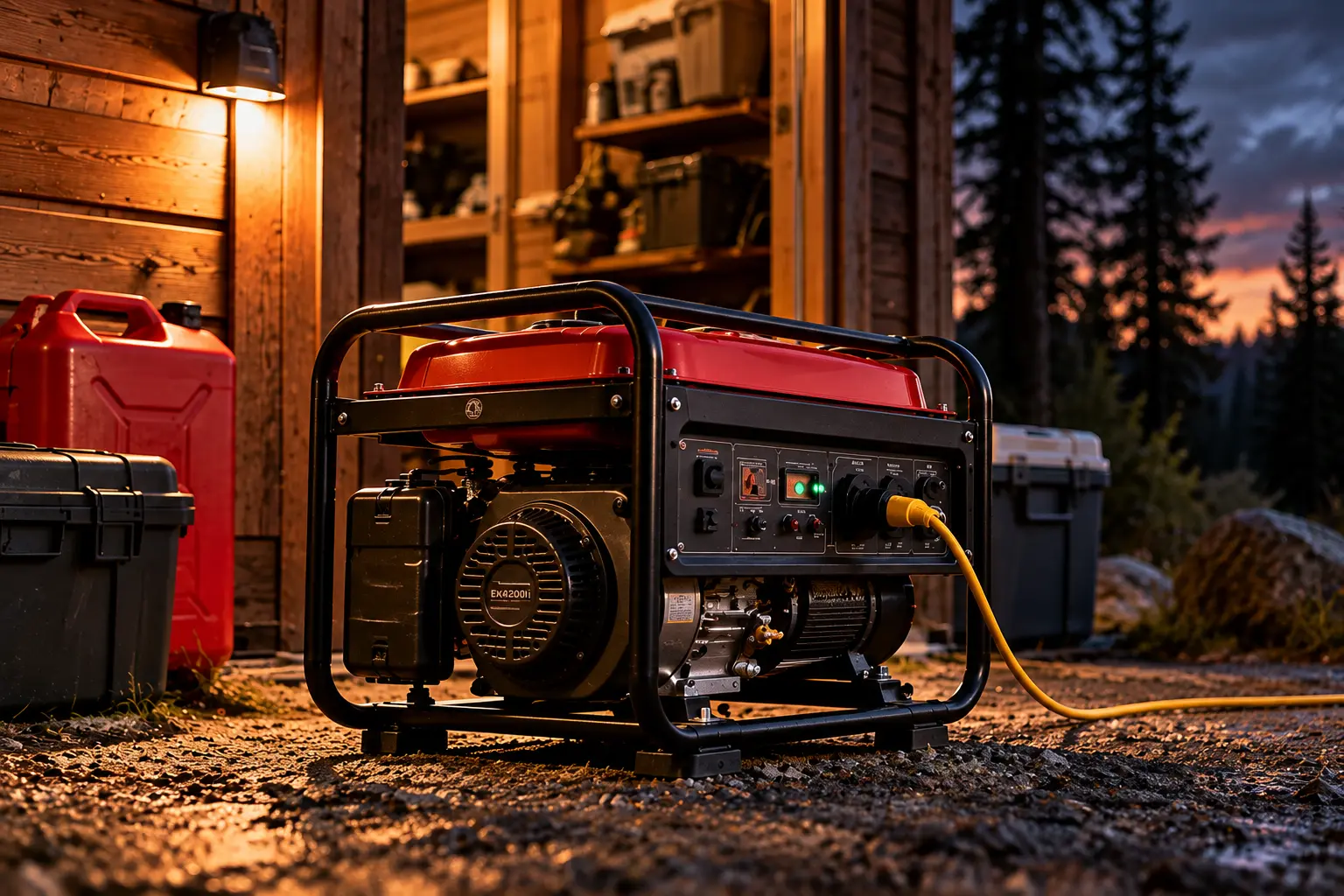
Natural · Risk index 3/9 (Quebec) · 2/9 (France)
Space weather
On March 13, 1989, a solar storm brought down Hydro-Québec’s grid within seconds: six million people lost power for about nine hours. The Sun can do it again.
Quebec / Canada
France
If you only do three things
- 1Be ready for a power outage lasting several days
- 2Keep a battery radio and paper maps
- 3Don’t rely only on GPS and electronic payments
Lasting collapse?
Key figures
When the Sun hits our grids.
Understanding the risk
A storm from the Sun.
During an eruption, the Sun can hurl a huge cloud of charged particles into space, called a coronal mass ejection. If it hits Earth, it disturbs the planet’s magnetic field: a geomagnetic storm, rated G1 to G5. It produces beautiful auroras, but also induces currents in long power lines, pipelines and cables.
Those currents can overload transformers and bring down a power grid, as in Quebec in 1989. Storms also disrupt satellites, GPS, timing signals and radio communications. The May 2024 storm was the strongest since 2003, without major grid damage.
Severity
The worst case is an extreme storm that damages large transformers, which take a long time to replace, causing multi-day outages over wide regions.
For a household, the practical effects look like a prolonged outage: no electric heating, refrigeration, card payments and sometimes mobile service.
In detail
The geomagnetic storm scale at a glance.
| Level | Intensity | Possible effects |
|---|---|---|
| G1-G2 | Minor to moderate | Auroras farther south, slight grid fluctuations |
| G3 | Strong | Voltage corrections, GPS and radio disruptions |
| G4 | Severe | Grid stability problems, satellites disrupted |
| G5 | Extreme | Risk of grid collapse, transformer damage |
Assess your exposure
Are you more exposed than average?
Tick what applies to your situation.
Get prepared
Your preparedness checklist
Tick items as you go: your progress is saved on this device.
Suggested kits and plans
Before, during, after
The right actions, before, during and after.
Before
- 72 hours of supplies
- Battery radio
- Charged power banks
- Paper map
- Cash
During
- Follow official notices
- Charge devices while power is on
- Limit GPS-dependent travel
- Unplug sensitive devices if power fails
- Apply power-outage routines
After
- Check electronic devices
- Plug things back in gradually
- Restock supplies
- Note what was missing
- Check on neighbours
In Quebec, Canada and France
What changes depending on where you live.
Quebec / Canada
In Canada, Natural Resources Canada runs Space Weather Canada, which issues forecasts and alerts. Hydro-Québec reports outages through Info-pannes.
- Forecasts
- Space Weather Canada
- Outages
- Hydro-Québec Info-pannes
- Emergency
- 911
- Support
- Info-Social 811
France
In France, at this latitude, expected effects of a geomagnetic storm mainly concern GPS, satellites and communications; power-outage guidance applies if the grid is affected.
- Emergency
- 112
- Outages
- Enedis
- Alerts
- FR-Alert
- Information
- Prefecture
Domino effect
This risk often triggers others
Frequently asked questions
Frequently asked questions
Is a solar storm dangerous to health?
Not on the ground: the atmosphere and magnetic field protect us. The risks are technical (power, satellites) and, to a limited extent, for aircrews and astronauts.
Can it destroy my electronics?
Unplugged household devices aren’t directly threatened. The main risk is surges when power returns: use surge protectors.
Can solar storms be forecast?
Partly: eruptions are observed in real time and reaching Earth takes 18 hours to a few days.
How is it different from an EMP?
A nuclear EMP is much briefer and can directly hit small devices. A solar storm mainly affects long power lines.
Sources
Sources
Data checked on November 18, 2026. Figures come from the organizations cited; consult them for updates.
- MétéoMédia, 32 years ago an intense solar storm paralyzed Quebec (French)
- U.S. Geological Survey, Space Weather Events of May 10, 2024
- NOAA Space Weather Prediction Center, Geomagnetic storms
This page provides general preparedness information. It does not replace instructions from the authorities: in an emergency, call 911 in Canada or 112 in France.
Start with the basics.
Our free “Be Prepared” guide: 72-hour kit, family plan and your own risk assessment.
Space weather
Index Quebec/Canada 3/9 · France 2/9
If you only do three things
- Be ready for a power outage lasting several days
- Keep a battery radio and paper maps
- Don’t rely only on GPS and electronic payments
During
- Follow official notices
- Charge devices while power is on
- Limit GPS-dependent travel
- Unplug sensitive devices if power fails
- Apply power-outage routines
After
- Check electronic devices
- Plug things back in gradually
- Restock supplies
- Note what was missing
- Check on neighbours
Emergency numbers: 911 (Canada) · 112 (France)
prepacivile.com/en/risks/space-weather/