
In this article
- In brief
- Why does food spoil?
- The principle of layered protection
- The main home preservation methods
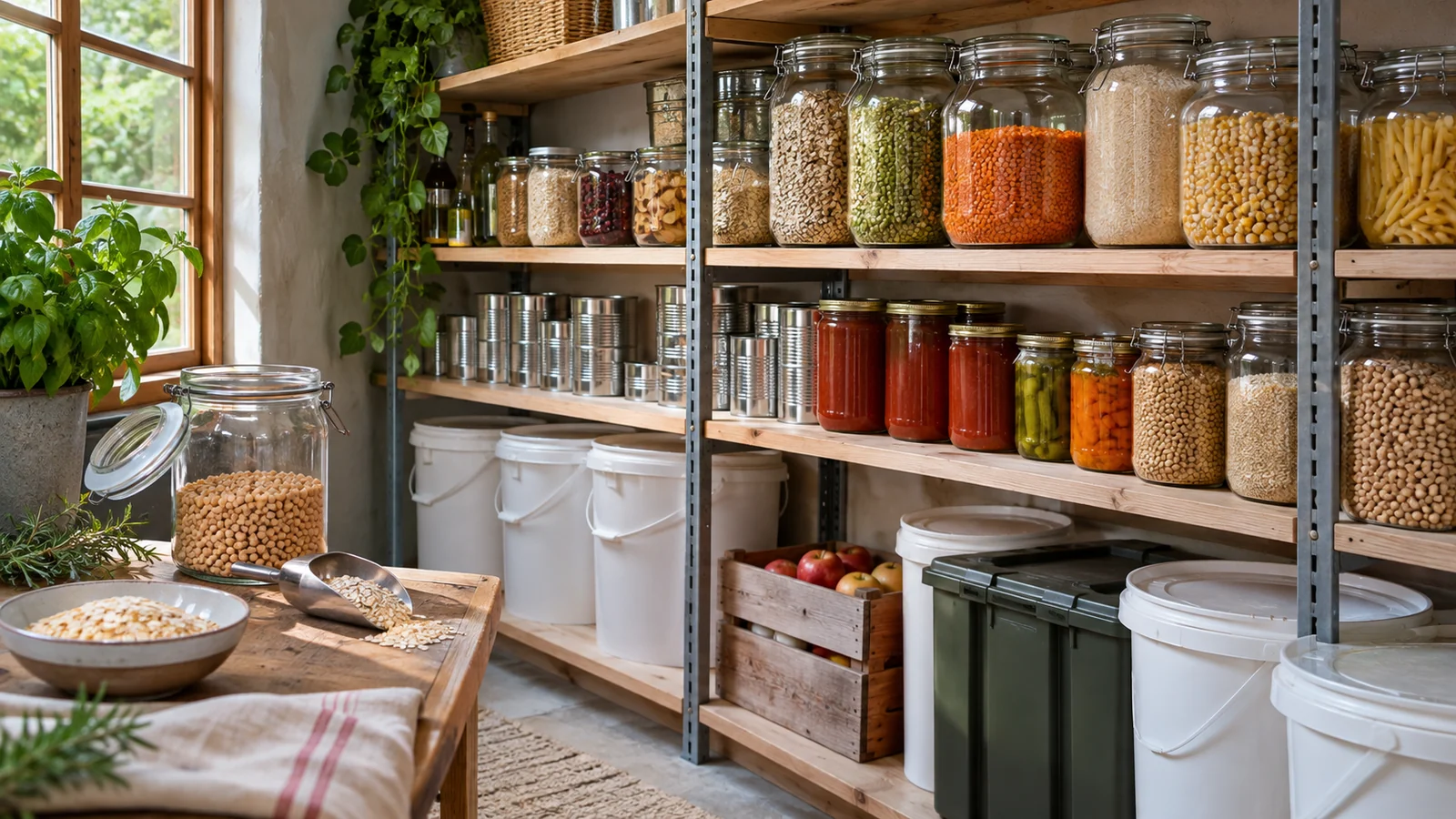
- Choosing containers
- Silica gel and oxygen absorbers: don’t confuse them
- Reference shelf lives
- The case of vitamins and supplements
- Surprising canned foods to diversify the reserve
- What a good storage location needs
- Frequently asked questions
Building a food reserve is one thing; keeping it in good condition for months or years is another. Poorly protected food loses flavour and nutritional value, then becomes unfit to eat, often without anyone noticing until it is needed. The good news: most losses can be avoided with a few simple principles and inexpensive supplies.
This guide brings together the essentials of long-term storage: why food deteriorates, layered protection, the main home preservation methods, choosing containers, using silica gel and oxygen absorbers, reference shelf lives, the special case of vitamins, and a few surprising canned foods that add variety to a reserve.
In brief
In brief. Six enemies degrade food reserves: microorganisms, enzymes, oxygen, moisture, light and heat, not to mention insects and rodents. Protect against them in layers: good starting food, an airtight container, an oxygen absorber for dry foods, a cool, dry, dark location and regular rotation. Properly packaged, white rice, wheat, pasta, sugar and salt keep for years, even decades; foods high in fat or moisture keep far less.
Why does food spoil?
| Factor | What it causes | How to protect against it |
|---|---|---|
| Microorganisms (bacteria, moulds, yeasts) | Rot, toxins, food poisoning | Cooking, canning, drying, salt, sugar, acidity, cold |
| Natural enzymes | Over-ripening, loss of texture and flavour | Blanching, cold, drying |
| Oxygen | Rancid fats, vitamin loss, insects | Oxygen absorbers, vacuum sealing, airtight containers |
| Moisture | Mould, clumping, bacterial growth | Very dry food, airtight containers, dry location |
| Light | Breakdown of vitamins and fats | Opaque containers, dark location |
| Heat and temperature swings | Speeds up every reaction, condensation | Cool, stable location |
| Pests (insects, rodents) | Contamination, losses | Rigid containers, inspection, preventive freezing |
A useful rule: heat accelerates every kind of deterioration. It is often estimated that each rise of about 10 °C (18 °F) can halve the shelf life of a dry food. A reserve stored at 15 °C (59 °F) will therefore last much longer than one in a garage that reaches 30 °C (86 °F) in summer.
The principle of layered protection
No single measure is enough. Long-term storage relies on several successive barriers, each making up for the weaknesses of the others:
- Good starting foodFresh, dry, insect-free, suited to the long term.
- An airtight packageMylar bag, jar or sealed container.
- Less oxygenOxygen absorber for dry, low-fat foods.
- Rigid protectionFood-grade bucket against rodents and impacts.
- A good locationCool, dry, dark, raised, with rotation.
The main home preservation methods
Canning
Canning destroys microorganisms with heat and creates a vacuum in the jar. There are two methods, and the choice is not a matter of preference:
- The boiling water bath suits acidic foods: most fruit, jams, pickles, acidified tomatoes.
- A home pressure canner is essential for low-acid foods: vegetables, meat, fish, legumes, soups. Only pressure reaches temperatures that destroy the spores of the bacterium responsible for botulism.
Always follow tested recipes, with the times and pressures recommended for your altitude. Home-canned food is ideally eaten within a year. A bulging lid, a leak, an abnormal odour or foam are danger signs: throw it out without tasting.
Dehydrating
Removing water prevents microorganisms from growing. An electric dehydrator, a low oven or a solar dryer can dry fruit, vegetables, herbs and lean meat. Home-dried foods generally keep six months to a year, longer if they are very dry, vacuum-packed or stored with an oxygen absorber in a cool place. See dehydration techniques.
Fermenting
Sauerkraut, kimchi, lacto-fermented pickles, yogurt: fermentation uses good bacteria to acidify food and keep harmful ones from growing. It needs little equipment and improves digestibility, but fermented products keep best in a cool place.
Vacuum sealing
Removing air from a bag slows oxidation and rancidity. Vacuum sealing extends storage in the freezer and pantry, but plastic bags slowly let oxygen through: for the very long term, Mylar remains superior.
Freeze-drying
Freeze-drying removes water by freezing under vacuum. It offers the longest shelf lives, up to several decades for well-packaged commercial products, while preserving flavour and nutrients. Home freeze-dryers exist but represent a major investment.
Salting and smoking
Traditional methods for meat and fish, they require rigour: salt proportions, temperatures, hygiene. Poorly controlled, they carry a risk of food poisoning.
Storing dry goods
White rice, wheat, oats, pasta, legumes, sugar, salt: these are the pillars of a long-term reserve. Kept very dry and protected from oxygen, moisture and insects, they keep for years. Freezing for 48 to 72 hours before packaging kills any insect eggs.
Choosing containers
| Container | Advantages | Limits | Ideal use |
|---|---|---|---|
| Glass jars | Airtight, reusable, inert | Fragile, let light through | Canning, small amounts of dry goods, in the dark |
| PET bottles | Light, airtight, free if reused | Slow oxygen permeability | Rice, sugar, dried beans for the medium term |
| Mylar bags | Near-total barrier to oxygen and light | Vulnerable to rodents and punctures | Very long-term storage with an oxygen absorber |
| Food-grade buckets (HDPE) | Sturdy, stackable, rodent-resistant | Slowly let oxygen through on their own | Outer protection for Mylar bags |
| Metal cans | Excellent protection | Require sealing equipment | Commercial products or professional sealing |
For plastic, use only clean, food-grade containers that have never held chemicals. See the Mylar bag guide and oxygen absorbers.
Foods poorly suited to the very long term
Some foods do not lend themselves to storage over several years, even in Mylar: brown rice, whole wheat flour, nuts, ground whole grains, foods high in fat or moisture. Their oils turn rancid. Keep them in the everyday pantry with fast rotation, or in the freezer.
Silica gel and oxygen absorbers: don’t confuse them
| Silica gel (desiccant) | Oxygen absorber | |
|---|---|---|
| Role | Absorbs moisture | Removes oxygen from a sealed container |
| Food use | Only if food-grade, never in direct contact | Designed for dry foods in airtight containers |
| Avoid | Coloured indicator versions, often toxic | Moist or fatty foods (botulism risk without oxygen) |
| Other uses | Tools, documents, electronics, seeds, medication | Mostly food |
Generally, the two are not used together in the same food container: some desiccants hold the moisture absorbers need to work. Silica gel is, however, very useful elsewhere in preparedness: a toolbox against rust, important documents, a wet electronic device, seeds, a fishing kit, silverware, medication pouches. Packets can be regenerated by gently heating them in the oven. Keep them out of reach of children and pets.
Reference shelf lives
These durations are guidelines for food that is well packaged and stored cool (ideally below 21 °C, or 70 °F), dry and dark. They vary with the product, packaging and actual conditions.
| Food | Original packaging | Mylar and absorber, cool |
|---|---|---|
| White rice | 1 to 2 years | Up to 25 years or more |
| Whole wheat berries | Several years | Up to 25 years or more |
| Dry pasta | 1 to 2 years | Up to 20 years or more |
| Rolled oats | 1 to 2 years | Up to 20 years or more |
| Dried beans and legumes | 1 to 2 years | Up to 20 years or more (longer cooking with age) |
| Nonfat powdered milk | 1 to 2 years | Up to 20 years |
| Sugar, salt, honey | Practically unlimited if kept dry | Practically unlimited |
| White flour | About 1 year | Several years |
| Brown rice, whole flour, nuts | A few months | Little gain: rotate or freeze |
| Commercial canned food | 2 to 5 years for most; acidic foods shorter | Not applicable |
| Commercial freeze-dried food | Per the manufacturer, often 25 years | Not applicable |
| Home-canned and home-dried food | Ideally within a year | A bit longer for very dry home-dried food |
A “best before” date is not an expiry date: it is about quality, not safety. A well-stored dry food often remains safe well beyond it, but gradually loses flavour and nutritional value. See what canned food dates mean.
The case of vitamins and supplements
A long-term food reserve may lack some nutrients, particularly vitamin C and fat-soluble vitamins. A multivitamin then serves as a safety net. Supplements generally do not become dangerous over time, but they lose effectiveness, especially when exposed to heat, moisture and light.
- keep them in their original bottle, tightly closed, cool and dry (not in the bathroom);
- favour tablets over softgels, gummies and liquids, which degrade faster;
- vitamin C and probiotics are among the most fragile;
- rotate: use the reserve day to day and replace it regularly;
- add renewable sources: sprouting seeds, a garden, canned fruit, dried berries;
- return expired supplements to the pharmacy rather than throwing them in the trash or toilet.
Pregnant people, children and people taking medication should ask a pharmacist before building a supplement reserve.
Surprising canned foods to diversify the reserve
Food monotony wears down morale during a prolonged crisis. A few lesser-known canned foods add variety and protein: canned bacon, whole or pieced chicken, game, canned brown bread, pancake mix, prepared meals, assorted fish. Buy a few to taste before stocking up: a canned food nobody likes is useless in a crisis. For home-canned meat, only a pressure canner is safe.
What a good storage location needs
- Cool and stable: ideally between 10 and 18 °C (50 to 65 °F), without large swings; avoid the attic, the garage and the area near a furnace.
- Dry: a damp basement calls for perfectly airtight containers and a dehumidifier.
- Dark: a closed cupboard or opaque containers.
- Raised: never directly on a concrete floor; use shelves or pallets.
- Accessible: easy rotation, oldest items at the front.
- Monitored: regular inspection for insects, rodents, leaks and damaged containers.
See where to store your reserves, rotation rules and, if pests appear, weevils in food stores. The food storage calculator helps you estimate quantities.
Frequently asked questions
How long does white rice keep?
One to two years in its original packaging, and up to 25 years or more in a Mylar bag with an oxygen absorber, in a bucket, cool and dry. Brown rice, richer in oil, keeps much less time.
Can you use an oxygen absorber with any food?
No. Absorbers suit dry, low-fat foods. With moist foods, the absence of oxygen can favour the botulism bacterium. For those foods, use pressure canning, freezing or dehydrating.
Is silica gel dangerous?
Plain silica gel has low toxicity, but it is not edible and can cause choking. Coloured indicator versions may contain toxic substances. Keep packets out of children’s reach and use only food-grade packets near food.
Are expired vitamins dangerous?
Generally not, but they lose effectiveness over time, especially in heat and humidity. Rotate them and return expired products to the pharmacy.
Where should you never store your reserve?
In an uninsulated garage or attic, near a furnace or water heater, directly on concrete, or in a damp place without perfectly airtight containers.