
Technological · Risk index 5/9 (Quebec) · 4/9 (France)
Drinking water contamination
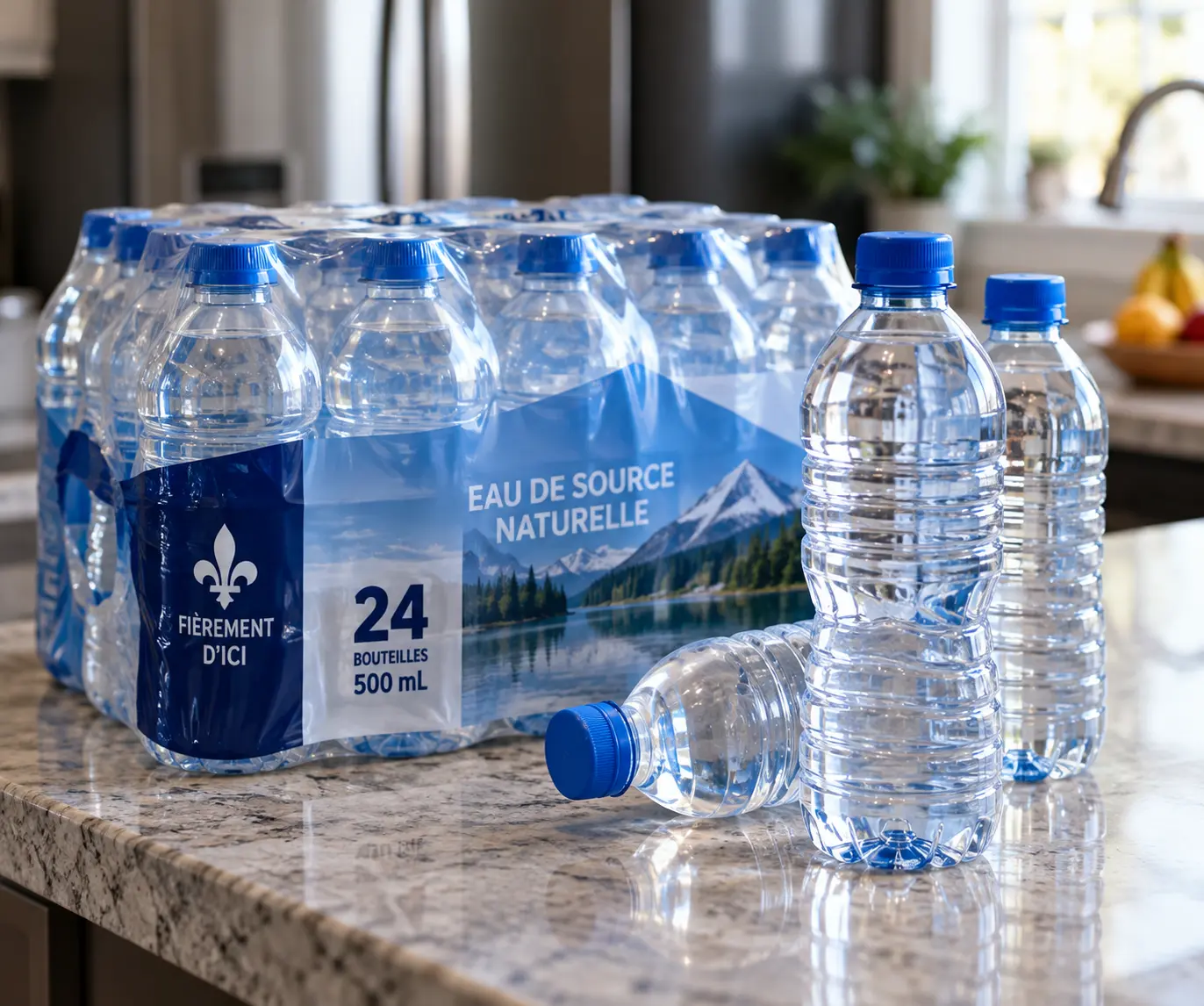
A water main break, bacterial contamination or a treatment failure can make tap water unsafe to drink. Boil-water advisories are frequent in Quebec; you need to know what to do, and what not to do, as soon as one is issued.
Quebec / Canada
France
If you only do three things
- 1Keep a 72-hour supply of bottled water
- 2Know how the advisory will reach you
- 3Boil water at a rolling boil for at least 1 minute during a boil-water advisory
Lasting collapse?
Key figures
Water we always assume is safe.
Understanding the risk
An advisory is not like other alerts.
A boil-water advisory means the water may contain micro-organisms: you must boil it before drinking. A do-not-consume advisory is stricter: do not drink the water even boiled, because the contaminant may be chemical.
In Quebec, the system operator must issue a boil-water advisory without delay whenever E. coli is detected. Precautionary advisories also follow main breaks or treatment failures. In France, the regional health agency (ARS) monitors tap water and the town hall or prefecture announces restrictions.
Severity
Most episodes cause short-lived digestive problems. Infants, older adults and immunocompromised people are more vulnerable.
The Walkerton tragedy in 2000 is a reminder that undetected contamination can be deadly.
In detail
What to do depending on the advisory.
| Advisory | What to do | Avoid |
|---|---|---|
| Boil-water advisory | Boil 1 minute for drinking, cooking, brushing teeth, washing baby bottles | Using ice cubes already made |
| Do-not-consume advisory | Use only bottled water for drinking and cooking | Boiling and assuming that is enough |
| Restriction for infants | Bottled water suitable for baby bottles | Using tap water for formula |
| After the advisory is lifted | Run cold water for a few minutes, discard ice cubes | Resuming without flushing the pipes |
| Private well | Have the water tested at least twice a year | Assuming clear water is safe |
Assess your exposure
Are you more exposed than average?
Tick what applies to your situation.
Get prepared
Your preparedness checklist
Tick items as you go: your progress is saved on this device.
Suggested kits and plans
Before, during, after
The right actions, before, during and after.
Before
- 72-hour water supply
- Municipal alerts on
- A way to boil without power
- Clean containers
- Water suitable for infants
During
- Read the type of advisory
- Boil 1 minute if it is a boil-water advisory
- Bottled water only if do-not-consume
- Discard ice cubes
- Tell neighbours and relatives
After
- Flush the pipes once lifted
- Clean filters and appliances connected to water
- Drain and clean the water heater if asked
- Restock your supply
- Get care if symptoms appear
In Quebec, Canada and France
What changes depending on where you live.
Quebec / Canada
Quebec’s Environment ministry publishes the list of boil-water and do-not-consume advisories issued when E. coli is present. Municipalities issue precautionary advisories, often through their alert systems.
- Emergency
- 911
- Advisories
- Municipality, Environment ministry list
- Health
- Info-Santé 811
- Poisoning
- Quebec Poison Control Centre 1-800-463-5060
France
The regional health agency (ARS) monitors tap water quality. In case of serious non-compliance, the town hall or prefecture restricts consumption for all or part of the population.
- Emergency
- 15 or 112
- Water quality
- ARS, town hall
- Poisoning
- Regional poison control centre
- Alerts
- Town hall, FR-Alert
Domino effect
This risk often triggers others
Frequently asked questions
Frequently asked questions
Can I wash during a boil-water advisory?
Yes, showers and baths are fine if you avoid swallowing water. For young children, a sponge bath is better.
Is a kitchen filter enough?
No, most household filters do not remove bacteria and viruses. Boil the water.
How much water should I store?
At least 2 litres (½ gallon) per person per day for drinking, plus water for cooking and hygiene.
Does boiling remove chemicals?
No. During a do-not-consume advisory, only bottled water is suitable.
365 Program
Prepare for this risk, week by week
Data checked on November 23, 2026. Figures come from the organizations cited; consult them for updates.
Sources
Data checked on November 18, 2026. Figures come from the organizations cited; consult them for updates.
- INSPQ, Boil-water advisories (in French)
- Government of Quebec, Types of advisories (in French)
- Hrudey et al., the Walkerton outbreak (PubMed)
- Pleinchamp, Pesticides in tap water (in French)
This page provides general preparedness information. It does not replace instructions from the authorities: in an emergency, call 911 in Canada or 112 in France.
Start with the basics.
Our free “Be Prepared” guide: 72-hour kit, family plan and your own risk assessment.
Drinking water contamination
Index Quebec/Canada 5/9 · France 4/9
If you only do three things
- Keep a 72-hour supply of bottled water
- Know how the advisory will reach you
- Boil water at a rolling boil for at least 1 minute during a boil-water advisory
During
- Read the type of advisory
- Boil 1 minute if it is a boil-water advisory
- Bottled water only if do-not-consume
- Discard ice cubes
- Tell neighbours and relatives
After
- Flush the pipes once lifted
- Clean filters and appliances connected to water
- Drain and clean the water heater if asked
- Restock your supply
- Get care if symptoms appear
Emergency numbers: 911 (Canada) · 112 (France)
prepacivile.com/en/risks/drinking-water-contamination/