
Technological · Risk index 5/9 (Quebec) · 5/9 (France)
Dam failure
A dam failure releases millions of cubic metres of water at once. The flood wave arrives within minutes near the structure, later downstream. It is rare, but you need to know whether you live in the affected zone and where to go.
Quebec / Canada
France
If you only do three things
- 1Find out whether your home is downstream of a dam or dike
- 2Know the warning signal and the nearest high ground
- 3Evacuate immediately on foot to high ground if the alert is given
Lasting collapse?
Key figures
Rare, but without warning.
Understanding the risk
A wave from upstream.
A dam can fail because of an exceptional flood, a foundation defect, erosion of an earth dike, an earthquake or poor maintenance. Failure can be sudden (concrete dam) or gradual (earth dike).
In Quebec, the Dam Safety Act covers structures one metre high or more; high-capacity dams are classified according to the consequences of a failure and must be inspected. In France, large dams have a special intervention plan (PPI) with sirens in the immediate proximity zone.
Severity
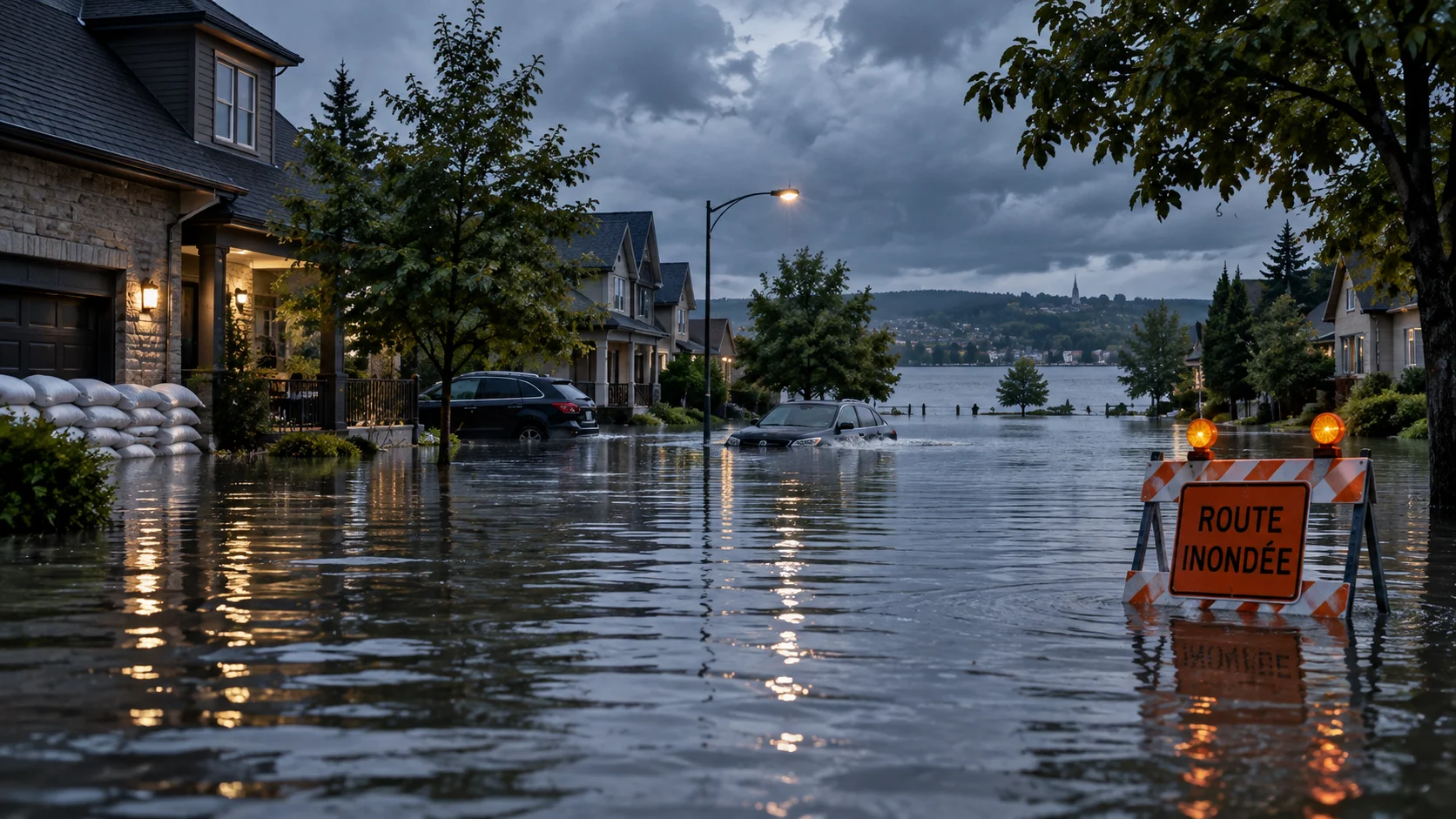
The flood wave sweeps away buildings, roads and vehicles. Close to the structure, there are only minutes to reach high ground.
Further downstream, the rise looks like a rapid flood, with more time to evacuate if the alert is given early.
In detail
What to do depending on the alert.
| Situation | What to do | Avoid |
|---|---|---|
| Before any alert | Know whether you are in a dam-break flood zone, find high ground | Believing a dam cannot fail |
| Alert or siren | Head immediately to high ground on foot | Driving toward the valley |
| Water arriving | Go to upper floors of a solid building if you can no longer flee | Staying on the ground floor or in the basement |
| In a car | Abandon the vehicle and climb | Crossing a flooded bridge or road |
| Afterwards | Wait for the all-clear, follow instructions | Returning to the valley too soon |
Assess your exposure
Are you more exposed than average?
Tick what applies to your situation.
Get prepared
Your preparedness checklist
Tick items as you go: your progress is saved on this device.
Suggested kits and plans
Before, during, after
The right actions, before, during and after.
Before
- Exposure checked
- High ground located
- Warning signal known
- Light bag ready
- Meeting point agreed
During
- Leave immediately on foot for high ground
- Do not drive toward the valley
- Go upstairs if you can no longer flee
- Do not go back for belongings
- Listen to the radio and instructions
After
- Wait for the all-clear
- Do not drink tap water without an advisory
- Photograph the damage
- Apply for disaster assistance
- Look after your mental health
In Quebec, Canada and France
What changes depending on where you live.
Quebec / Canada
The Government of Quebec maintains the Dam Directory and oversees dam safety. Owners of high-capacity dams must have an emergency plan; your municipality includes it in its civil security plan.
- Emergency
- 911
- Dams
- Dam Directory (Quebec)
- Alerts
- Municipality, Alert Ready
- Support
- Info-Social 811
France
Large dams have a special intervention plan (PPI) prepared by the prefecture, with sirens in the immediate proximity zone. Your commune’s DICRIM tells you whether you are concerned.
- Emergency
- 112
- Local risk
- DICRIM, Géorisques
- Alerts
- PPI siren, FR-Alert
- Support
- France Victimes, 116 006
Domino effect
This risk often triggers others
Frequently asked questions
Frequently asked questions
How do I know if I am downstream of a dam?
Check the Dam Directory and your municipality’s civil security plan in Quebec, or the DICRIM and Géorisques in France.
How much time do I have to leave?
Near the structure, only a few minutes. Further away, sometimes more: leave as soon as the alert is given.
Why not take the car?
Valley roads are the first to flood and can be blocked. On foot to high ground is safer.
Are dams monitored?
Yes. Major structures are inspected and instrumented, which makes failure rare but not impossible.
365 Program
Prepare for this risk, week by week
Data checked on November 23, 2026. Figures come from the organizations cited; consult them for updates.
Sources
Data checked on November 18, 2026. Figures come from the organizations cited; consult them for updates.
- Government of Quebec, Dam Directory (in French)
- Government of Quebec, Legal framework for dams (in French)
- Malpasset Dam, 1959
- MétéoMédia, The Saguenay flood 25 years on (in French)
- Géorisques (in French)
This page provides general preparedness information. It does not replace instructions from the authorities: in an emergency, call 911 in Canada or 112 in France.

Start with the basics.
Our free “Be Prepared” guide: 72-hour kit, family plan and your own risk assessment.
Dam failure
Index Quebec/Canada 5/9 · France 5/9
If you only do three things
- Find out whether your home is downstream of a dam or dike
- Know the warning signal and the nearest high ground
- Evacuate immediately on foot to high ground if the alert is given
During
- Leave immediately on foot for high ground
- Do not drive toward the valley
- Go upstairs if you can no longer flee
- Do not go back for belongings
- Listen to the radio and instructions
After
- Wait for the all-clear
- Do not drink tap water without an advisory
- Photograph the damage
- Apply for disaster assistance
- Look after your mental health
Emergency numbers: 911 (Canada) · 112 (France)
prepacivile.com/en/risks/dam-failure/