
In this article
- Why integrate a vehicle into your evacuation plan
- Limits and points of vigilance
- Characteristics of a Good Evacuation Vehicle
- All-wheel drive (4x4)
- Diesel engine
- Manual Transmission
- Modular interior
- Ease of maintenance and repair
- Trailer hitch
- Modifications and accessories
- Checklist: What to have on board
- Make vehicle evacuation more efficient
- Summary
- Frequently asked questions
- Sources and benchmarks
For the majority of people with a vehicle, it is one of the most important assets in an evacuation scenario. But integrating it effectively into a preparation plan requires reflection, anticipation and some concrete adjustments.
Putting your escape bag in the trunk and starting is not enough. A vehicle that is poorly prepared, or used without an alternative plan, can quickly become a factor of vulnerability rather than an advantage. This article examines the forces and limitations of the vehicle as an evacuation tool, the characteristics to be preferred, and the elements to have on board.
Why integrate a vehicle into your evacuation plan
A vehicle offers three fundamental advantages in an evacuation context: distance, load capacity and shelter.
Extended radius of action
A vehicle makes it possible to reach inaccessible points of withdrawal on foot within a reasonable time. This opens options that would not otherwise exist - provided the destination is identified in advance and the route is planned.
Load capacity
A vehicle can carry much more equipment and supplies than a person can carry. It can fulfill the role of a mobile logistics base, provided you do not succumb to the temptation to take everything away. The balance between utility and mobility remains the decisive criterion.
Temporary shelter
A vehicle can offer temporary protection against the weather, if the location remains safe. In winter, follow the safety instructions if you have to wait on board and call for help. The engine should not run in an enclosed space; snow can also clog the exhaust.
Plan the essential effects easy to take, without free object that hinders the controls or becomes a projectile. If the vehicle becomes unusable, the alternative must be suitable for people, weather and danger; it is not automatically a walk.
Limits and points of vigilance
The advantages of the vehicle are real, but they must not mask its operational constraints. In many common scenarios, a vehicle can become an obstacle rather than an asset.
Risk of Dependency
An evacuation plan focused exclusively on the vehicle is fragile. A breakdown, a fuel shortage, an obstacle on the road or simply parking in the wrong place at the wrong time can make the vehicle unusable. Planning should always include a vehicle-free fallback option.
Saturation of roads
Check the road conditions and local instructions. Plan alternative routes that are practicable and authorized. A short cut on foot, by bike or off-road is not automatically safer or more accessible at home. Prepare the routes →
A vehicle also adds a layer of logistical complexity: regular maintenance, spare parts, stored fuel, equipment to be checked periodically. These elements represent an investment of time and resources that must be integrated into overall planning.
Characteristics of a Good Evacuation Vehicle
There is no ideal universal vehicle. The best choice depends on the geographical context, household composition, available budget and anticipated scenarios. Here are the characteristics that most often come back as determining factors.
All-wheel drive (4x4)
All-wheel drive may be useful in some contexts, but it does not make a road closed, flooded or damaged. Choose transport according to the actual journeys and the needs of the occupants, without considering the 4x4 as a guaranteed passage.
Diesel engine
Choose the engine according to the vehicle, the routes, the maintenance and the available supply. Use only the fuel provided by the manufacturer. Kerosene, heating oil or recovered oil are not universal substitutes for diesel fuel.
Manual Transmission
The type of transmission must be suitable for drivers. A manual gearbox is not universally more reliable, economical or easy to repair. Do not schedule a push start without explicit instructions from the manufacturer.
Modular interior
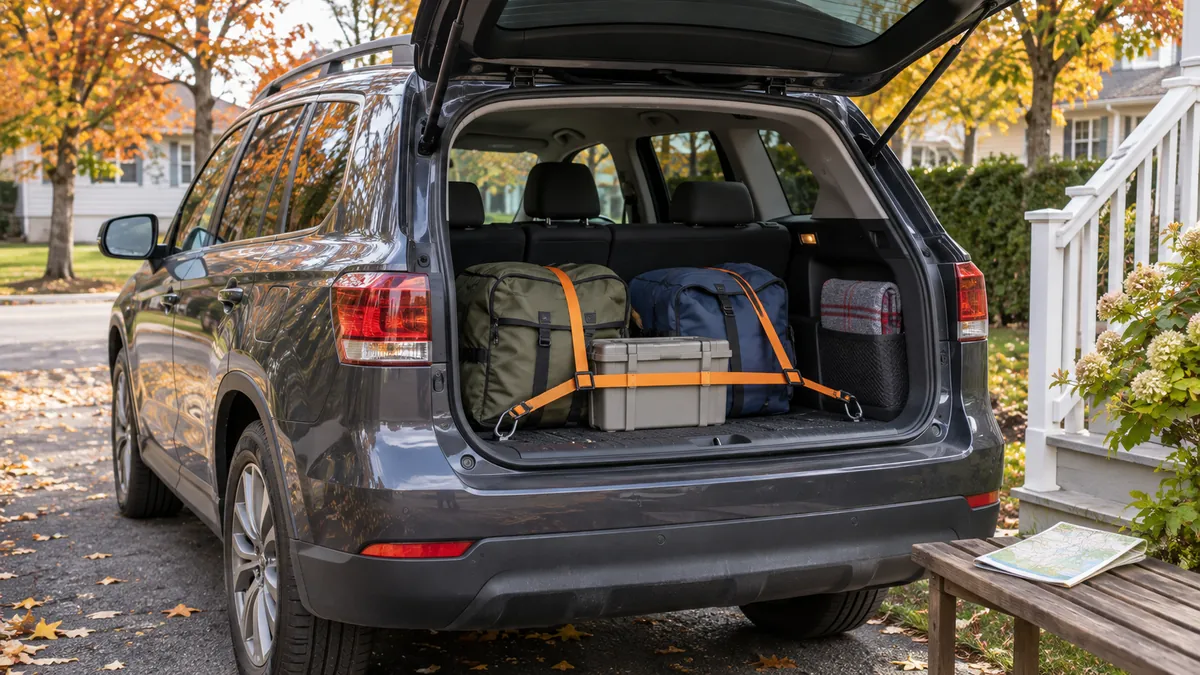
Organize luggage without compromising seats, seat belts, visibility and access to exits. Check the load and stow points. A sleeping arrangement does not replace a place of transport with appropriate restraint.
Ease of maintenance and repair
A common vehicle, with a large network of available parts, will be easier to maintain than a rare or heavily modified model. Reliability is the primary criterion of an evacuation vehicle. A sophisticated but unreliable vehicle is worth less than a perfectly maintained regular model.
Trailer hitch
A trailer adds load, hitch, braking and manoeuvring constraints. It must not be added without compatibility verification or abandoned in such a way as to create a hazard. Evaluate its real usefulness for the route.
Modifications and accessories
Do not use a vehicle or buffalo guard to hit an obstacle or force a passage. Modifications must be compatible with the vehicle and its safety. In the face of blocked access, follow the instructions and look for a safe alternative.
Checklist: What to have on board
This list is in addition to the personal evacuation bag, which must always be present in the vehicle and accessible quickly. It aims to maximize autonomy and the ability to respond to mechanical and logistical contingencies.
Store essential effects so that they are accessible at the right time and retained during the journey. Do not place luggage where it interferes with an airbag, pedals or an exit.
Mobility and fuel
- Adequate amount of fuel or energy under normal conditions; all reserve transport requires appropriate containers and conditions.
- Information on refueling points and alternatives, rather than improvised siphoning.
- Tyres and equipment adapted to the season, the vehicle and the conditions.
- Compatible and used troubleshooting accessories according to instructions; do not improvise a towing.
- Specialized equipment only if it is suitable for the vehicle and you know how to use it safely.
- Pneumatic troubleshooting solution intended for the vehicle, with its tools and limits of use.
- Checking the compatibility and date of any puncture-resistant material; it does not repair all damage.
Mechanics and tools
- Compatible cables or starting device, following the vehicle and manufacturer's instructions.
- Consumables provided by the manufacturer, stored and transported correctly.
- Basic tool kit: pliers, wrenches, screwdriver, utility knife, heavy-duty adhesive tape, clamps
- Spare keys
Communication and food
- Telephone, contacts on paper and means of reception or communication really mastered.
- Electrical adapter compatible with the devices and the capacity of the vehicle socket.
- Charging cable for essential devices
Security and Emergency
- Suitable emergency device, stored in an accessible and safe way; check the windows and functions for which it is intended.
- Fire extinguisher adapted to the vehicle
- Means of signalling appropriate to the context, without exposing yourself on the roadway to install them.
Make vehicle evacuation more efficient
Material preparation is not enough. Several simple practices make it possible to significantly increase the reliability of the vehicle evacuation plan.
- Keep the vehicle in good mechanical condition. Periodic reviews, repairs as needed, and regular verification of levels are fundamental. A poorly maintained vehicle remains a major point of failure, regardless of the quality of the rest of the preparation.
- Test the planned evacuation route. Physically browsing the planned route, ideally in different conditions, allows to identify critical points, possible alternatives and adjustments to be made to the plan or load.
- Check that the intended drivers have the necessary authorization, skills and settings to operate the vehicle.
- Integrate the vehicle in periodic exercises and reviews. The check of the condition of the vehicle and its evacuation equipment must be planned regularly, as well as the revision of the evacuation bag or the family plan.
- Identify fuel refuelling points on the route. In a planned evacuation, knowing in advance which service stations are available and having an alternative plan if they are closed or saturated is a useful precaution.
- Predict the failure of the trip. This may require other transportation, assistance or waiting in a safe place. Walking is not suitable for all people or situations; agree on who to prevent and how to seek help.
Summary
A vehicle can facilitate the movement and transportation of equipment, without replacing a verified destination, contacts and routes. The essential effects, load and assistive solutions must be provided with all occupants.
The ideal evacuation vehicle is not necessarily the most imposing or the most equipped. This is the one that fits your real situation: your geographical environment, the composition of your home, your probable routes and your mechanical skills. Reliability takes precedence over sophistication.
Frequently asked questions
Does a 4x4 have to be used as an evacuation vehicle?
Nope. The vehicle must match the routes and needs. All-wheel drive never justifies crossing a closure, a flooded area or a dangerous passage.
How much extra fuel should I take?
Estimate the route, detours and refueling possibilities. There is no universal quantity to be transported or a doubling rule valid for all. Any storage requires proper storage and transportation; do not store an improvised can in the passenger compartment.
Is the personal evacuation bag necessary if the vehicle is well equipped?
A transportable kit remains useful, adapted to the occupants and the destination. It should not be presented as a 72-hour walking guarantee. Prepare assistance for people who cannot pursue on their own. Predicting mobility needs →
Do you need to change your vehicle to an evacuation vehicle?
Not necessarily. A common, well-maintained vehicle, equipped with the essentials listed in this article and integrated into a thoughtful evacuation plan is often more efficient than a heavily modified vehicle but less reliable or more difficult to repair. Changes can add value, but they also add complexity.
Sources and benchmarks
References for Quebec and Canada. Sources consulted on November 2, 2026.