
In this article
- Factors to consider when completing your evacuation plan
- 1. Regional risk analysis: Anticipating potential disasters
- 2. Self-assessment: Identifying personal strengths and weaknesses
- 3. Variety of destinations: Plan several options
- 4. Determining specific destinations: A psychological and strategic asset
- 5. Estimation of travel speed: A key factor in route planning
- Fine-tuning your evacuation plan: Adapting the plan to everyone’s needs
- Enrichment of your evacuation plan: essential complementary aspects
- Conclusion: Preparation and Reactivity
- Your contribution is valued
- Sources and benchmarks
Preparing an evacuation adapted to your home
An evacuation plan connects the available means to the decisions to be made: when to leave, where to go, how to move and who to prevent. The emergency kit supports this plan; it does not replace the instructions of the authorities or the choice of a safe route.
The choice of the bag, its content and its adaptation to urban or natural environments are components of the preparation. The evacuation plan links them to people, destinations, routes and means of travel. This guide develops this organization and the decisions to be checked before departure.
The next steps range from designing the plan to putting it into practice. The final document must be shared with the persons concerned, accessible and exercised in a safe setting. It is used to decide and communicate, not just to fill out a file.
Review the plan when the risks, routes, people or means available change. A useful preparation remains adaptable and takes into account current instructions; it does not guarantee the absence of danger.
Factors to consider when completing your evacuation plan
1. Regional risk analysis: Anticipating potential disasters
An adapted preparedness begins with a thorough understanding of the risks specific to your region. This crucial step goes beyond simply knowing the history of natural disasters or past incidents. It involves a detailed assessment of potential hazards that could arise in your immediate environment.
Ask yourself some essential questions: Is your area prone to frequent flooding? Is it in an active seismic zone? Have there been any public safety incidents, such as terrorist attacks? Each answer to these questions shapes your evacuation plan, guiding your decisions on which routes to prioritize, which resources to store, and even which readiness skills to develop.
For example, if you live near a major waterway, such as the St. Lawrence River, consider the potential consequences of flooding on your evacuation plans. This could mean developing alternative escape routes, acquiring specific equipment for flooding, or putting in place additional precautionary measures to protect your home and property.
By identifying disasters that are likely to occur in your area, you can develop a targeted and reactive evacuation plan that can effectively protect you from the most likely threats.
2. Self-assessment: Identifying personal strengths and weaknesses
Creating an effective evacuation plan requires honest introspection to identify your personal strengths and weaknesses. This is essential to tailor your plan to your unique capabilities and to address any gaps that could compromise your safety in an emergency.
Start by examining your skills and assets. Do you have any special skills that could be useful in an emergency, such as medical knowledge, guidance skills, or good physical condition? These assets can positively influence your evacuation plan by allowing you to travel longer distances, effectively manage medical emergencies, or carry heavier emergency equipment.
In parallel, identify your weaknesses or gaps in preparation skills. Maybe you need to improve your fire-ignition skills, night navigation skills, or identification of edible plants and wild animals? Recognizing these weaknesses allows you to plan specific trainings or trainings to overcome them. Remember: Skills complement the material, but do not replace essential resources.
This self-assessment process helps customize your evacuation plan based on your actual abilities, increasing your chances of survival and reducing your reliance on potentially bulky equipment.
3. Variety of destinations: Plan several options
Developing a robust evacuation plan involves considering various destinations, depending on the different geographic directions. This strategy offers vital flexibility, allowing you to respond effectively to various crisis scenarios.
Geographical diversity: consider several destinations and directions of retreat when the territory allows it. The four cardinal points – north, south, east and west – can help examine options, without imposing four artificial destinations. A road or place may become unavailable depending on the flood, earthquake or other event; check the instructions and do not cross a hazardous area to reach a planned option.
Adaptability: select each location according to the danger, the route, the accessibility and the actual possibility of reception. An area out of flood zone can be relevant in case of flooding; an underground space is not a universal shelter and can be dangerous in other situations. Distinct evacuation and shelter according to the instructions of the authorities.
Route planning : For each destination, consider several routes. Crisis conditions can make certain paths impassable. Having multiple routes to each destination increases your chances of success and reduces the risk of getting stuck.
4. Determining specific destinations: A psychological and strategic asset
Defining specific destinations helps to organize the trip and communicate the plan. A known place can also reassure some people, without a major psychological effect being guaranteed. Keep a fallback option: knowing where to go does not replace checking the security and opening of the place.
Personal destinations: a second home, the home of a loved one or a camping site can be considered if the reception is allowed, the place accessible and adapted to the danger. Familiarity can facilitate organization and comfort, but does not prove that this place will be safe or available during the event.
Preventive storage: with the agreement of the person in charge of the place, certain supplies can be kept at the destination to limit the loading of the departure. Check their maintenance, expiration and access. Do not make the trip dependent on stocks that could be inaccessible and keep enough to cover the needs of the move.
Public options: If you do not have a personal destination, ask about the places of help and reception indicated by the authorities. A location on a map is not necessarily open or designated for the event. Reception centres can be an appropriate solution; by default they should not be considered inferior to private accommodation. Check accessibility, animals, transport and instructions at the time of departure.
A concrete goal can help explain the plan and maintain common direction. Also plan how to announce a change of destination, as the uncertainty does not entirely disappear. The confidence sought comes from an understood, verified and adaptable plan, rather than a promise of success.
5. Estimation of travel speed: A key factor in route planning
Accurately assessing your travel speed is crucial to developing a realistic and effective evacuation plan. This estimate determines how long it will take you to reach your destination and influences the amount of resources needed along the way.
Factors affecting movement speed :
- Weight of the evacuation bag: the marker of 25% of the body weight evoked historically is not a universal limit of safety. The acceptable load depends on the carrier, the terrain, the duration, its condition and the aids available. A bag that is too heavy can reduce mobility and increase discomfort. Do a progressive test in a safe setting, without trying to reach a percentage, and adapt the material if a pain or difficulty appears.
- Terrain: an illustrative scenario evokes a beach of 3 to 7 km/h on flat ground. This is not a guaranteed reference speed for an evacuation group. Load, pavement, stairs, weather, obstacles and breaks change the real time. Instead, measure your pace in a safe trial and allow for margin. Do not use an average to justify crossing a waterway, closed track or hazardous area.
- Physical condition : Your endurance and fitness directly affect your speed. A physically fit person can cover more ground and support more weight. If necessary, engage in progressive training to improve your physical condition before a possible evacuation.
Development of the route plan :
- Multiple routes : Plan several routes to each destination to adapt to different situations and weather conditions.
- Rest points: plan accessible places to take a break if conditions allow. Identifying them does not guarantee opening, drinking water or the presence of food. Check up front for hospitality opportunities and authorizations, and then keep an alternative and your personal supplies.
- Preparation : Practice traveling distances with your evacuation bag to familiarize yourself with fatigue and weight. This will help you adjust your plan based on your actual abilities.
By taking these factors into account and carefully preparing your itinerary, you increase the chances of a successful evacuation plan. The key is to balance speed with safety and efficiency to ensure that you and your loved ones reach your destination safely.
Fine-tuning your evacuation plan: Adapting the plan to everyone’s needs
When developing an evacuation plan, it is essential to consider the specific needs of each member of your group or family. The presence of seniors, children, or members with special needs requires careful planning to ensure the safety and effectiveness of your plan.
Key points to consider :
- Speed of travel : Adjust the expected travel speed to the pace of the least mobile member of your group. This may involve reducing the distance traveled each day or planning more breaks for rest.
- Alternative routes : Plan several routes to your destination, taking into account the ease of access and security for all members of the group, including children and the elderly.
- Meeting points : Establish clear meeting points in case of separation. Make sure that each member of the group knows where to meet in case of emergency.
- Training and preparation : Encourage all members of the group to participate in evacuation exercises and first aid training. This strengthens the cohesion of the group and prepares everyone to respond effectively in an emergency.
- Specific equipment : Include in your equipment specific items for children and the elderly, such as medications, comfort items, and mobility aids.
- Communication and information : Make sure each member of the group has the necessary information, such as maps, routes, and emergency numbers.
By refining your evacuation plan to accommodate the diversity of your group’s needs, you maximize the chances of a successful and safe evacuation. The goal is to ensure that everyone, regardless of their physical condition or specific needs, can move efficiently and safely to the intended destination.
Enrichment of your evacuation plan: essential complementary aspects
When you’re fine-tuning your evacuation plan, it’s crucial to incorporate additional elements to ensure complete and thoughtful preparation. Here are some aspects to consider :
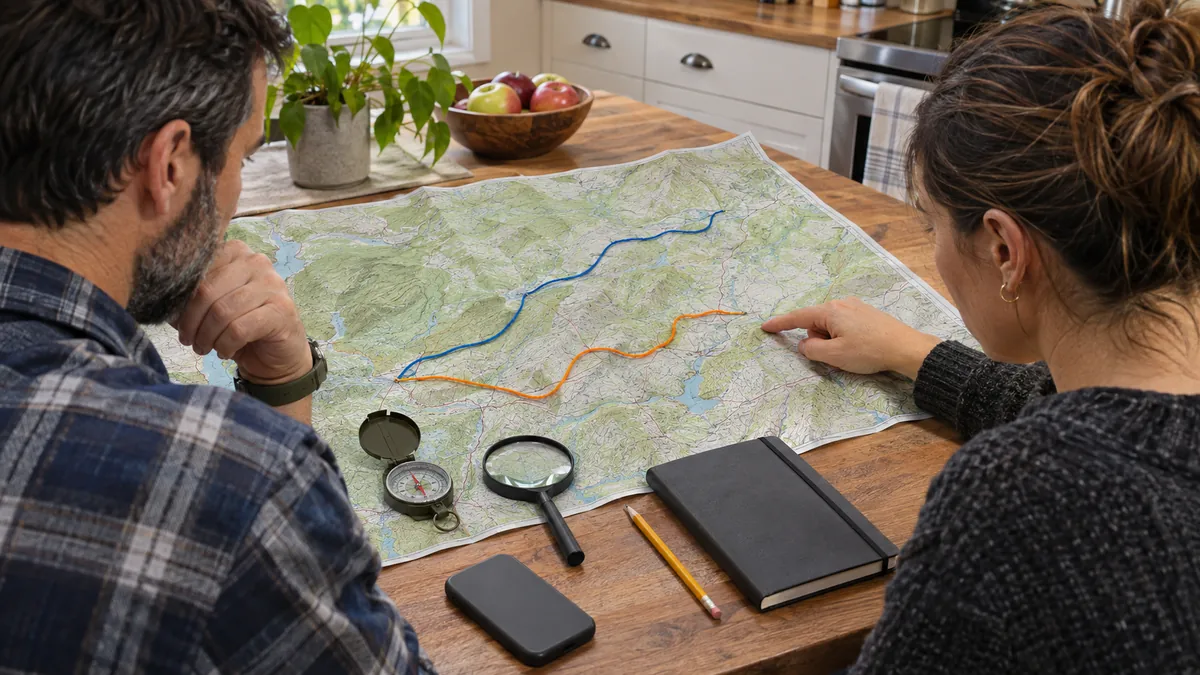
- Strategic Navigation : Use a detailed stratified map with your clearly marked routes and destinations. Identify landmarks and milestones for easy navigation. This allows for better orientation and more efficient navigation in emergency situations.
- Meeting points : Set clear meeting points for your group. This minimizes confusion and ensures an effective meeting in case of separation. Choose places that are easily recognizable and accessible to all members of the group.
- Emergency communication : Prepare a list of emergency numbers, including those from friends, family, and government agencies. This is crucial to maintain contact and receive updates on the situation in real time.
- Practical use of equipment: Learn how to use what you carry, starting with lighting, communication, carrying and small repairs. An axe or crowbar corresponds to particular uses, not to a general ability to build a shelter or force a passage. Their employment requires an authorized context, skills and appropriate protections. A blocked exit or damaged structure may require rescue intervention rather than an improvised test.
- Accommodation planning: anticipate arrival before night when the context allows. The historical landmark of two to three hours before sunset is an illustrative margin, not enough time in any situation. Season, weather, available reception, terrain and group condition must guide the planning. Plan a safe and authorized destination first; do not make bivouac, water or food search a mandatory step in a citizen evacuation.
- Effort management: Energy expenditure varies according to person, load, speed, terrain and duration. The old example of more than 400 calories per hour for a 70 kg person is not a demonstrated individual need. It serves as a reminder that carrying a load can increase the effort. Plan breaks, clean water, and adapted foods; use the energy needs calculator as a planning estimate, not as a medical prescription.
- Periodic review of the plan : Once your evacuation plan is finalized, it is essential to review it regularly. Make sure it remains relevant and effective to evolving threats and changing circumstances.
By integrating these additional aspects, your evacuation plan becomes more robust, responsive and adapted to the realities of the field. This strengthens your preparation and increases your chances of a successful and safe evacuation.
Conclusion: Preparation and Reactivity
Remember, "Only well-prepared minds take advantage of chance." Your preparation today can make all the difference tomorrow.
Your contribution is valued
Which fallback routes and special needs would be worth adding to the plan? A travel experience, an obstacle encountered or a solution tested can be useful to share, without disclosing a private address or sensitive storage. Contributions to the team can be sent via the PrépaCivile contact page.