
In this article
Provide a reserve adapted to the home and distinguish boiling, non-consumption and the limits of domestic treatments.
Understanding Dependence on Services
Tap water depends on collection, treatment and distribution. Failure, breakage or contamination can disrupt some of these services; however, not all failures automatically result in pressure loss or boil-down notices.
Identify your source: municipal network, other network or individual well. Notice who is posting the reviews and how to receive them. A domestic appliance does not dispense from consulting the instructions of the water manager.
Calculate the needs of the home
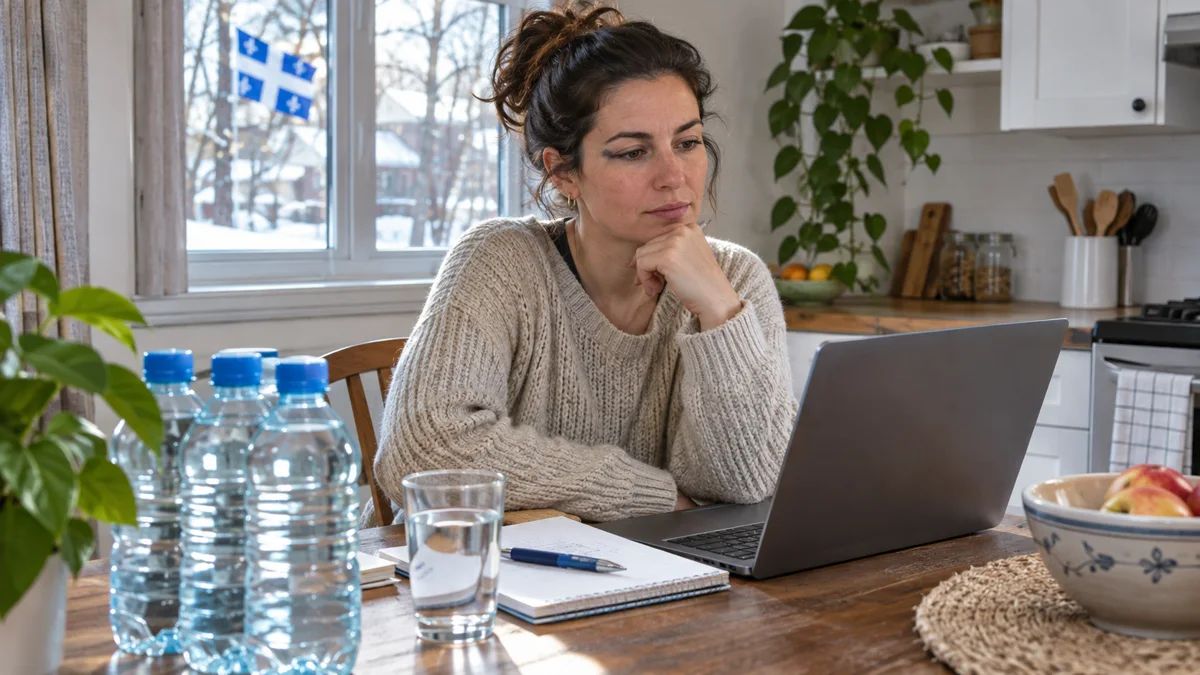
For three days, Quebec recommends providing 6 liters of water per person to drink and 6 additional liters for food and hygiene. This marker must be adapted to people, conditions and animals. It does not include an unlimited usual consumption for domestic purposes.
For four people, this represents 24 liters for drinking and 24 liters for the other needs mentioned over three days. Spread the weight and plan how to get another drinking source if the interruption continues. An inaccessible reserve in a flooded basement does not fulfill its role.
Medical needs, infants or a heat context require special attention. Ask for appropriate advice rather than reducing the supply by relying on food or a universal amount per kilogram for animals.
Store without improvising
Use appropriate, clean and closed drinking water bottles or food containers. Never use containers that contain fuels or chemicals. Follow the container instructions and storage conditions.
Identify the date, protect the storage of heat, gel and chemicals, and arrange the rotation. Appearance, smell or taste do not prove potability. Do not present a shelf life of six to twelve months as a guarantee for all containers.
Read the review before treating the water
A boil notice requires boiling the water at least one minute in large broths before the intended uses. Let it cool safely. The notice may specify uses such as food, ice cubes or brushing teeth.
A non-consumption notice may impose another drinking source. Do not try to bypass it with a filter, pellets or boiling. These processes do not eliminate all contaminants, including chemicals. Restrictions on other uses should be read in the notice.
Wait for the official lift and apply the return to service instructions. The disappearance of a taste or the return of the current is not enough to raise an opinion.
Filters and Alternative Sources: Checking the Limits
A portable filter does not automatically make any surface water potable. Performance depends on the model, contaminants, maintenance and conditions of use. A brand alone does not provide protection against bacteria, viruses and chemicals.
Disinfectants require precise concentration, contact time and conditions. Do not apply a universal recipe of drops of bleach or pellets. Follow the applicable official instructions and those of the product; choose a confirmed drinking source.
Rainwater, snow or a watercourse are not a drinking reserve by default. Clearly separate non-potable water and check for permitted uses. Do not modify an indoor network without complying with applicable requirements.
Well and Reserve Review
For a well, follow the microbiological and chemical analysis recommendations relevant to the context. A common test does not look for all contaminants. After a flood or a worrying change, ask for the appropriate instructions.
Check containers, quantities and contact information during seasonal changes and after any changes to the household. This method combines accessible reserve, reliable information and planned refueling.
Sources and Updates
Documentary verification: November 3, 2026.