
Natural · Risk index 1/9 (Quebec) · 1/9 (France)
Volcano
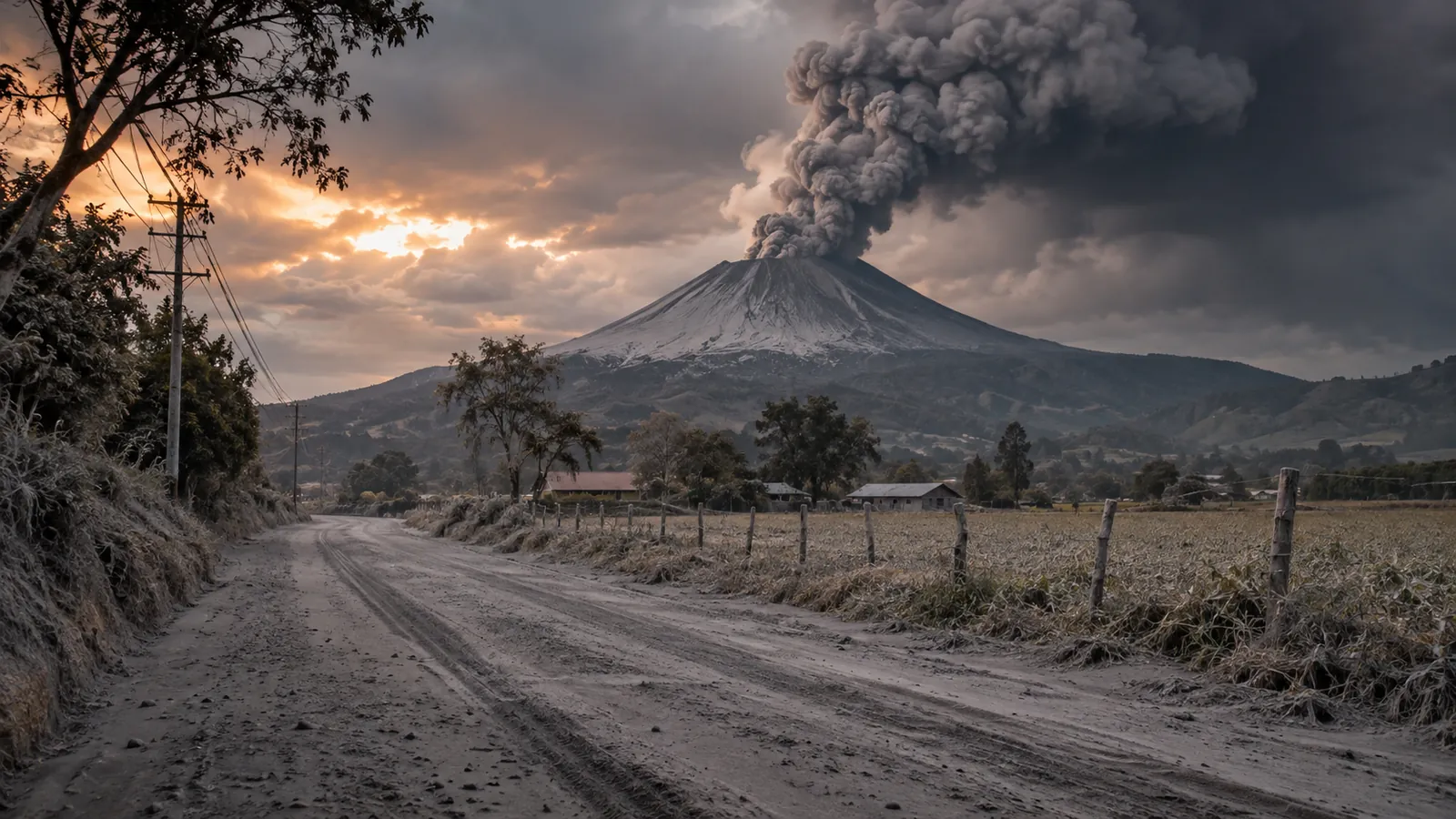
There are no active volcanoes in Quebec or mainland France. But British Columbia, Yukon, the French Caribbean and Réunion have them, and ash from a major eruption can travel thousands of kilometres.
Quebec / Canada
France
If you only do three things
- 1Know the volcano’s alert level if you live or travel near one
- 2Keep masks and goggles for ashfall
- 3Evacuate without delay when authorities ask
Lasting collapse?
Key figures
Rare, but formidable.
Understanding the risk
Flows, surges and ash.
An eruption can produce lava flows, pyroclastic flows (avalanches of hot gas and rock, as at Saint-Pierre in 1902), mudflows, toxic gases and ash plumes. Caribbean volcanoes are explosive; Réunion’s Piton de la Fournaise mostly produces lava flows.
In Canada, all potentially active volcanoes are in British Columbia and Yukon. The Tseax eruption, around 1700, is recorded in Nisga’a oral history. Ash from a large eruption, even far away, can reach areas hundreds or thousands of kilometres away.
Severity
Near the volcano, pyroclastic flows and mudflows are the deadliest phenomena because they move so fast. Preventive evacuation is the only effective protection.
Further away, ash irritates eyes and airways, contaminates water, collapses roofs under its weight and grounds air travel.
In detail
Volcanic phenomena and the right reflex.
| Phenomenon | Danger | Reflex |
|---|---|---|
| Pyroclastic flow | Very fast, scorching, deadly | Evacuate beforehand, when told |
| Lava flow | Slow but destructive | Move away, don’t go to watch |
| Mudflow (lahar) | Fast, follows valleys | Head for high ground, away from rivers |
| Ashfall | Breathing, roofs, water, roads | Stay inside, mask, goggles |
| Volcanic gases | Irritation, suffocation in hollows | Avoid low areas near the volcano |
Assess your exposure
Are you more exposed than average?
Tick what applies to your situation.
Get prepared
Your preparedness checklist
Tick items as you go: your progress is saved on this device.
Suggested kits and plans
Before, during, after
The right actions, before, during and after.
Before
- Alert level known
- Evacuation route
- Masks and goggles
- Bag ready
- Water supplies covered
During
- Evacuate as soon as authorities ask
- Stay away from valleys and rivers
- Stay inside during ashfall
- Wear mask and goggles outside
- Avoid driving in ash
After
- Return only when allowed
- Clear ash from roofs carefully
- Dampen ash before sweeping
- Check water quality
- Watch for breathing problems
In Quebec, Canada and France
What changes depending on where you live.
Quebec / Canada
In Canada, volcanic risk is rare but possible, and concentrated in British Columbia and Yukon. Natural Resources Canada monitors volcanoes; Get Prepared gives general guidance.
- Emergency
- 911
- Monitoring
- Natural Resources Canada
- Guidance
- Get Prepared (Canada.ca)
- Flights
- Your airline
France
In France, IPGP volcano observatories monitor Montagne Pelée, La Soufrière and Piton de la Fournaise. Prefectures set alert levels and organize evacuations.
- Emergency
- 112 or 18
- Monitoring
- IPGP observatories
- Alerts
- Prefecture, FR-Alert
- Information
- Géorisques
Domino effect
This risk often triggers others
Our guides on this topic
Frequently asked questions
Frequently asked questions
Are there volcanoes in Quebec?
No active ones. The Monteregian Hills, like Mount Royal, are ancient magma intrusions extinct for millions of years.
Is ash dangerous?
Yes: it irritates eyes and lungs, especially for people with asthma, and can collapse roofs. Wear a filtering mask and stay inside.
Can eruptions be predicted?
Often, warning signs (earthquakes, ground deformation, gases) appear first. That’s why at-risk volcanoes are monitored constantly.
What if my flight is cancelled due to an eruption?
Follow your airline’s updates and check your travel insurance. Ash is dangerous for aircraft engines.
Sources
Sources
Data checked on November 18, 2026. Figures come from the organizations cited; consult them for updates.
- Outremers360, Deadliest natural disasters in French overseas territories since 1900 (French)
- Natural Resources Canada, Unlocking the secrets of Canadian volcanoes (French)
- Government of Canada, Volcanic activity
- RCI, 50 years after the Soufrière eruption (French)
- RCI, Yellow vigilance at Pelée (French)
This page provides general preparedness information. It does not replace instructions from the authorities: in an emergency, call 911 in Canada or 112 in France.
Start with the basics.
Our free “Be Prepared” guide: 72-hour kit, family plan and your own risk assessment.
Volcano
Index Quebec/Canada 1/9 · France 1/9
If you only do three things
- Know the volcano’s alert level if you live or travel near one
- Keep masks and goggles for ashfall
- Evacuate without delay when authorities ask
During
- Evacuate as soon as authorities ask
- Stay away from valleys and rivers
- Stay inside during ashfall
- Wear mask and goggles outside
- Avoid driving in ash
After
- Return only when allowed
- Clear ash from roofs carefully
- Dampen ash before sweeping
- Check water quality
- Watch for breathing problems
Emergency numbers: 911 (Canada) · 112 (France)
prepacivile.com/en/risks/volcano/