
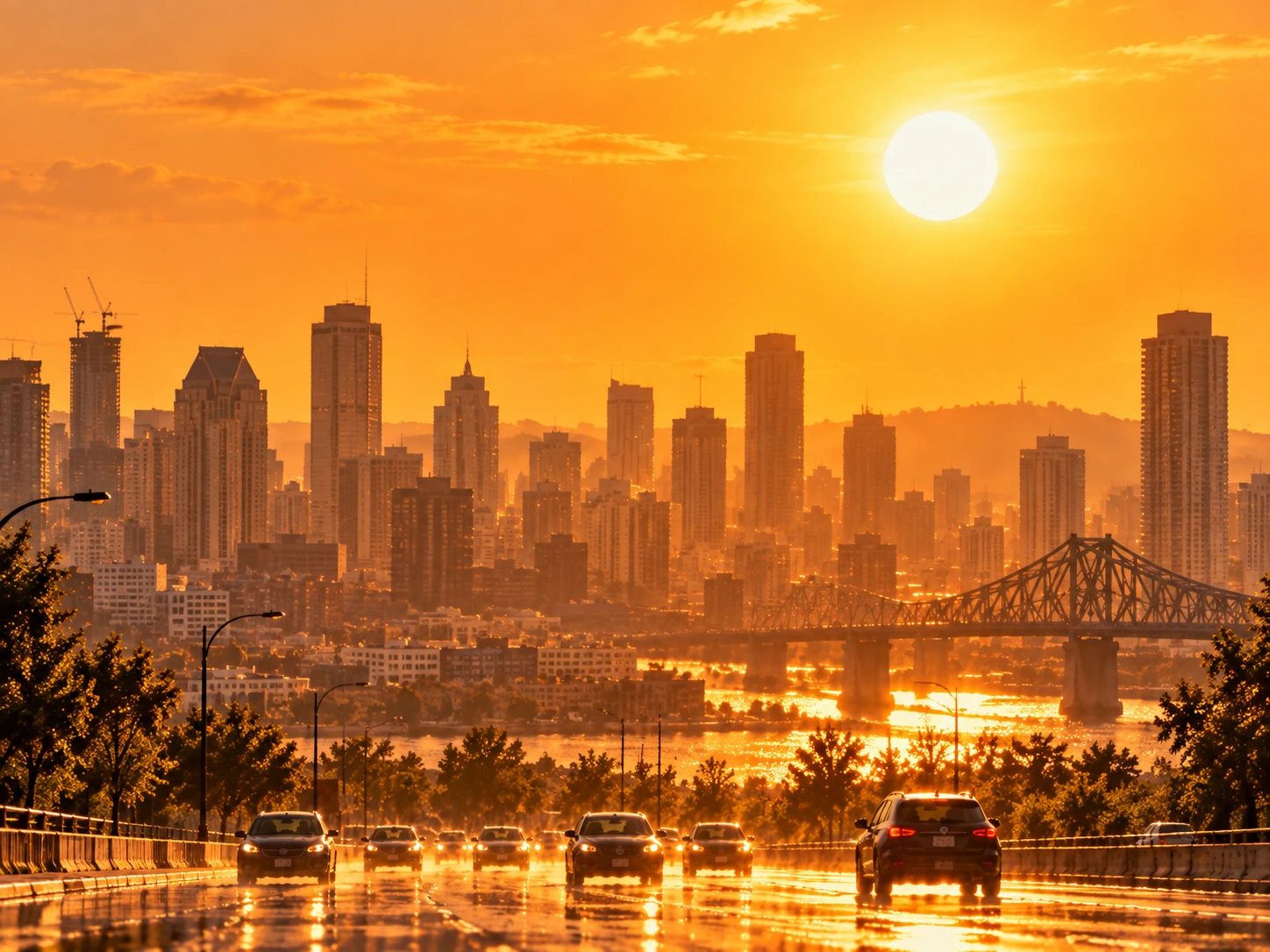
Natural · Risk index 6/9 (Quebec) · 8/9 (France)
Heat wave
Heat makes no noise and destroys nothing. Yet it is one of the deadliest weather phenomena, especially for seniors and sick people living alone.
Quebec / Canada
France
If you only do three things
- 1A cool place you can reach (air-conditioned room, public space) during the hottest hours
- 2Drink regularly and call elderly or isolated relatives every day
- 3Close shutters and curtains by day, ventilate at night
Lasting collapse?
Key figures
A silent killer, on both sides of the Atlantic.
Understanding the risk
Why heat kills silently.
A heat wave is a period of several days when temperatures stay high during the day and do not fall enough at night. It is this lack of night-time relief that exhausts the body: it can no longer get rid of the accumulated heat. Homes, especially poorly insulated upper-floor apartments, turn into ovens.
Big cities amplify the effect: asphalt, concrete and lack of greenery create heat islands where temperatures can be several degrees higher than in green neighbourhoods. Climate change is making heat waves more frequent and intense, in Quebec as in France.
Severity
Heat stroke is a medical emergency: very high body temperature, hot and dry or clammy skin, confusion, headache, nausea, loss of consciousness. Without quick treatment, it can cause death or lasting damage. Heat also worsens heart, respiratory and kidney disease.
Those most at risk are seniors, people living alone, people with chronic or mental illnesses, infants and outdoor workers. In Montreal in 2018, 80% of those who died were at home and two-thirds lived in a heat island.
In detail
Who is most at risk, and what to do?
| Person | Why | Key measure |
|---|---|---|
| Senior, especially living alone | Less sense of thirst, weaker temperature regulation | Daily call, access to an air-conditioned place |
| Chronically ill or on medication | Some medications (diuretics, psychiatric drugs) impair regulation | Ask your pharmacist before summer |
| Baby and young child | Dehydrates quickly, can’t express thirst | Offer drinks often, never leave in a car |
| Outdoor worker or athlete | Physical effort in high heat | Shade breaks, water, adjusted hours |
| Homeless or isolated person | No cool place, little follow-up | Cooling centres, mutual-aid networks |
Assess your exposure
Are you more exposed than average?
Tick what applies to your situation.
Get prepared
Your preparedness checklist
Tick items as you go: your progress is saved on this device.
Suggested kits and plans
Before, during, after
The right actions, from the first hot day to the end of the alert.
Before
- Find a cool place
- Equip your home (blinds, fan)
- Check your medication
- List of people to call
- Alerts on
During
- Drink water regularly, even if not thirsty
- Spend at least a few hours a day somewhere cool
- Close blinds and windows by day, open at night if the air is cooler
- Take cool showers or baths
- Call vulnerable people every day
After
- Keep drinking: the effects of heat can last a few days
- Watch seniors’ condition after the episode
- Note what was difficult in your home
- Plan shading or insulation work
- Review with your family
In Quebec, Canada and France
What changes depending on where you live.
Quebec / Canada
Environment and Climate Change Canada issues heat warnings. Cities, including Montreal, open cooling centres and make check-in calls to vulnerable people during extreme heat.
- Emergency
- 911
- Health
- Info-Santé 811
- Alerts
- WeatherCAN, Environment Canada
- Cool places
- Your municipality
France
In France, Météo-France publishes heat-wave warnings (yellow to red) and the national heat-wave plan is activated every summer. Town halls keep a register of isolated elderly or disabled people, who can sign up to be contacted.
- Medical emergency
- 15 or 112
- Heat-wave helpline
- 0 800 06 66 66 (free)
- Warnings
- Météo-France
- Register
- Your town hall
Domino effect
This risk often triggers others
Frequently asked questions
Frequently asked questions
At what temperature is it a heat wave?
Thresholds vary by region. In Quebec, extreme heat generally means daytime highs above about 30 to 33 °C (86 to 91 °F) with nights not falling below 20 °C (68 °F) for several days. In France, thresholds are set by department.
Is a fan enough?
A fan helps when the air is moderately warm. In extreme heat it only moves hot air around: you then need an air-conditioned place and to cool your body with water.
What should I drink during a heat wave?
Water, regularly, without waiting until you’re thirsty. Avoid alcohol and limit very sugary drinks. People on fluid restrictions should ask their doctor.
Can I leave a child or pet in a car for a few minutes?
No. The temperature in a car in the sun rises very fast and can become deadly within minutes.
Sources
Sources
Data checked on November 18, 2026. Figures come from the organizations cited; consult them for updates.
- Santé publique France, Excess mortality in the August 2003 heat wave (BEH, French)
- Santé publique France, Summer 2023 heat and health report (French)
- Global News, 66 Montrealers died from extreme heat during 2018 heat wave
- Montreal Public Health, 2018 heat wave (French)
This page provides general preparedness information. It does not replace instructions from the authorities: in an emergency, call 911 in Canada or 112 in France.
Start with the basics.
Our free “Be Prepared” guide: 72-hour kit, family plan and your own risk assessment.
Heat wave
Index Quebec/Canada 6/9 · France 8/9
If you only do three things
- A cool place you can reach (air-conditioned room, public space) during the hottest hours
- Drink regularly and call elderly or isolated relatives every day
- Close shutters and curtains by day, ventilate at night
During
- Drink water regularly, even if not thirsty
- Spend at least a few hours a day somewhere cool
- Close blinds and windows by day, open at night if the air is cooler
- Take cool showers or baths
- Call vulnerable people every day
After
- Keep drinking: the effects of heat can last a few days
- Watch seniors’ condition after the episode
- Note what was difficult in your home
- Plan shading or insulation work
- Review with your family
Emergency numbers: 911 (Canada) · 112 (France)
prepacivile.com/en/risks/heat-wave/