
Technological · Risk index 8/9 (Quebec) · 7/9 (France)
Gas leak and carbon monoxide
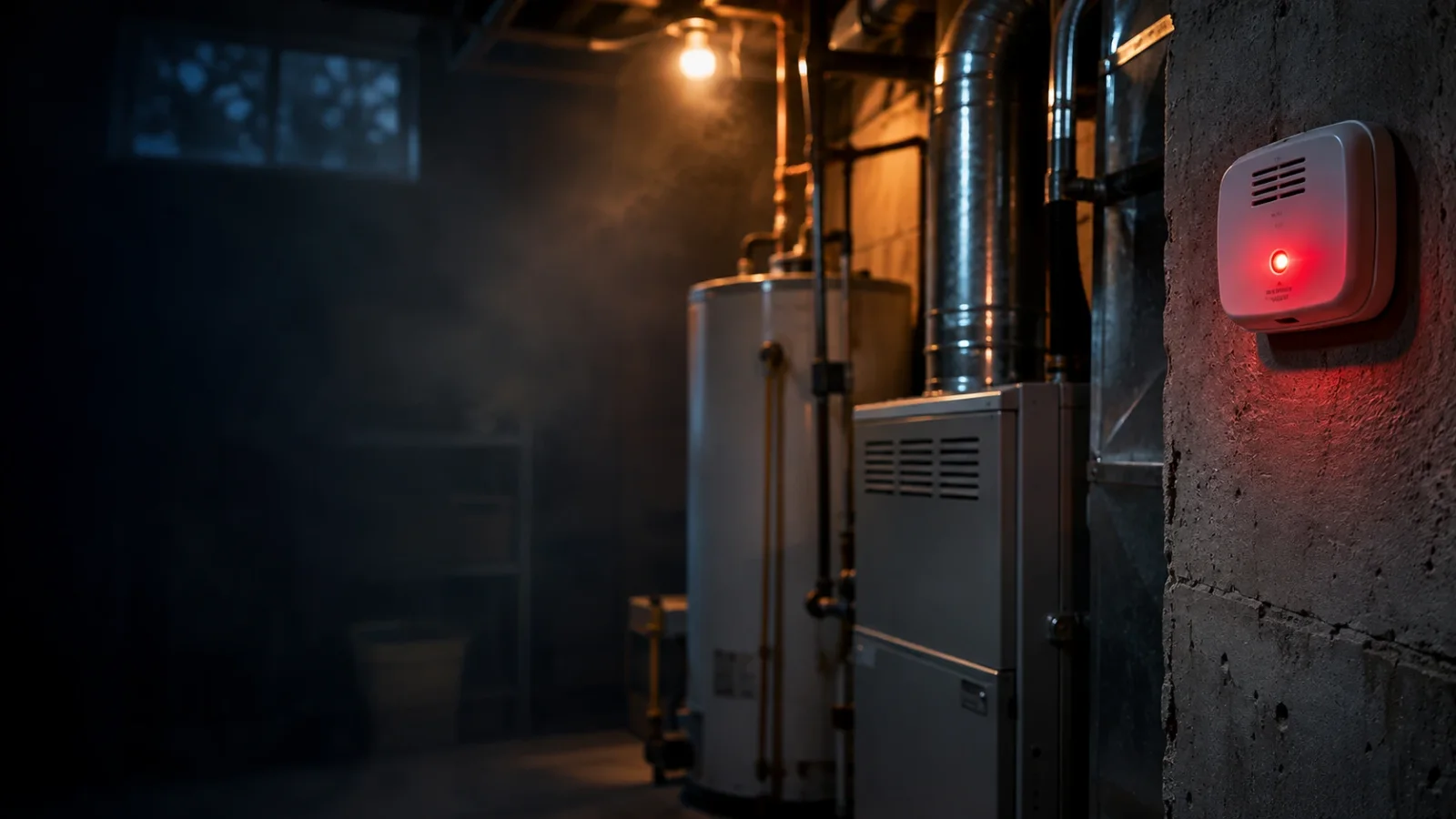
Carbon monoxide is invisible, odourless and deadly. It comes from a poorly adjusted combustion appliance or one used indoors. Natural gas and propane can explode. In both cases, one reflex: get out, then call.
Quebec / Canada
France
If you only do three things
- 1Install a CO alarm on every floor with a bedroom
- 2Never use a generator, barbecue or combustion heater indoors
- 3If you smell gas or the alarm sounds: get out now, call from outside
Lasting collapse?
Key figures
A silent and preventable killer.
Understanding the risk
Two dangers, one reflex.
Carbon monoxide (CO) forms during incomplete combustion: stoves, fireplaces, furnaces, water heaters, generators, barbecues, a car in a garage. It cannot be seen or smelled; only a CO alarm detects it.
Natural gas and propane are odorized (rotten-egg smell) so leaks can be noticed. A spark (switch, doorbell, phone) can trigger an explosion in a room where gas has built up.
Severity
CO causes headaches, nausea and dizziness, then loss of consciousness and death. Several people in the same home, and pets, are often affected at once.
The risk rises in winter and during power outages, when people improvise heating or run a generator.
In detail
What to do depending on the signal.
| Signal | What to do | Avoid |
|---|---|---|
| CO alarm | Get all occupants out, call 911 from outside | Opening windows and staying inside |
| Several people with headaches | Get to fresh air, call poison control or 911 | Assuming it is just the flu |
| Gas smell | Leave without touching switches, call from outside | Looking for the leak with a flame |
| Winter power outage | Generator outdoors, at least 6 m (20 ft) away, far from openings | Heating with a barbecue or camp stove indoors |
| Car in the garage | Back the car out before starting it | Leaving the engine running with the door closed |
Assess your exposure
Are you more exposed than average?
Tick what applies to your situation.
Get prepared
Your preparedness checklist
Tick items as you go: your progress is saved on this device.
Suggested kits and plans
Before, during, after
The right actions, before, during and after.
Before
- CO alarms installed
- Appliances inspected
- Gas valve located
- Generator planned outdoors
- Symptoms known
During
- Get out immediately
- Do not switch anything on or off if you smell gas
- Call from outside
- Count people and pets
- Do not go back in until cleared
After
- Have the faulty appliance repaired
- Get checked even if symptoms fade
- Replace an alarm older than 7 to 10 years
- Air out before re-entering
- Share the experience with loved ones
In Quebec, Canada and France
What changes depending on where you live.
Quebec / Canada
In Quebec, CO poisoning is a reportable disease. Municipalities set the rules on CO alarms; your fire department can tell you which type is required.
- Emergency
- 911
- Poisoning
- Quebec Poison Control Centre 1-800-463-5060
- Gas leak
- Gas utility (Énergir, for example)
- Health
- Info-Santé 811
France
Santé publique France monitors CO poisonings, which are more frequent during the heating season. If you smell gas, GRDF’s gas safety emergency line is available 24/7.
- Emergency
- 18, 15 or 112
- Gas leak
- GRDF gas safety emergency: 0 800 47 33 33
- Poisoning
- Regional poison control centre
- Prevention
- Annual sweeping and servicing
Domino effect
This risk often triggers others
Frequently asked questions
Frequently asked questions
Does a smoke alarm detect CO?
No, unless it is a combined smoke and CO model. Check the label.
Where should the CO alarm go?
On every floor where people sleep, near bedrooms, following the manufacturer’s instructions.
Can I run a generator in the garage with the door open?
No. CO still builds up. The generator must be outdoors, away from doors and windows.
Do symptoms look like the flu?
Yes: headache, nausea, fatigue. If several people have them at the same time, think CO.
365 Program
Prepare for this risk, week by week
Data checked on November 23, 2026. Figures come from the organizations cited; consult them for updates.
Sources
Data checked on November 18, 2026. Figures come from the organizations cited; consult them for updates.
- Public Health Agency of Canada, Carbon monoxide poisonings and injuries
- INSPQ, Deaths related to carbon monoxide poisoning (in French)
- Government of Quebec, Carbon monoxide poisoning (in French)
- Santé publique France, Carbon monoxide poisoning (in French)
- Health Canada, Carbon monoxide poisoning
- Government of Quebec, Fire safety statistics (in French)
This page provides general preparedness information. It does not replace instructions from the authorities: in an emergency, call 911 in Canada or 112 in France.
Start with the basics.
Our free “Be Prepared” guide: 72-hour kit, family plan and your own risk assessment.
Gas leak and carbon monoxide
Index Quebec/Canada 8/9 · France 7/9
If you only do three things
- Install a CO alarm on every floor with a bedroom
- Never use a generator, barbecue or combustion heater indoors
- If you smell gas or the alarm sounds: get out now, call from outside
During
- Get out immediately
- Do not switch anything on or off if you smell gas
- Call from outside
- Count people and pets
- Do not go back in until cleared
After
- Have the faulty appliance repaired
- Get checked even if symptoms fade
- Replace an alarm older than 7 to 10 years
- Air out before re-entering
- Share the experience with loved ones
Emergency numbers: 911 (Canada) · 112 (France)
prepacivile.com/en/risks/gas-leak-carbon-monoxide/