
In this article
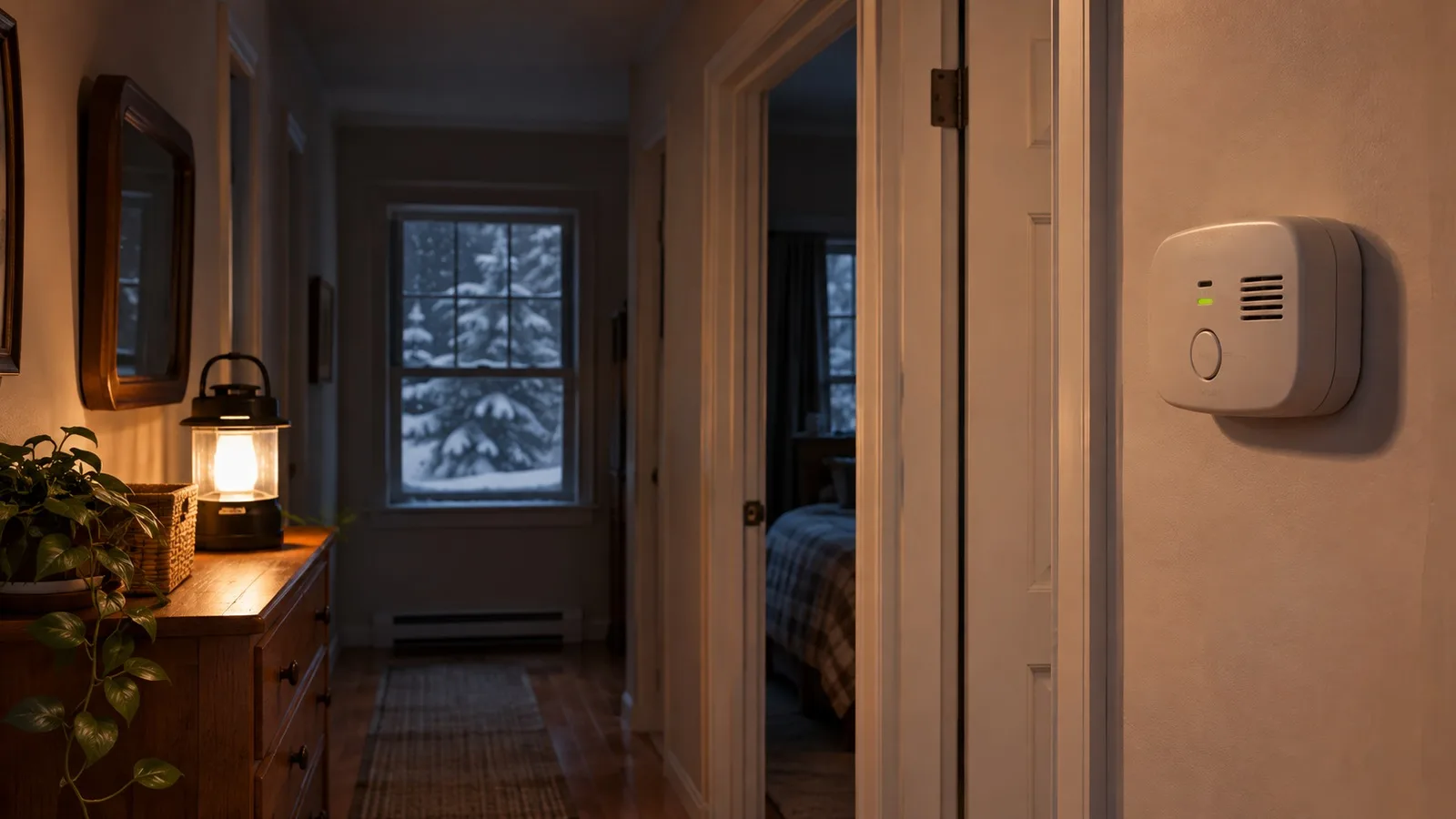
During a power outage, people bring out the generator, the space heater, the camp stove or the barbecue. Each of these burns fuel and can produce carbon monoxide (CO), an invisible gas with no smell and no taste. CO poisonings rise after ice storms, windstorms and long outages, often in homes where nobody noticed anything. A CO alarm that works without electricity is one of the most cost-effective preparedness purchases there is.
In short
In short. Install at least one CO alarm certified for Canada (CSA 6.19 standard) on every level and near bedrooms, powered by batteries or with a battery backup. Test it monthly and replace it on the manufacturer’s date. During an outage, never use a generator, barbecue, camp stove or outdoor heater inside the home, garage or shed, even with the door open. If the alarm sounds or several people have headaches, get everyone out and call 9-1-1 from outside.
Why the risk rises during an outage
CO forms when fuel (gasoline, propane, natural gas, kerosene, wood, charcoal) burns without enough oxygen. In normal times, household appliances are designed and vented to remove it. During an outage, people improvise: they bring an outdoor appliance inside, close everything to keep the heat in, run a generator too close to a window. That is exactly the mix that causes poisonings.
Signs of poor combustion on a flame appliance:
- a yellow or orange flame instead of blue;
- soot or black marks around the appliance;
- a pilot light that keeps going out;
- unusual condensation on windows.
These signs do not replace an alarm: CO can reach dangerous levels with no visible clue at all.
Choosing an alarm that works during an outage
| Type | Works without power? | Keep in mind |
|---|---|---|
| Battery-powered | Yes | The simplest for preparedness; replace batteries as the manufacturer advises. |
| Plug-in with battery backup | Yes, on the battery | Check that the backup battery is installed and charged. |
| Plug-in without battery backup | No | It goes silent exactly when the risk increases. |
| Hardwired to the home’s circuit | Depends on model | Check that each unit has a backup battery. |
| Combination smoke and CO | Depends on power source | Convenient, but both functions often share the same lifespan. |
Choose a unit certified for Canada under CSA 6.19 (or UL 2034 with Canadian certification), ideally with a digital display: it shows a low but rising level before the alarm goes off.
Where to install it
- Near bedrooms, so the alarm wakes people who are asleep;
- on every level, including the basement where the furnace or water heater often sits;
- near the door between the house and an attached garage;
- at the height and distance from appliances given in the manufacturer’s manual: they vary from model to model.
CO alarm requirements vary by municipality and type of dwelling. Check with your local fire department; if you rent, talk to your landlord.
Recognizing poisoning
Early symptoms look like the flu or fatigue: headache, nausea, dizziness, weakness, confusion, drowsiness. Three clues should raise the alarm:
- several people (or pets) are sick at the same time;
- symptoms ease outside and return indoors;
- they appear after a fuel-burning appliance is turned on.
Babies, older adults, pregnant people and people with heart or lung disease are more vulnerable.
If the alarm sounds
- Get everyone, pets included, out into fresh air. Do not look for the source.
- Call 9-1-1 from outside, even if nobody has symptoms.
- Do not go back in until firefighters or a professional say it is safe.
- Have the appliance involved inspected before using it again.
The rules during an outage
- Generator: outdoors only, away from doors, windows and air intakes. Several health agencies recommend at least 6 m (20 ft). Never in the garage, even with the door open. See our generator guide.
- Barbecue, camp stove, outdoor propane heater: never indoors, nor in a tent, closed trailer or shed. See portable stoves.
- Kerosene heater approved for indoor use: follow the manual strictly, ventilate and keep an alarm nearby. See our article on kerosene heaters.
- Car: never run it in a garage, even to warm up or charge a phone. After a snowstorm, clear the tailpipe before starting it.
- Fireplace and wood stove: chimney swept, damper open, never charcoal indoors.
Maintenance
- Test the alarm monthly with the test button.
- Replace batteries as the manufacturer advises, and as soon as it chirps for low battery.
- Write the installation date on the unit in pencil; replace it at the end of its stated life (often 7 to 10 years).
- Keep spare batteries in your outage kit.
Key points
- EquipA CSA 6.19 alarm, battery-powered or with battery backup, on every level and near bedrooms.
- PreventGenerators, barbecues and outdoor stoves: never in the house, garage or a tent.
- ReactAlarm or symptoms: everyone out, then 9-1-1 from outside.
Frequently asked questions
Does my smoke alarm detect CO?
No, unless it is a combination unit clearly labelled “smoke and CO”. Check the label.
My home is all-electric: do I need a CO alarm?
Yes if you have an attached garage, a fireplace, or plan to use a fuel-burning appliance during an outage. In practice, that covers most prepared households.
Is an open window enough with an outdoor appliance?
No. Ventilation does not make indoor use of an outdoor appliance safe.
Disclaimer. This article provides general prevention information. Always follow your appliance manuals and your fire department’s guidance. If you have symptoms, call 9-1-1 or your provincial health line (8-1-1 in Quebec).
Sources
- Health Canada, information on carbon monoxide and CO alarms.
- Government of Quebec (Québec.ca), carbon monoxide poisoning: prevention and symptoms.
- Canadian Standards Association (CSA), CSA 6.19 standard for residential carbon monoxide alarms.
Go further: the Power outage fact sheet and the emergency equipment builder.