
Technological · Risk index 5/9 (Quebec) · 6/9 (France)
Supply chain disruption
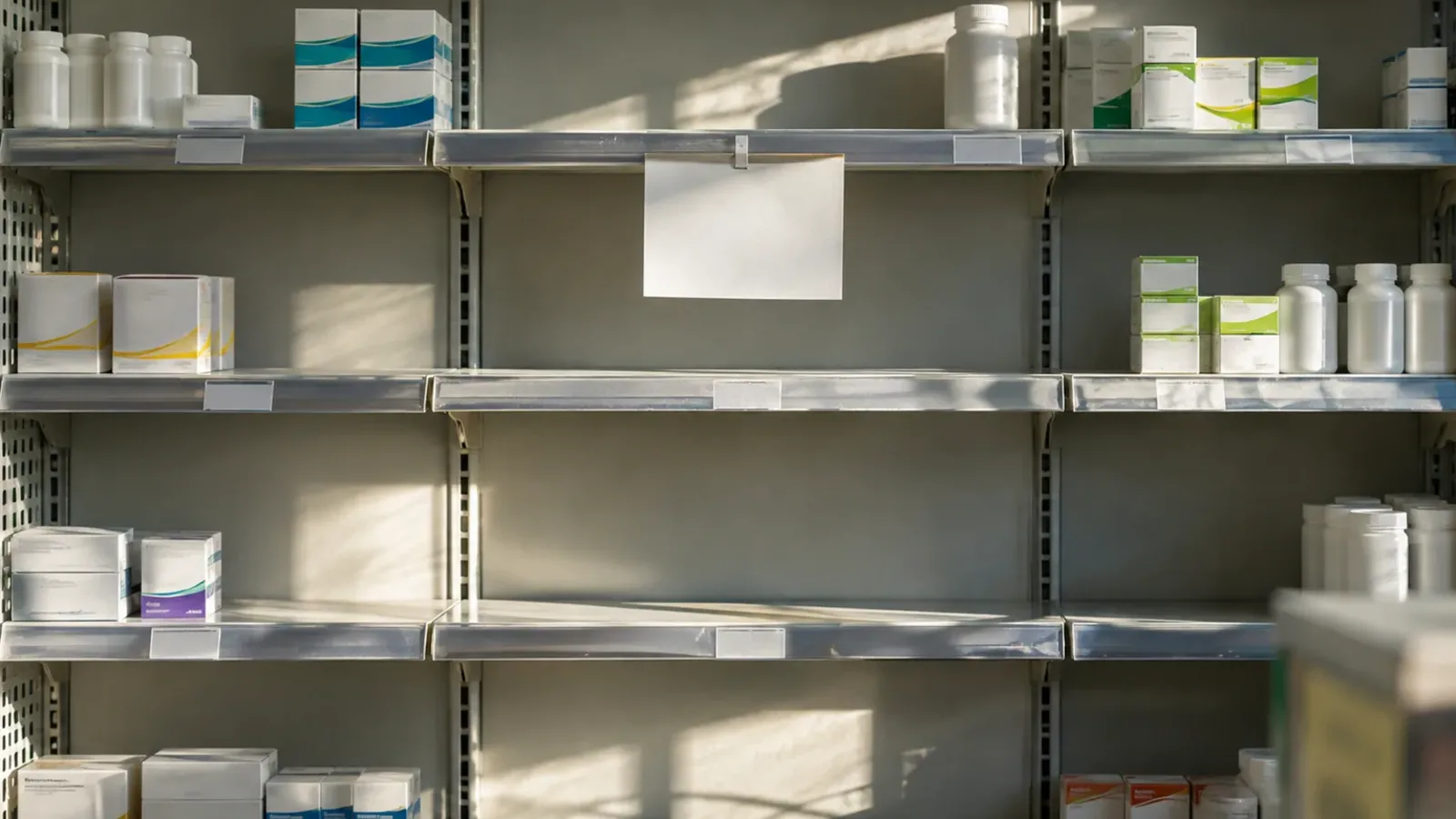
A cut road, a strike, a cyberattack or an international crisis can empty shelves or gas stations within days. Shortages rarely last long, but they hit people with no reserves first.
Quebec / Canada
France
If you only do three things
- 1Keep a rotating stock of food and water for at least 7 days
- 2Keep the car’s tank at least half full
- 3Do not give in to panic buying, which creates the shortage
Lasting collapse?
Key figures
Shelves that empty within days.
Understanding the risk
A supply chain stretched to the limit.
Stores run on just-in-time logistics: they keep little stock and rely on daily deliveries. When a link breaks (road, port, refinery, carrier, IT system), shelves empty quickly, all the more if people panic-buy.
In November 2021, floods in British Columbia cut roads and rail lines to the Port of Vancouver. In October 2022, in France, a refinery strike left up to a third of gas stations without fuel.
Severity
Most disruptions are partial and temporary. They become serious for people who depend on a specific product (medication, infant formula, fuel to get to work or heat the home).
Households with no reserves or financial margin are hit first.
In detail
What to do depending on the shortage.
| Shortage | What to do | Avoid |
|---|---|---|
| Fuel | Limit trips, carpool, work from home | Storing gasoline in unapproved containers |
| Food | Use your stock, cook simply, share with neighbours | Panic-buying unnecessary quantities |
| Medication | Talk to your pharmacist, do not stop a treatment | Buying unverified medication online |
| Baby products | Contact your local health centre or pharmacist | Making homemade formula |
| Electronic payments down | Pay cash | Carrying all your money on you |
Assess your exposure
Are you more exposed than average?
Tick what applies to your situation.
Get prepared
Your preparedness checklist
Tick items as you go: your progress is saved on this device.
Suggested kits and plans
Before, during, after
The right actions, before, during and after.
Before
- Rotating stock in place
- Tank half full
- Cash on hand
- Medication in reserve
- List of specific needs
During
- Use your stock without panicking
- Limit trips
- Buy only what you need
- Share with neighbours
- Get information from reliable sources
After
- Rebuild the stock gradually
- Note what ran out
- Adjust quantities
- Thank and maintain your mutual aid network
- Review your budget
In Quebec, Canada and France
What changes depending on where you live.
Quebec / Canada
In Canada, governments coordinate supply chain recovery during crises, as in British Columbia in 2021. Municipalities and community organizations support households in difficulty.
- Emergency
- 911
- Food assistance
- 211 (community services)
- Medication
- Your pharmacist
- Health
- Info-Santé 811
France
In France, the state can release strategic fuel reserves and requisition depots, as in 2022. Prefectures can limit purchases at gas stations.
- Emergency
- 112
- Information
- Prefecture, prix-carburants.gouv.fr
- Assistance
- Your commune’s CCAS
- Medication
- Your pharmacist
Domino effect
This risk often triggers others
Frequently asked questions
Frequently asked questions
Is stockpiling hoarding?
No, if you build it gradually in normal times. Mass buying in the middle of a crisis is what worsens shortages.
What reserve should I aim for?
First 72 hours, then 7 days, then 30 days, at the pace your budget allows.
Can I store gasoline?
In small amounts, in approved containers, away from the house and according to local rules. Rotate the stock.
What if an essential product runs out?
Talk to your pharmacist or local health centre for health products; look for a safe substitute rather than a homemade solution.
365 Program
Prepare for this risk, week by week
Data checked on November 23, 2026. Figures come from the organizations cited; consult them for updates.
Sources
Data checked on November 18, 2026. Figures come from the organizations cited; consult them for updates.
- AFP, 2022 fuel shortage (in French)
- Transport Canada, B.C. supply chain recovery
- Statistics Canada, Unexpected $500 expense
- CBC News, Port of Vancouver cut off, November 2021
This page provides general preparedness information. It does not replace instructions from the authorities: in an emergency, call 911 in Canada or 112 in France.
Start with the basics.
Our free “Be Prepared” guide: 72-hour kit, family plan and your own risk assessment.
Supply chain disruption
Index Quebec/Canada 5/9 · France 6/9
If you only do three things
- Keep a rotating stock of food and water for at least 7 days
- Keep the car’s tank at least half full
- Do not give in to panic buying, which creates the shortage
During
- Use your stock without panicking
- Limit trips
- Buy only what you need
- Share with neighbours
- Get information from reliable sources
After
- Rebuild the stock gradually
- Note what ran out
- Adjust quantities
- Thank and maintain your mutual aid network
- Review your budget
Emergency numbers: 911 (Canada) · 112 (France)
prepacivile.com/en/risks/supply-disruption/