
In this article
Knowing your consumption helps to prepare a reserve and reduce losses. The goal is not to train to run out of water, food or care. A family plan must maintain basic needs and provide assistance when resources are no longer sufficient.
Measure before reducing
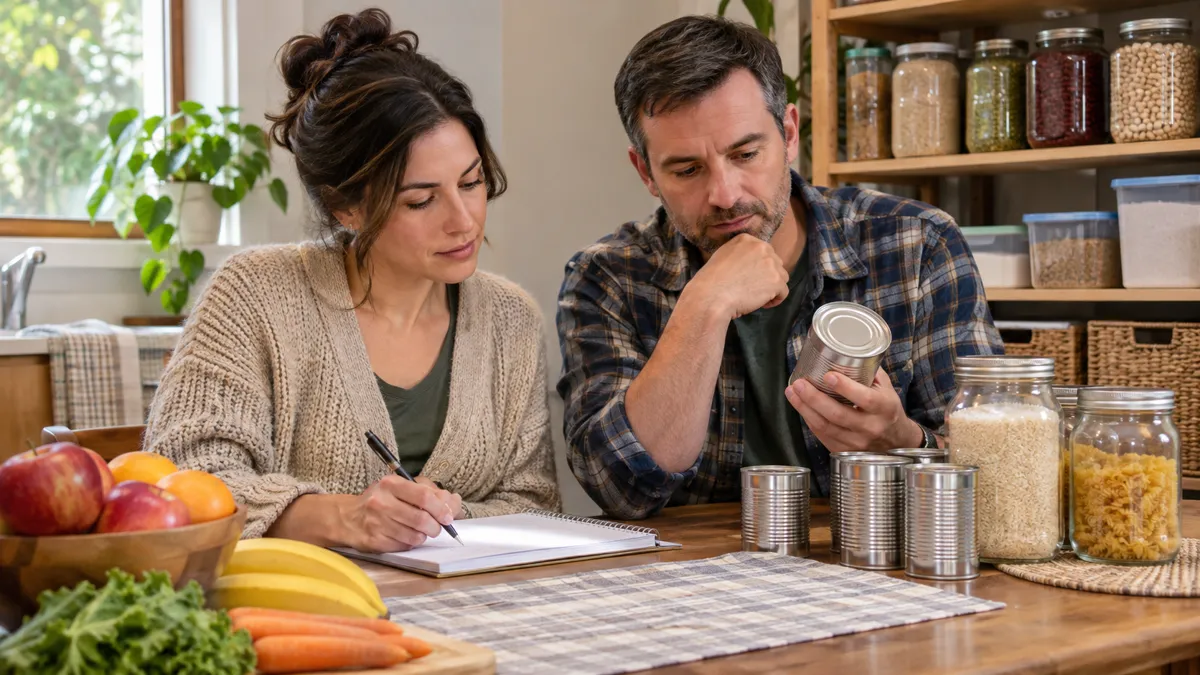
Start with an inventory: quantities, dates, storage conditions, uses and people involved. Distinguish necessary consumption from avoidable waste. A leak of water, a forgotten food at the bottom of a storage or a product bought in duplicate can be corrected without reducing the coverage of needs.
For food, a weight does not sum up a meal. Calories, protein, variety, allergies, cooking and individual needs matter. A child, a sick person or a pregnant person must not follow an arbitrary reduction threshold.
Turning a stock into portions, not a promise of survival
The basic calculation is: quantity available divided by quantity used per serving. It only informs about this ingredient. Ten kilograms of rice alone is not a complete diet for 100 days.
| Stock of a dry ingredient | Quantity per serving | Theoretical number of servings |
|---|---|---|
| 10 kg | 100 g | 100 |
| 10 kg | 75 g | About 133 |
| 10 kg | 50 g | 200 |
These numbers illustrate a division and not a recommendation of portions or duration of autonomy. They do not take into account losses, cooking, other foods or nutritional needs. Reducing a serving to increase the number of days does not guarantee that the meal is sufficient.
A kitchen scale can help to check the quantities of a recipe and stocks; choose a suitable capacity and accuracy, and then use measurements that are actually observed.
Protecting essential needs
Do not voluntarily limit hydration to test a reserve. Provide drinking water, meals, hygiene, animals and special needs. A humanitarian marker or domestic average is not an individual prescription.
For care, do not space out any treatment or use of essential materials in order to “hold on longer.” Agree on a continuity solution with the professionals concerned. If the needs can no longer be insured, look for a supply or hospitality solution rather than waiting for exhaustion.
Saving without compromising hygiene
Observe the consumption of soap, paper and supplies according to actual uses. Alternatives must be suitable for the person, access to water and management of cleaning and waste. A fixed reduction of 50% is not a relevant health target.
Prepare suitable formats, keep labels and avoid spills that create confusion. Do not reduce a concentration or contact time prescribed for a disinfectant to save money.
Energy: measuring the use of the device
The duration of a fuel bottle depends in particular on the burner, setting and conditions. There is no universal continuous cooking time for a 20 pound bottle. Consult the package leaflet and check its use under normal and authorised conditions.
Stoves and barbecues designed for the outside stay outside, away from openings. Don’t schedule a week of deprivation or a general cut to test your home. A task-limited exercise is easier to frame.
Building a useful family picture
| Resource | Available | Use really observed | Next action |
|---|---|---|---|
| Usual foods | Quantity and dates | Meals and home needs | Rotation or adapted complement. |
| Water | Usable volume | Special uses and needs | Complete and confirm access. |
| Lighting | Appliances and power supply | Modes of use | Test or renew batteries. |
| Hygiene | Products and conditions | Individual Uses | Plan for renewal. |
Discuss the picture without blaming people. Health and accessibility needs are not a waste. Break down tasks realistically and confirm who can help.
An exercise without deprivation
For a week, pick up a regular intake, spot an avoidable loss and test a correction that doesn’t decrease essential needs. Compare the result, then adjust the reserve. Do not impose consumption levels of 70%, 50% or 30% without a suitable basis.
The preparation aims at a better knowledge of the needs, a useful rotation and confirmed relays. It must make life more sustainable, without turning hunger, dehydration or imposed discomfort into proof of resilience.