
Malicious acts and conflict · Risk index 2/9 (Quebec) · 2/9 (France)
Chemical attack
A chemical attack shows within seconds or minutes: people coughing, collapsing, an unusual smell. The right reflex is to move away quickly, get to fresh air and decontaminate.
Quebec / Canada
France
If you only do three things
- 1Move away immediately, toward fresh air and upwind
- 2Remove exposed clothing and wash with soap and water
- 3Call 911, 18 or 112 and follow instructions
Lasting collapse?
Key figures
A precedent in the subway.
Understanding the risk
Immediate effects.
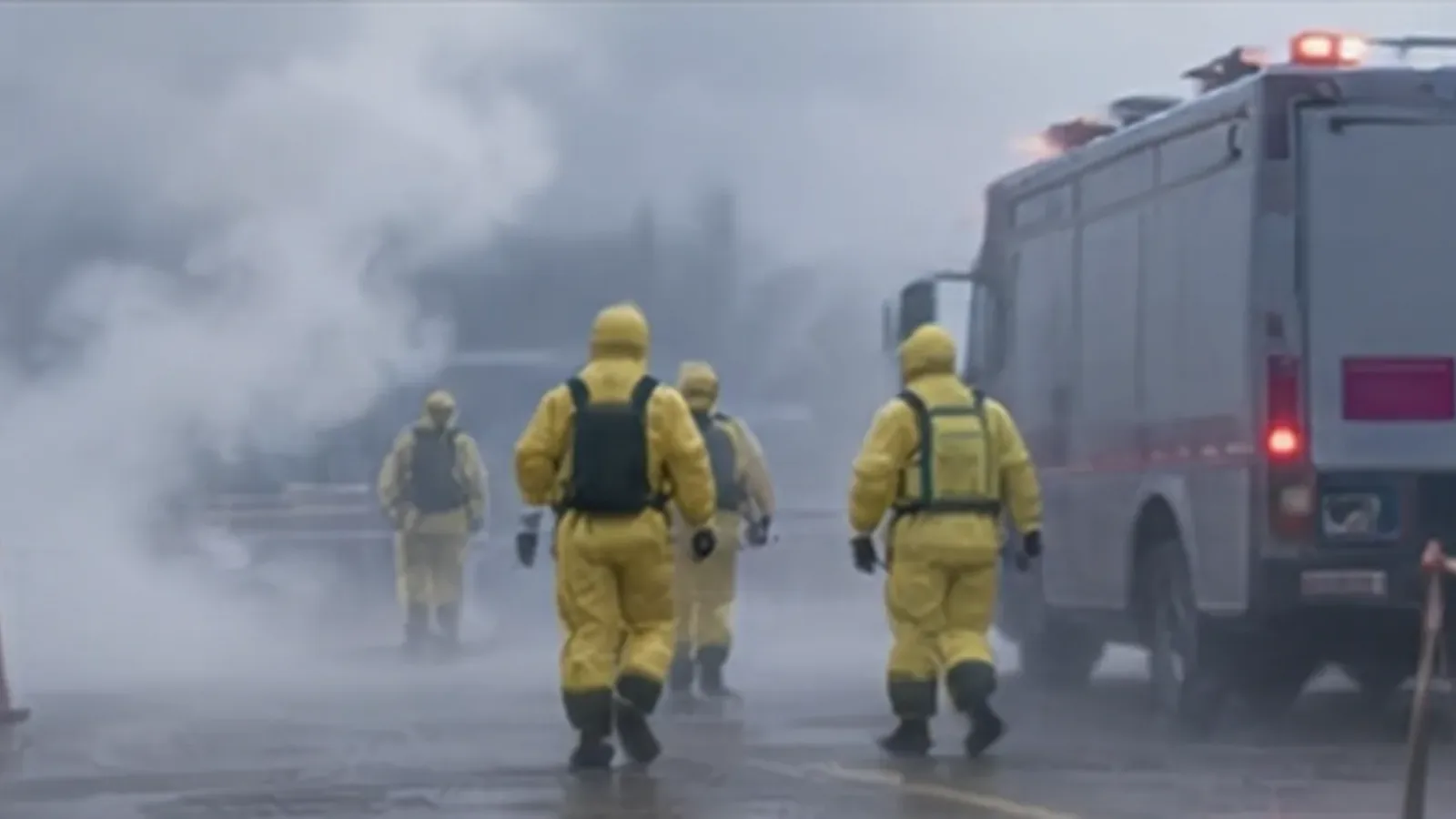
A chemical attack is the deliberate release of a toxic substance: nerve, choking, irritant or blister agent. It usually targets a busy enclosed place, like a subway, hall or mall.
Signs appear fast and affect several people at once: stinging or watering eyes, coughing, trouble breathing, vomiting, convulsions, people collapsing, sometimes a smell or visible cloud. Dead birds or animals can also be a warning.
Severity
Severity depends on the product, dose and exposure time. Getting out quickly and decontaminating greatly reduces effects.
Responders apply special decontamination procedures before treating victims. Cooperating with these instructions also protects caregivers and loved ones.
In detail
Warning signs and the right reflex.
| Sign | What it may mean | Reflex |
|---|---|---|
| Several people coughing or collapsing | Toxic product in the air | Leave the area immediately |
| Burning, watering eyes | Irritant or nerve agent | Rinse eyes, get to fresh air |
| Unusual smell, cloud or mist | Product being released | Move away upwind |
| Oily liquid on surfaces | Persistent agent | Don’t touch, alert |
Assess your exposure
Are you more exposed than average?
Tick what applies to your situation.
Get prepared
Your preparedness checklist
Tick items as you go: your progress is saved on this device.
Suggested kits and plans
Before, during, after
The right actions, before, during and after.
Before
- Exits spotted
- Sealing kit
- Ventilation known
- Poison control noted
- First aid learned
During
- Leave toward fresh air
- Cover nose and mouth with cloth
- Touch nothing, don’t eat or drink
- Alert emergency services
- If the agent is outside: go in and seal
After
- Remove and bag exposed clothing
- Wash with soap and water, rinse eyes
- Follow responders’ decontamination instructions
- See a doctor even without symptoms
- Report anyone affected
In Quebec, Canada and France
What changes depending on where you live.
Quebec / Canada
In Quebec, hazardous materials sheltering and evacuation instructions also apply to a chemical attack. The Quebec Poison Control Centre answers 24/7.
- Emergency
- 911
- Poisoning
- Quebec Poison Control Centre
- Health
- Info-Santé 811
- Alerts
- Québec En Alerte
France
In France, official guidance for toxic products says to move away, shelter and call 18 or 112, or 15 for SAMU. The NRBC plan organizes the emergency response.
- Fire service
- 18 or 112
- SAMU
- 15
- Poisoning
- Poison control centre
- Alerts
- FR-Alert
Domino effect
This risk often triggers others
Frequently asked questions
Frequently asked questions
Does a cloth mask protect?
Very little: it may help you get out, but doesn’t filter gases. The priority is getting to fresh air.
Should I go up or down?
Many toxic gases are heavier than air: go higher and avoid basements, unless told otherwise.
Why remove clothing?
It can hold much of the product. Removing it and washing greatly reduces exposure.
Can I help a victim?
Only without exposing yourself. Otherwise, move away, alert and tell responders where victims are.
Sources
Sources
Data checked on November 18, 2026. Figures come from the organizations cited; consult them for updates.
- History.com, Nerve gas attack on Tokyo subway
- French government, Reacting to a terrorist attack and toxic products (French)
- Government of Quebec, Hazardous materials accident (French)
This page provides general preparedness information. It does not replace instructions from the authorities: in an emergency, call 911 in Canada or 112 in France. If exposed, see a health professional even without visible symptoms.
Start with the basics.
Our free “Be Prepared” guide: 72-hour kit, family plan and your own risk assessment.
Chemical attack
Index Quebec/Canada 2/9 · France 2/9
If you only do three things
- Move away immediately, toward fresh air and upwind
- Remove exposed clothing and wash with soap and water
- Call 911, 18 or 112 and follow instructions
During
- Leave toward fresh air
- Cover nose and mouth with cloth
- Touch nothing, don’t eat or drink
- Alert emergency services
- If the agent is outside: go in and seal
After
- Remove and bag exposed clothing
- Wash with soap and water, rinse eyes
- Follow responders’ decontamination instructions
- See a doctor even without symptoms
- Report anyone affected
Emergency numbers: 911 (Canada) · 112 (France)
prepacivile.com/en/risks/chemical-attack/