
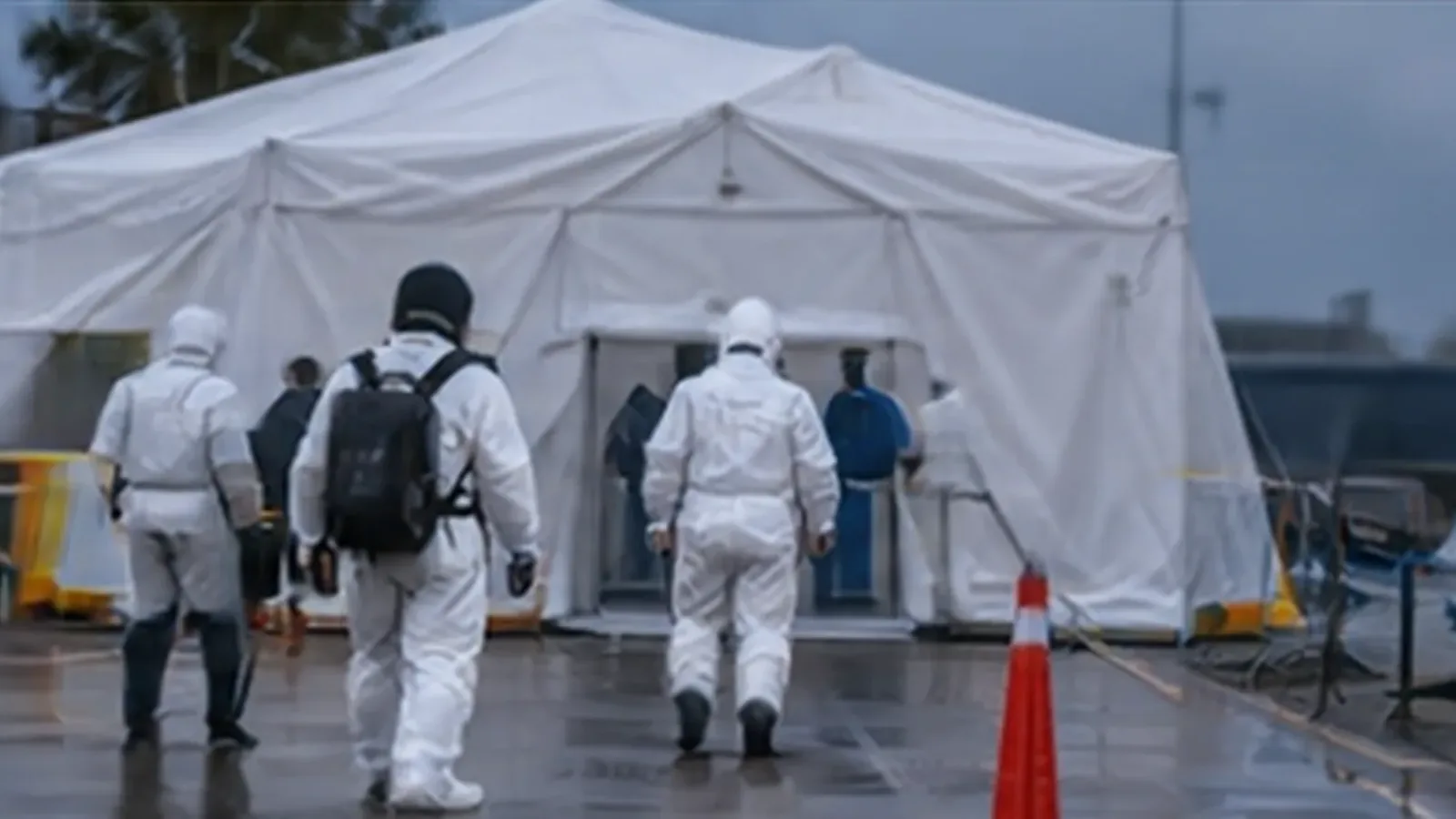
Malicious acts and conflict · Risk index 2/9 (Quebec) · 2/9 (France)
Biological attack
A biological attack makes no noise: it often shows up as patients flooding hospitals days later. Protective steps resemble those for an epidemic, with one golden rule: follow public health.
Quebec / Canada
France
If you only do three things
- 1Follow public health instructions immediately
- 2Don’t touch a suspicious powder or object, move away and alert
- 3Keep your family’s medical history to get treated quickly
Lasting collapse?
Key figures
A precedent that left a mark.
Understanding the risk
An invisible, delayed threat.
A biological attack is the deliberate release of bacteria, viruses or toxins to make people sick. It can spread through air, water, food or mail. Unlike a chemical attack, its effects often appear after an incubation period of several days.
Detection relies on doctors, laboratories and health surveillance systems, which spot unusual cases. Authorities then organize distribution of treatments or vaccines, sometimes at dedicated distribution centres.
Severity
Severity depends on the agent, how it’s spread and how fast people are treated. For anthrax, for example, getting antibiotics quickly is decisive.
Some agents are contagious and can spread person to person: pandemic measures (isolation, hygiene, masks) then become essential.
In detail
Biological or chemical: what sets them apart.
| Biological | Chemical | |
|---|---|---|
| Symptom delay | Hours to several days | Seconds to minutes |
| Detection | Hospitals, labs, surveillance | Immediate symptoms on site |
| Contagion | Possible depending on agent | No |
| Response | Treatment, vaccines, isolation | Evacuation or shelter, decontamination |
Assess your exposure
Are you more exposed than average?
Tick what applies to your situation.
Get prepared
Your preparedness checklist
Tick items as you go: your progress is saved on this device.
Suggested kits and plans
Before, during, after
The right actions, before, during and after.
Before
- Medical history
- Two weeks of supplies
- Vaccines up to date
- Masks and hygiene
- Alerts on
During
- Follow public health instructions
- Move away from suspicious substances and alert
- Wash hands with soap
- Go to the distribution centre if asked
- Take the full course of treatment
After
- Watch for symptoms
- Call before going to the ER
- Respect any isolation requested
- Clean as instructed
- Look after your mental health
In Quebec, Canada and France
What changes depending on where you live.
Quebec / Canada
In Canada, the Public Health Agency of Canada and provincial authorities coordinate responses to biological threats. In Quebec, Info-Santé 811 guides concerned residents.
- Emergency
- 911
- Health
- Info-Santé 811
- Alerts
- Alert Ready
- Information
- Québec.ca
France
In France, the government’s NRBC plan organizes the response to nuclear, radiological, biological and chemical threats. Santé publique France monitors diseases.
- Emergency
- 15, 17 or 112
- Surveillance
- Santé publique France
- Alerts
- FR-Alert
- Information
- Prefecture
Domino effect
This risk often triggers others
Frequently asked questions
Frequently asked questions
Should I stockpile antibiotics?
No. Treatment depends on the agent, and authorities distribute it when needed. The wrong antibiotic can be useless or dangerous.
Does a mask help?
A well-fitted mask reduces risk from an agent spread through the air. Follow public health advice.
How would I know there was an attack?
Through authorities, often after unusual cases are detected. Beware of rumours and rely on official channels.
What if I was exposed?
Follow instructions: washing, changing clothes, preventive treatment at a distribution centre. Don’t go to the ER without calling first, unless life-threatening.
Sources
Sources
Data checked on November 18, 2026. Figures come from the organizations cited; consult them for updates.
This page provides general preparedness information. It does not replace instructions from the authorities: in an emergency, call 911 in Canada or 112 in France. This fiche does not replace medical advice. Always follow public health authorities’ instructions.
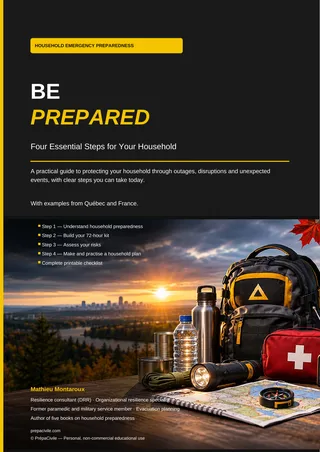
Start with the basics.
Our free “Be Prepared” guide: 72-hour kit, family plan and your own risk assessment.
Biological attack
Index Quebec/Canada 2/9 · France 2/9
If you only do three things
- Follow public health instructions immediately
- Don’t touch a suspicious powder or object, move away and alert
- Keep your family’s medical history to get treated quickly
During
- Follow public health instructions
- Move away from suspicious substances and alert
- Wash hands with soap
- Go to the distribution centre if asked
- Take the full course of treatment
After
- Watch for symptoms
- Call before going to the ER
- Respect any isolation requested
- Clean as instructed
- Look after your mental health
Emergency numbers: 911 (Canada) · 112 (France)
prepacivile.com/en/risks/biological-attack/