
In this article
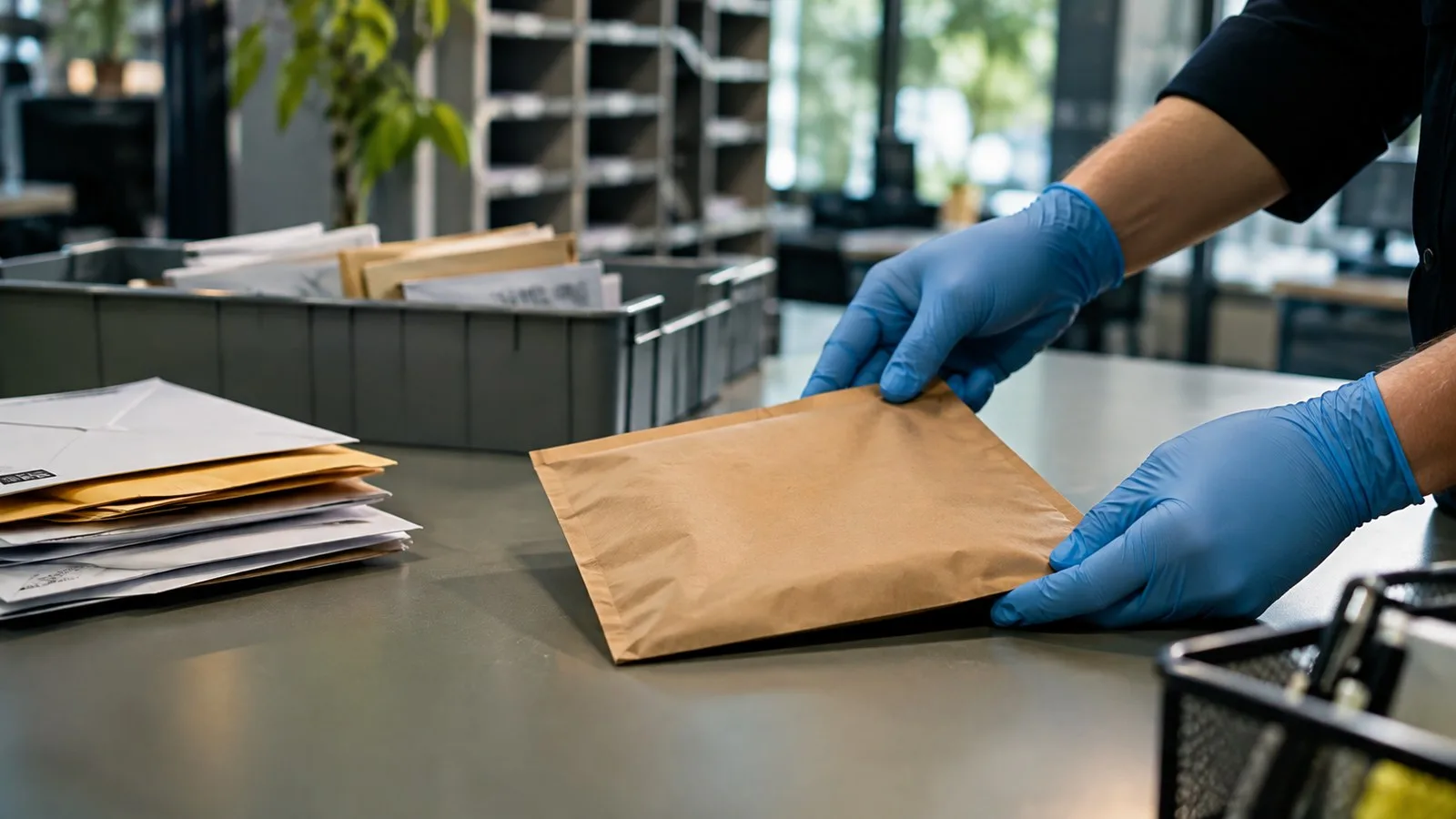
In the fall of 2001, a few weeks after the September 11 attacks, letters containing anthrax spores were mailed in the United States. According to the Centers for Disease Control and Prevention (CDC), the episode caused 22 cases and 5 deaths. It mobilized more than 1,500 health responders, and the FBI investigation, code-named “Amerithrax,” required more than 10,000 interviews on six continents. A handful of envelopes was enough to shut down post offices, government buildings and newsrooms for weeks.
A biological attack remains a rare event. But it has one feature that changes everything: it can go unnoticed for hours or days. Often there is no explosion, no smell and no immediate victim. This practical guide explains how such a threat would be detected, what to do with a suspicious package or after a possible exposure, and how your usual preparedness already protects you to a large extent.
In short
In short. A biological attack is usually detected by the health system, when unusual illnesses start appearing. With a suspicious package or envelope, do not touch, shake or smell it: leave the room, close the door, wash your hands and call 911 in Canada, or 17 or 112 in France. After a possible exposure, remove your outer layer of clothing, wash, and follow responders’ instructions instead of going home. The rest of your preparation is the same as for a pandemic: hygiene, masks, supplies to stay home and official information.
What are we talking about?
Health Canada groups these threats under the acronym CBRNE: chemical, biological, radiological, nuclear or explosive incidents. They refer to the uncontrolled release of chemical or biological agents, radioactive contamination of the environment or explosions causing very extensive damage. They can be accidental or terrorist. In France, the term used is NRBC.
A biological attack is the deliberate release of microorganisms or toxins to make people, animals or crops sick. To understand the threat itself, its history and the main families of agents, read our article Bioterrorism: understanding the threat and preparing. This one focuses on what you can actually do.
How it differs from a chemical attack
- Fast effectsAn unusual smell, watering eyes, several people feeling unwell within minutes in the same place. Leave the area immediately.
- Delayed effectsNothing visible at the time of exposure. Symptoms appear hours or days later, often far from where the attack happened.
- By the health systemDoctors, labs and public health spot a cluster of unusual cases and trace it back to the source.
Sources: Government of France; Public Health Agency of Canada
How authorities prepare
In Canada, the Minister of Public Safety is responsible for responding to terrorist acts, and Health Canada and the Public Health Agency of Canada play a key role whenever public health is threatened. The Agency describes several tools:
- National plans, such as the National Smallpox Contingency Plan.
- A laboratory network coordinated by the National Microbiology Laboratory, able to identify unknown agents quickly, and mobile labs that can be deployed anywhere in Canada or abroad.
- The National Emergency Stockpile System, which rapidly ships medical supplies to provinces and territories on request.
- The Global Public Health Intelligence Network, which monitors media worldwide in seven languages to detect early signs of outbreaks.
In France, the response relies on the Vigipirate plan and specialized government NRBC plans, with detection, decontamination and care coordinated by prefectures and regional health agencies.
For you, the practical consequence is simple: in an attack, information and instructions will come from public health. It will say who should see a doctor, who should receive preventive treatment and what measures to take.
Faced with a suspicious package or envelope
Mail remains the best-documented scenario since 2001. Public Safety Canada lists the signs that should catch your attention:
- no return address, or an unfamiliar one;
- an unexpected delivery from an unusual country;
- excessive postage;
- addressed to a title (“President”) rather than a person, or restrictive markings such as “Confidential”;
- unusual or illegible writing;
- oversized or lopsided packaging, or too much tape or string;
- a strange smell or sound;
- oily stains, discolouration, visible powder, protruding wires or foil, or leaking liquid.
The contents should worry you if there is visible powder or liquid, a threatening note, a threat received before delivery, or an unexpected item you cannot identify. It is often a hoax or a harmless substance. But you cannot know that: always treat it as dangerous.
Advice from Public Safety Canada.
- Do not touchDo not handle, shake, smell or taste it. Leave the package and its contents where they are.
- IsolateGet everyone out of the room and close the door. If possible, shut off heating, ventilation and air conditioning.
- WashAnyone who touched it removes contaminated clothing, seals it in a plastic bag and washes with soap and water.
- CallCall 911 (17 or 112 in France). Wait in a safe place and follow responders’ instructions.
Source: Public Safety Canada, Suspicious packages
If you are more worried about an explosive device, the advice is different: evacuate the room and leave doors and windows open. In every case, note who was in contact with the item so you can tell responders.
After a possible exposure
The French government has published a poster on what to do after exposure to a toxic or contaminating product. Its advice also applies to a biological incident:
- Cover your nose and mouth with whatever you have: tissue, scarf, damp cloth.
- Quickly leave the place if it seems dangerous. If more than two people show the same symptoms in the same place, raise the alarm.
- Call emergency services and give your location and what you see: in France, 18 or 112 for firefighters and 15 for emergency medical services; in Canada, 911.
- Remove your outer layer of clothing once at a distance, without touching the outside, and put it in a plastic bag. If possible, undress completely and wash your hands with soap and water.
- Do not go home, and do not go to the hospital, your doctor or a pharmacy on your own: you could contaminate your loved ones. Wait for responders, who set up a gathering and care point.
- Do not shake hands, drink, eat, smoke or rub your face.
The French government points out that some serious symptoms can appear several hours after exposure. If that happens, call 15 (or 911) immediately, say you were in the area and follow instructions.
If public health announces an attack
The most likely scenario for the public is not being on site, but learning from the news that an agent was released, sometimes several days earlier. In that case:
- Follow official sources only: public health, government, your municipality. Rumours spread much faster than facts in this kind of event.
- Check whether you are affected: authorities will specify the places, dates and people concerned. If you are, follow testing or preventive treatment instructions.
- Do not take antibiotics or other medication on your own. The right treatment depends on the agent, and self-medicating can be useless or harmful.
- Do not rush to the emergency room without symptoms: first call the line you are given (811 in Québec for Info-Santé, 15 in France in an emergency) so hospitals are not overwhelmed.
- Stay home if asked. Measures may resemble those of a pandemic: fewer contacts, masks, closure of some places.
The PrépaCivile live watch brings together official alerts, including those of the European Centre for Disease Prevention and Control and civil emergency alerts in Québec.
Preparing without paranoia
The good news: you do not need special equipment. Preparing for a biological threat is the same as preparing for an epidemic or a few weeks of staying home.
Hygiene and masks
Washing your hands with soap and water remains the most effective measure against most infectious agents. Keep a supply of soap, hand sanitizer and certified N95 or FFP2 respirators: when well fitted, they protect much better than a cloth mask.
Supplies to stay home
The Government of Canada recommends being self-sufficient for at least 72 hours. For a health threat, plan for one to two weeks instead: food, at least 2 L (half a gallon) of drinking water per person per day, your usual medication renewed in advance, and hygiene and cleaning products.
Information
A battery or hand-crank radio ensures access to instructions even if networks are overloaded. Sign up for your municipality’s alerts and make sure your phone receives emergency alerts. Write useful numbers down on paper.
Everyday vigilance
In France, the government sums up the reflexes in a terrorist attack in four words: escape, hide, alert and resist. For a biological threat, vigilance mostly means reporting a suspicious object or behaviour to the authorities, without stepping in yourself.
Your kit for a health threat
Frequently asked questions
Is a gas mask useful at home?
For the general public, no. A biological attack is not detected at the moment of exposure, and a poorly fitted or poorly maintained gas mask offers little protection. Good-quality N95 or FFP2 respirators, used when authorities recommend them, are far more useful.
Should I stockpile antibiotics?
No. Treatment depends on the agent, and public health decides who should receive it. Authorities have national stockpiles for this purpose. Keep a supply of your usual medication instead.
Should I be wary of my mail?
Not day to day. The signs to know are those on Public Safety Canada’s list. A delivery that combines several of them should be set aside and reported, unopened.
Is a biological attack always contagious?
No. Some agents make people sick without spreading from person to person, like the 2001 anthrax. Others are contagious. Public health will specify the measures to take depending on the agent identified.
Disclaimer. This article is for public information and preparedness. It does not replace advice from a health professional or instructions from public health and authorities. In an emergency, call 911 (Canada) or 112 (France).
Sources
- CDC, Anthrax postal terrorism
- FBI, Amerithrax or anthrax investigation
- Health Canada, CBRNE incidents (in French)
- Public Health Agency of Canada, Bioterrorism and emergency preparedness (in French)
- Public Safety Canada, Suspicious packages: get prepared (in French)
- Government of France, Responding to a terrorist attack (in French)
Go further: the Biological attack fact sheet, the Pandemic fact sheet, the Chemical attack fact sheet and the live watch.