
This article is the second part of our step-by-step preparedness plan, focused on the first concrete actions of citizen preparedness. After setting your priorities and building a water reserve in part 1, it is time to tackle two pillars: the food reserve and thinking about personal safety.
In brief
In brief. Step 3: build a food reserve by buying a little more of what you already eat, rotating it, then adding long-life foods; a garden and new skills come next. Step 4: think about personal safety without falling into distrust: prevention, a secured home, neighborly mutual aid and knowing the legal framework.
Step 3: building a food reserve
Food is often the first blind spot in citizen preparedness. For generations, households had gardens, home preserves and direct access to local producers. That connection gradually faded with urbanization, large retailers and centralized supply chains. Today many households have only a few days of food on hand. That is not a criticism: it reflects how we consume. But it creates an immediate dependence on supply chains. As soon as an event disrupts them (severe weather, an extended outage, a logistics disruption), shelves can empty within hours.
The goal of a food reserve is not to prepare for the apocalypse. It is to reduce your immediate dependence on grocery stores, buy time when collective resources are under pressure, and avoid having to go out at the worst moment. Canadian authorities recommend at least 72 hours of self-reliance; gradually aiming for two weeks, then a month, gives you a real margin.
Start with what you already eat
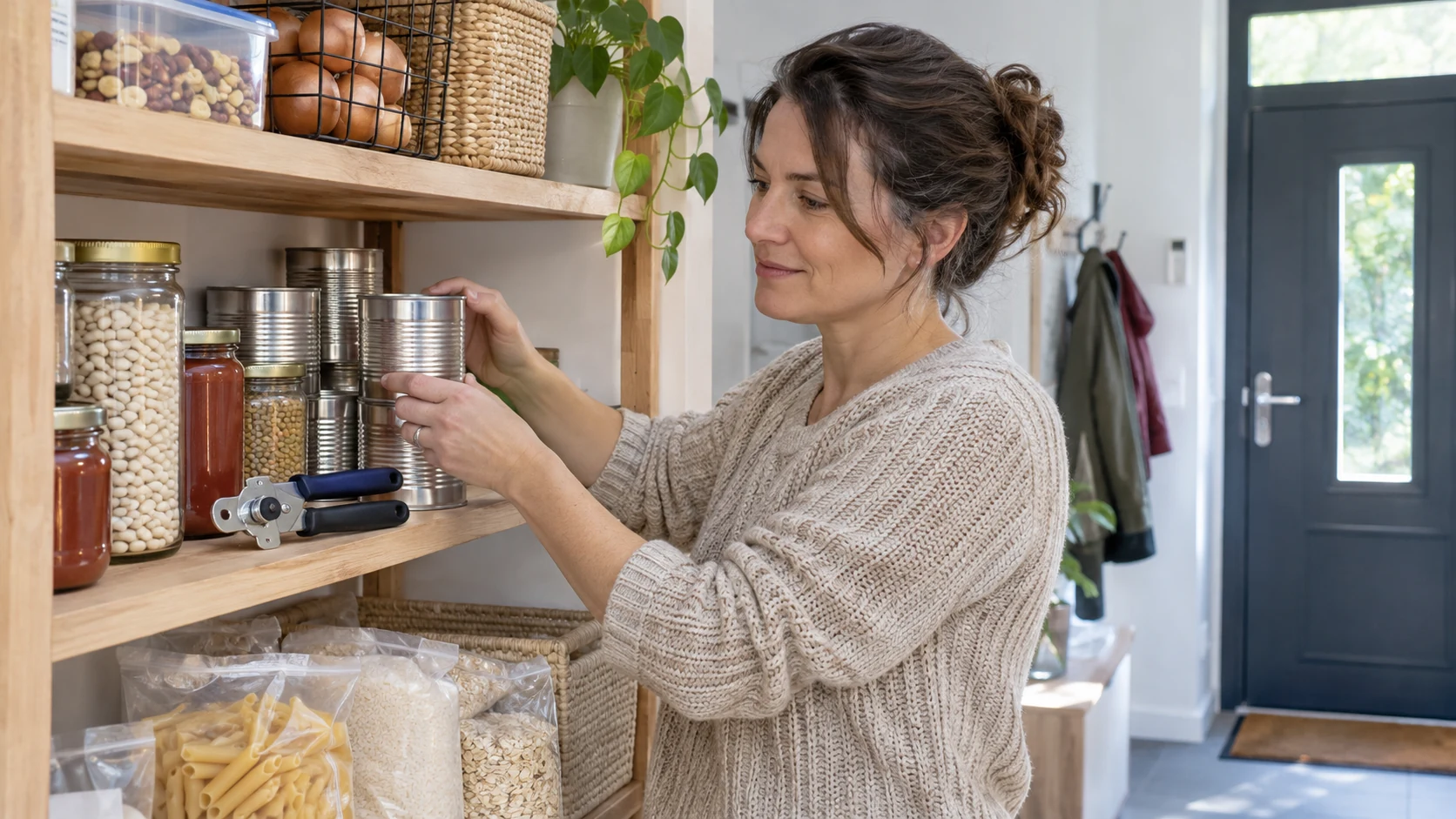
The most accessible strategy is also the simplest: buy more of what you already eat. On each grocery trip, add a few items to your usual cart. Pasta, rice, canned sauces and vegetables, tuna, legumes, soups, peanut butter, coffee and tea keep a long time and are already part of most menus.
This approach has a big advantage: you naturally eat and replace your reserve, which avoids expired supplies. Adopt the "first in, first out" rule: use the oldest items first and put new purchases at the back of the cupboard. Also plan a way to cook safely without electricity, and a manual can opener. See our ten rules for stock rotation.
Add long-life foods
Grocery foods work well for a short- to medium-term reserve. For longer self-reliance, you can add freeze-dried or dehydrated foods, or foods packed in Mylar bags and airtight containers.
| Everyday reserve | Long-term reserve | |
|---|---|---|
| Contents | Everyday foods in larger quantities | Freeze-dried, dehydrated, vacuum-packed or Mylar-packed foods |
| Rotation | Natural, as you cook | Infrequent, to be monitored |
| Shelf life | A few weeks to a few months | Up to several years depending on the product and storage |
| Budget | Easy to fit in, gradual purchases | Higher initial investment |
Balancing the two offers the most flexibility: an everyday reserve renewed regularly, backed by a long-term base for an extended need. For packaging, see our guide to Mylar bags. Keep your reserve in a cool, dry, dark place, protected from rodents.
Progress in milestones
Rather than aiming straight away for months of food, move forward in realistic milestones that fit your budget and space. Each milestone reached is real protection, even if you go no further.
Each milestone reached is real protection; move at your own pace.
- Recommended minimumReady-to-eat or easy-to-prepare foods, no refrigeration needed.
- Comfortable marginGradual purchases of what you already eat, with rotation.
- Solid self-relianceA well-organized everyday reserve and first long-life foods.
- Advanced preparednessLong-term base, garden, preservation skills.
Source: summary of this article; 72-hour minimum recommended by Canadian authorities.
Thinking about long-term self-sufficiency
In a more advanced approach, food production deserves some thought. A vegetable garden, even a modest one, concretely complements a reserve: fresh food, a more varied diet and less dependence on commercial channels. But gardening has to be learned. Starting a garden in the middle of a crisis is rarely realistic: you need tools, prepared soil and time, since some vegetables take weeks before harvest. In northern climates such as Quebec, snow prevents planting in the ground from November to April in most regions. If gardening interests you, start now, in normal conditions, to build the skills and habits.
Some households also consider small-scale livestock, such as a few laying hens. This option requires space, time, knowledge and compliance with municipal bylaws, which often ban farm animals in cities. It is a personal decision that depends on your situation. Preservation skills (canning, dehydrating, lacto-fermentation) are often a better starting point: see our article on traditional skills worth relearning.
Step 4: thinking about personal safety
Once water and food needs are better covered, personal safety deserves attention. The point is not to feed anxiety or plan for extreme scenarios, but to recognize that tensions can arise in some degraded situations. Disaster research shows, however, that mutual aid largely prevails: preparedness does not mean general distrust. It means anticipating, reducing vulnerabilities and keeping room to maneuver.
Prevention and securing your home
- Secure entry points: quality locks, a security bar for sliding doors, outdoor lighting.
- Stay discreet about your supplies: share the approach, not the inventory.
- Build ties with your neighbors: a neighborhood where people know each other is safer and more resilient.
- Prepare a family plan: meeting point, a room to take refuge in, emergency numbers everyone knows.
- Learn to defuse a tense situation and to walk away rather than confront.
Our guide to identifying home security weaknesses helps you set priorities.
The question of weapons: a strict legal framework
Firearms come up often in preparedness discussions. In Canada, owning firearms is governed by licensing, training and safe storage requirements, and self-protection is generally not a recognized reason to acquire one; pepper spray designed for use against people is a prohibited weapon there. In French-speaking Europe, acquiring and carrying weapons is also tightly regulated. PrépaCivile does not recommend acquiring weapons for household safety: a weapon without training is a risk, and a firearm in the home increases the risk of accidents, theft and tragedy. People who legally own firearms for hunting or sport shooting must strictly follow storage rules. To understand the hierarchy of response (prevent, avoid, flee, de-escalate, alert) and the self-defence framework, see our article on protecting your family.
What comes next in the plan
The next steps complete these foundations: financial security (emergency fund, cash), basic medical supplies and backup energy used safely. See in particular our emergency kit checklist and our guide to habits for saving money on preparedness.
Key takeaway: building a food reserve does not require a massive investment. Starting by buying a little more of what you already eat is an immediate, realistic step. Adding long-life foods, learning to garden or preserve, and thinking about your safety within the legal framework are the natural milestones of this progression.
Frequently asked questions
How much food should you store to start?
At least 72 hours for each household member, then two weeks, then a month, at your own pace. Favor foods you like that do not need refrigeration.
Should you buy freeze-dried meals?
It is not essential to start. They are useful for a long-term reserve or an evacuation bag, but a well-rotated reserve of everyday foods covers most situations.
Is a weapon necessary to protect your home?
No. Prevention, a secured home, escaping, calling for help and mutual aid are more effective and do not carry the risks of a firearm in the home.