

In this article
For a home supplied by a private well, a power outage isn't just an inconvenience: your drinking water stops, because the pump is electric. And long outages tend to happen during the most severe weather, exactly when water matters most. Having at least one way to draw water from the well without electricity is a basic preparedness measure for any rural or semi-rural household. Here are seven methods, from the simplest to the most elaborate, with their advantages, limits and installation requirements.
In short
- Start by knowing your well: depth, water level, pump type and voltage (120 V or 240 V).
- A hand pump installed alongside the electric pump is the most independent backup.
- A generator runs outdoors only, and connecting it to the building requires a transfer device installed by a licensed electrician.
- Also keep a drinking water supply: no pumping method replaces a few days of stored water.
- After a flood, have your well water tested before drinking it.
| Method | Depends on | Depth | Relative cost | Independence |
|---|---|---|---|---|
| 1. Generator | Fuel | That of the existing pump | Medium to high | Limited by fuel supply |
| 2. Solar pump | Sun (and battery, if included) | Up to about 180 m (600 ft) for some submersible models | Medium to high | Good, with a tank or battery |
| 3. Wind pump | Wind | Variable | Medium | Variable |
| 4. Hand pump | Muscle power | Up to about 90 m (300 ft) for high-end models | Low to medium | Maximum |
| 5. Well bucket | Muscle power | That of the accessible casing | Low | Maximum, but slow |
| 6. Hydraulic ram or High Lifter | Flowing water with a drop | Depends on the drop | Medium | Maximum (runs continuously) |
| 7. Homemade pump | Muscle power | Limited (mainly shallow wells) | Very low | Maximum, lower reliability |
Relative cost is a rough guide: prices vary by model, installation and supplier. Ask for current quotes.
1. Backup generator
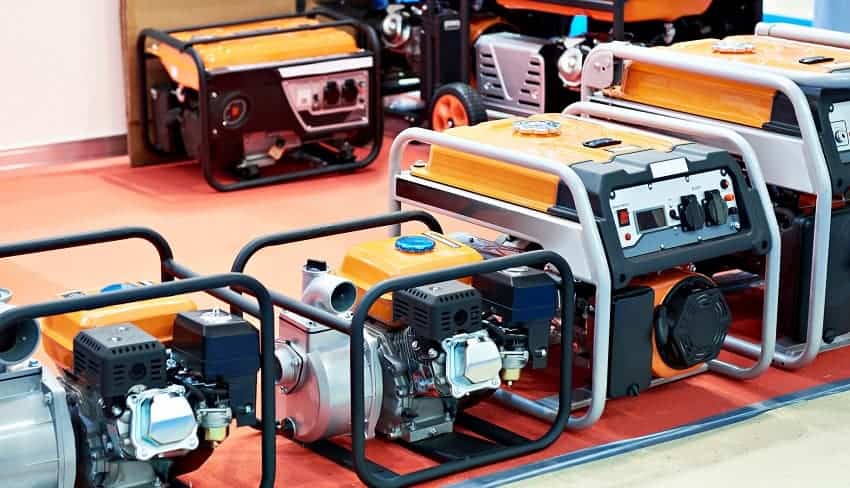
A compatible generator can run your existing pump, as long as it's sized for the pump's voltage, starting current and running power. A well pump draws much more current when starting than when running: check the pump's nameplate and have the connection planned by a professional. A national equipment statistic doesn't determine the right choice for your well.
The choice between gasoline, propane or diesel depends on your setup, the power required and the fuel available. In North America, some pumps run on 120 V and others on 240 V: don't assume a single 220 V voltage, or that you need a diesel model. A proper transfer device (transfer switch), installed by a licensed electrician, prevents any backfeed into the grid, which could electrocute utility crews working on the lines.
Watch out: fuel
A generator depends on its fuel. During a long outage after a weather disaster, gas stations may be out of service themselves. Keeping a fuel reserve, following safe storage rules (approved containers, permitted quantities, outside the living space), is an integral part of this plan. To use it in the rain, see our article Generators and rain; to reduce its noise safely, read Reducing generator noise.
2. Solar pump
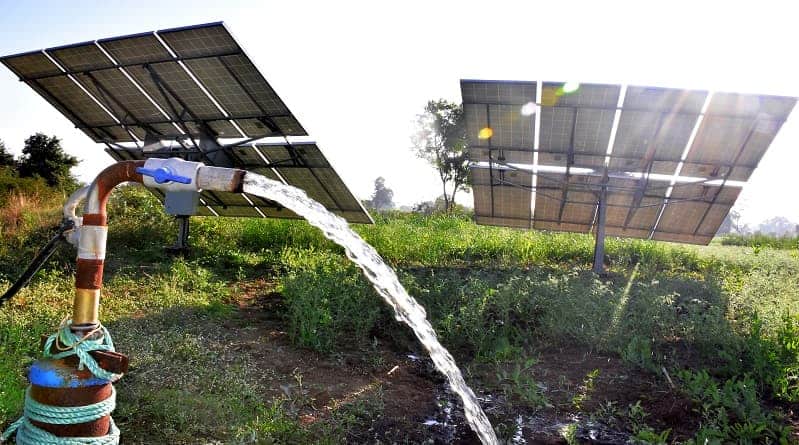
Solar well pumps fall into two main categories depending on well depth:
- Surface solar pump: suited to shallow wells (less than 8 m / 25 ft) and to moving water from a storage tank to the house.
- Submersible solar pump: its capacity depends on the total dynamic head (the height the water must be lifted, plus pipe losses), the dynamic water level during pumping, the flow required and its power supply.
Not all solar pumps have a built-in battery: to have water at night or on cloudy days, you need a water reserve or a compatible electrical storage system.
A particularly robust approach is to pair a submersible solar pump with a storage tank placed higher up on the property. The pump fills the tank when the sun shines; gravity then delivers the water to the house continuously, regardless of the weather or the grid. This two-stage system reduces reliance on a single energy source. In Quebec, plan freeze protection for the tank and pipes. To size your solar power, see our guide Off-grid solar power.
3. Wind pump
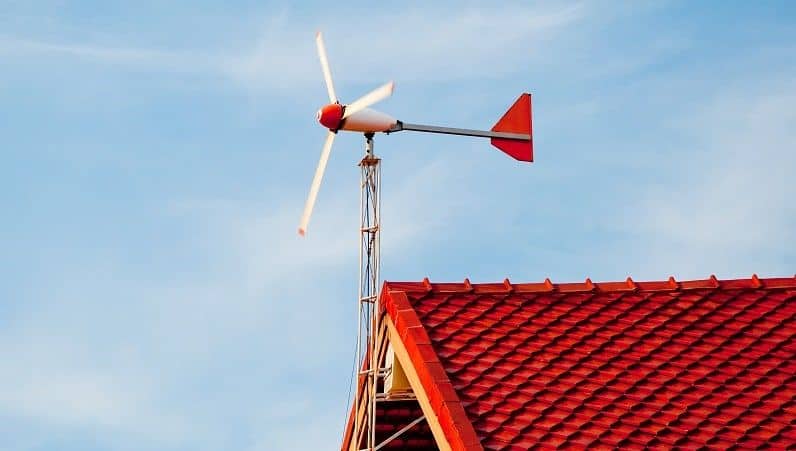
A wind pump is a proven solution in regions with good wind potential. Like a solar pump, it works best paired with a gravity storage tank: the wind pumps water when it blows, and the reserve covers calm periods.
A wind or hybrid system requires a wind assessment on your property and compatible components. The cost of a complete well wind pump includes the tower or support, protections, piping and maintenance: there's no universal budget. Also check municipal rules (height, distance from property lines).
Some do-it-yourselfers build small pumping wind turbines from PVC pipe and salvaged parts, such as a vehicle alternator. These builds require solid mechanical and electrical skills, and a sturdy installation that can withstand strong winds.
4. Hand pump
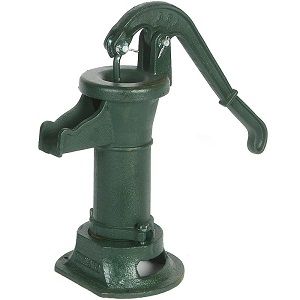
A hand pump is generally considered the most reliable and durable backup. It needs no fuel, sun or wind: only muscle power. It can often be installed in the same well as the existing electric submersible pump, so you can switch from one to the other without taking anything apart, if the casing diameter allows.
Shallow wells (less than 8 m / 25 ft)
Standard hand pumps are effective and affordable in this range, because they draw water up from the surface. An entry-level pitcher pump can be found for about CA$50, but a higher-quality model, such as the sealed pressurized water pumps from Lehman's (a U.S. retailer), will be far more reliable when you need it.
Deep wells (more than 30 m / 100 ft)
Beyond about 8 m (25 ft), no pump can draw water up from the surface. Deep-well hand pumps therefore use a cylinder submerged in the water, or a suitable design that pushes the water upward. Check the model's limit based on the water level, drawdown (how far the level drops while pumping), the casing and the effort required. Even robust equipment needs periodic testing and maintenance.
Our pick for most households
A hand pump is the backup method most independent of any outside energy source. Its only limits are the depth of the well and the physical condition of the person pumping. For long-term family use, it's the most robust safety investment of the options presented here.
Our article Installing a hand pump on a well covers the technical steps, and our hand pump comparison helps you choose a model.
5. Well bucket
A well bucket (also called a torpedo bucket or cylinder bucket) is the simplest and cheapest way to draw water from a well without electricity. It's a long, narrow container designed to go down the well casing and bring water up on a rope. A good galvanized steel model costs under CA$100 and holds nearly 7.5 litres (2 US gallons) per lift. A drain valve at the bottom lets you empty the water into a container without tipping the bucket.
You can also make one with PVC pipe, a check valve and strong rope. Use clean materials suitable for drinking water, and a rope that won't break in the casing.
Main limitation
In most setups, you first have to pull the submersible pump to free up the casing. It can be done, but it takes time and requires the right equipment to remove the pump without damaging it. A well bucket is therefore an effective last resort, less immediate than a hand pump installed alongside.
6. Hydraulic ram or High Lifter
Both systems use the pressure of water flowing from upstream to push part of that water to a point higher than the source. They suit properties with a natural drop between the water source and the point of use, such as a creek or spring. They don't draw from a drilled well: they use flowing surface water.
- Hydraulic ram: it needs a larger flow of water and runs with a regular, fairly noticeable clacking sound. It works well for properties with a stream or spring with a steady flow.
- High Lifter: according to the manufacturer, it can work with a flow as low as about 4 litres per minute (1 US gallon per minute) and is silent. It's better suited to low-flow sources.
Both systems are self-powered: they need no electricity, fuel, wind or sun. Properly installed, they run continuously, regardless of outages and weather. The main constraint is the terrain: you need enough drop between the source and the pump inlet (at least about 45 cm / 18 in, depending on the model), plus a continuous water supply. In Quebec, protect them from freezing, and check the rules governing water withdrawals from a watercourse. Surface water must be treated before drinking.
7. Homemade emergency pump
If you have DIY skills and want a low-cost independent solution, you can build a working emergency pump. There are two levels of complexity:
- Simple suction pump (shallow wells): the easiest to build. It works on the same principle as pitcher pumps, drawing water up by pressure difference, down to about 8 m (25 ft).
- Pump for deeper wells: more complex to build, it must push water up from the bottom rather than draw it up. Detailed guides with materials lists and instructions exist online: choose reputable sources and materials suitable for drinking water.
These homemade solutions are useful last resorts when no commercial equipment is available. Their long-term reliability is lower than certified equipment, but they can get you through an emergency.
Don't forget water quality
Pumping the water is only part of the problem. After a flood, a septic system overflow or work on the well, the water can be contaminated even if it looks clear. In Quebec, private well owners are responsible for the quality of their water: have it tested by an accredited laboratory, and follow your municipality's or public health's instructions if in doubt. For health advice in Quebec, call Info-Santé 811. In the meantime, use your drinking water supply or water treated according to official instructions.
Frequently asked questions
Which method should most households with a well choose?
A hand pump installed alongside the electric pump is generally the best fit. It doesn't depend on any outside energy source, works in any weather, can often be installed without removing the submersible pump and meets a household's daily needs. For a well whose water is less than 8 m (25 ft) down, an affordable surface pump is enough. For a deep well, a higher-quality model is a worthwhile investment.
Can I install a hand pump myself?
On a shallow well, installation is within reach of a skilled do-it-yourselfer with the right tools. On a deep well, it's more technical: connecting to the existing pipes and positioning the cylinder and foot valve require good plumbing knowledge and sometimes specialized equipment. For a very deep well, calling a well driller or pump specialist is better to keep the well sealed and the system efficient.
Does a hydraulic ram work on flat land?
No. A hydraulic ram and a High Lifter need a drop between the water source and the pump of at least about 45 cm (18 in). On completely flat land, they can't work. They're ideal for properties with a stream or spring with a drop, or when water needs to be sent to a tank higher than the source.
Do I need to remove the submersible pump to use a well bucket?
In most standard wells, yes: the bucket has to go down the casing, so you must pull the submersible pump first. It can be done, but it takes time, and you need the right equipment to lower and raise the pump without damaging it. That's why a well bucket is mainly a last resort, while a hand pump coexists with the electric pump.
Sources and verification references
Local instructions and product instructions take precedence for your situation. References consulted: Health Canada: food and drinking water safety in an emergency (in French); CDC (United States): use a generator safely.
Equipment to compare based on your needs
Some links below are affiliate links: we may receive a commission at no additional cost to you. Products are examples by function, to choose according to your needs; buying the entire selection is unnecessary.