
In this article
- The basics
- Dry foods (1 to 19)
- Cans, jars and pouches (20 to 42)
- Instant meals (43 to 48)
- Sugars and syrups (49 to 53)
- Seasonings and condiments (54 to 66)
- Basic cooking ingredients (67 to 71)
- Drinks (72 to 82)
- Snacks (83 to 97)
- Supplements (98 to 100)
- Bonus: the cold-soaking method
- Frequently asked questions
- Read next
- Sources and verification references
- Equipment to compare for your needs
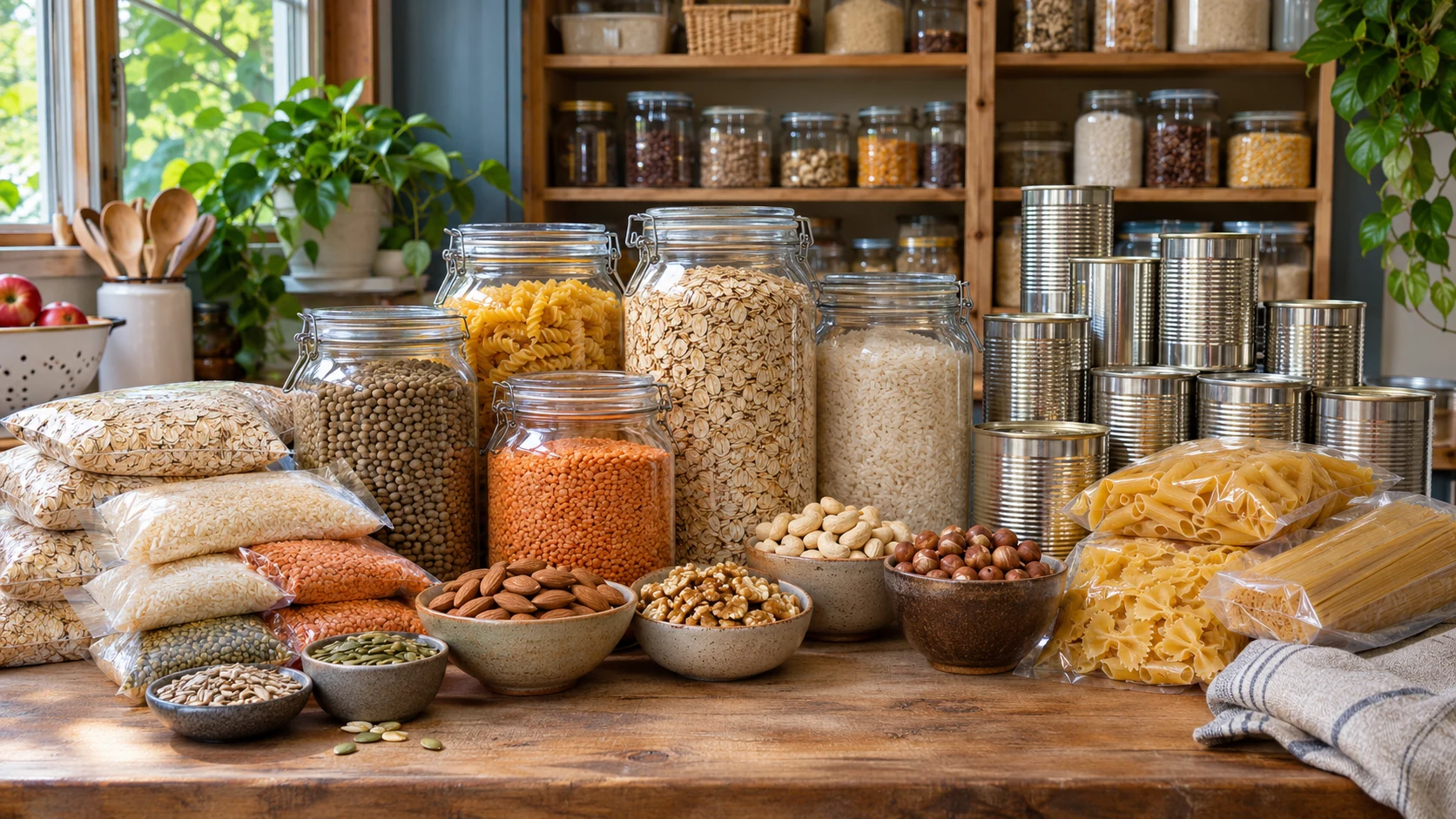
Building an emergency food supply does not require specialized products or an exceptional budget. Most of the foods useful for getting through one to three weeks can be found at the grocery store, and many are already part of your meals. Here are 100 foods that keep without refrigeration, sorted by category, plus the cold-soaking method for eating without cooking during an outage.
At a glance
- Aim for balance: carbohydrates, protein, fruit and vegetables, good fats, plus spices and a few treats for morale.
- Store what you already eat and rotate (first in, first out).
- In a Quebec winter, also plan a safe way to cook without electricity, or foods that can be eaten without cooking.
Important: this list covers dry or shelf-stable products before opening. Once opened or rehydrated, several must go in the fridge: check each label. During an outage, perishable food left more than two hours in a warm area does not become safe again by refrigerating or cooking it afterwards. Plan meal-sized portions, and drinking water.
Some of these foods can be eaten without cooking, which is valuable during a prolonged power outage. A supply made only of dry pasta and canned peas would provide calories, but not nutrients: variety makes meals more nourishing, more appetizing and easier to sustain over time.
The basics
Rotation: first in, first out
New purchases go behind the older ones; always eat the oldest first. Rotation prevents waste and ensures the supply is edible on the day you need it. A supply that never rotates quickly becomes a collection of expired products. See the ten rotation rules.
Store what you already eat
The most effective method: buy a little more of the foods you already eat, rather than special products you would never cook. In a crisis, familiar foods are easier to prepare and accept. Freeze-dried meals and rations have their place, but not as the foundation of a one- to three-week supply.
The enemies of dry foods
Three factors degrade dry foods: moisture (mould), insects and rodents, and oxygen (rancidity). For a one- to three-week supply that rotates, airtight containers in a cool, dark place are enough. For the long term, Mylar bags with oxygen absorbers are the most effective solution. See where to store your supply.
The Quebec winter context
A winter outage in Quebec adds a constraint: the heat source for cooking is often the same one used for heating. Planning a backup way to cook is as important as the supply itself. A propane or butane stove, a barbecue or a camp stove must be used outdoors only, never in the house, garage or a tent: risk of carbon monoxide poisoning. A fireplace or wood stove in good condition, installed to code, can be used indoors. This is where cold soaking really comes into its own.
Dry foods (1 to 19)
Dry foods are the backbone of any supply. They keep from several months to several years without refrigeration, away from moisture, insects and light. For several years, repackage them in Mylar bags with oxygen absorbers.
1. Grains: white rice, instant rice, quinoa, couscous, barley, millet, spelt. White rice is the benchmark for shelf life: up to several decades in a Mylar bag with an absorber, in a cool place.
2. Flours: all-purpose, whole wheat, rice, oat. Whole-grain flours go rancid faster than white.
3. Beans and lentils: red and green lentils, chickpeas, black and kidney beans. Long cooking time: plan a way to heat. Red lentils cook fastest.
4. Bean powders: instant refried beans, hummus mix, falafel mix: ready in minutes with water.
5. Breakfast cereals: in a sealed box, they often keep their quality for a good while past the date; check when opening.
6. Pasta: spaghetti, penne, fusilli, macaroni, rice vermicelli. They keep a long time when dry.
7. Tortillas: shelf life varies widely by brand and recipe; check the date before storing.
8. Instant mashed potatoes: quick, with hot water; follow the package directions.
9. Dehydrated fruit and vegetables: store-bought or homemade; homemade products keep less long.
10. Textured vegetable protein (TVP): an excellent plant protein, rehydrates in water, long shelf life.
11. Beef jerky: concentrated, portable protein; once opened, keep it sealed and eat it soon.
12. Powdered eggs: often overlooked, useful for baking and omelettes without refrigeration. See also freezing eggs.
13. Rolled oats: versatile, nutritious, can even be prepared cold (see below).
14. Pancake mix: some formulas only need water.
15. Baking mixes: brownies, muffins, cornbread: comfort and morale when things drag on.
16. Cocoa powder: durable, for hot drinks and baking.
17. Nuts: almonds, walnuts, cashews, peanuts: rich in protein and good fats, but they can go rancid.
18. Seeds: sunflower, pumpkin, chia, flax: very nutritious.
19. Breadcrumbs and croutons: to enrich soups and dishes; keep well in sealed packaging.
To go further: storing rice and storing flour.
Cans, jars and pouches (20 to 42)
Canned goods generally remain safe well past their date, which indicates optimal quality rather than a safety limit. A can with no deep dent, rust or swelling is generally safe; see canned food shelf life for details by category.
Cans or jars? For an emergency supply, metal cans are better: glass breaks more easily when moving or evacuating. If you store jars, use sturdy, anchored shelving.
Fruit and vegetables
20. Pickles: cucumbers, peppers, carrots, asparagus: welcome variety.
21. Canned vegetables: peas, corn, beets, green beans, carrots; choose low-sodium versions.
22. Fruit and fruit sauces: whole fruit, jam, applesauce, cranberry sauce; choose fruit packed in juice.
23. Mushroom sauce: to perk up rice and pasta.
24. Tomatoes: whole, diced, purée, sauce: the base of many dishes.
25. Olives: a good source of healthy fats, long shelf life.
Vary your canned vegetables for a wider range of nutrients, beyond corn and peas. Well-made homemade jams in sterilized jars keep a long time.
Protein
26. Nut butters: peanut, almond, cashew: very dense in calories and protein. Some (pistachio, sunflower) go rancid faster, and natural peanut butter keeps less long once opened.
27. Canned legumes: already cooked, no cooking needed; rinse them to reduce sodium.
28. Canned meats: chicken, ham, ground beef, sausages: a wide choice in Canada. Pouches are lighter for an evacuation.
29. Tuna and other fish: pouches are handy (no liquid). Sardines are rich in omega-3s, calcium and protein.
30. Hummus in pouches or cans: handy on crackers; dry mixes take up much less space.
31. Seitan (wheat gluten): concentrated plant protein, found in Asian or natural food stores; avoid with celiac disease or gluten intolerance.
Complete meals
32. Canned pasta: ravioli, spaghetti and meatballs: can be eaten straight from the can if needed.
33. Soups and broths: minestrone, tomato soup, chicken broth: a base to enrich other dishes.
34. Canned chili: a complete meal (protein and carbohydrates) in one can.
35. Dolmas (stuffed grape leaves): in Greek or Middle Eastern grocery stores: nutritious variety.
36. Rice-stuffed eggplant: in Middle Eastern grocery stores: an original complete meal.
37. Stuffed peppers: with cheese or rice, to break the monotony.
Other canned goods
38. Canned cheese: processed cheese in jars or spray cans: handy, long shelf life.
39. Canned bread: the brown bread in a can from the American brand B&M can be found in some Canadian grocery stores.
40. Canned butter: costly, but useful for long periods without refrigeration.
41. Canned desserts: puddings, cakes: important comfort when the situation lasts.
42. Canned milks: evaporated milk, sweetened condensed milk, coconut milk: for cooking and drinks.
Instant meals (43 to 48)
Handy and quick, instant meals complement staple foods, without being the core of the supply, because of cost, space and sometimes nutritional value.
43. Boxed meals: macaroni and cheese, instant stuffing, seasoned rice, dehydrated sides; to make them last, remove the cardboard box and keep the pouches in an airtight container.
44. Self-heating meals: they contain their own heating element: useful, but costly.
45. Freeze-dried hiking meals: very light, with a long shelf life claimed by some manufacturers; costly, best for long-term supplies and go-bags.
46. Bulk freeze-dried foods: freeze-dried vegetables, meat, cheese: to put together your own meals.
47. Military-style rations (MREs): civilian equivalents exist: complete meals with a heating element, long shelf life, high cost.
48. Instant ramen: the cheapest option, not very nutritious on its own, but easy to enrich with canned vegetables, pouch proteins and spices.
Sugars and syrups (49 to 53)
Most keep a very long time when dry and protected from insects. They make meals more enjoyable and are comforting when a crisis drags on.
49. White sugar: very long shelf life when dry and protected from insects; the basis of baking.
50. Honey: keeps almost indefinitely when tightly closed; it can crystallize, which is harmless (warm it gently).
51. Maple syrup: Quebec's signature product. Pure syrup keeps according to the label before opening; once opened, keep it in the fridge.
52. Molasses: also provides iron, calcium and magnesium.
53. Corn syrup: long shelf life, useful in baking.
Seasonings and condiments (54 to 66)
Without seasoning, meals quickly become bland and hard to eat, especially when the situation drags on. Spices are among the cheapest and most rewarding purchases for a supply.
54. Extracts (vanilla, almond, etc.): very long shelf life, essential for baking.
55. Herbs and spices: pepper, cumin, paprika, oregano, thyme, cinnamon, curry: a varied assortment in small quantities.
56. Seasoning blends: chili seasoning, Cajun, herbes de Provence, etc.
57. Bouillon cubes and powder: turn hot water into soup or sauce; powder takes up less room.
58. Soy sauce: long shelf life, perks up rice, legumes and proteins.
59. Ketchup: follow the label: many products need refrigeration after opening. Sealed single-serve packets make a no-fridge supply easier.
60. Mustard: follow the manufacturer's instructions after opening; stability depends on the recipe and container.
61. Mayonnaise: an opened jar must go in the fridge; for a no-fridge supply, choose sealed single-serve packets.
62. Salad dressings: shelf life varies with the recipe; choose small sizes.
63. Vinegar: almost unlimited shelf life, also useful for homemade pickles.
64. Salt: unlimited shelf life; it also preserves food.
65. Sauces and spreads: barbecue sauce, salsa, jarred pesto, cheese sauce in pouches; refrigerate after opening if the label says so.
66. Hazelnut spread: calorie-dense, good for morale.
Basic cooking ingredients (67 to 71)
Often forgotten, these ingredients make many other dry foods in the supply usable.
67. Cornstarch: thickener for soups and sauces.
68. Baking soda: essential for baking; also useful for cleaning and deodorizing.
69. Baking powder: leavening for quick breads, pancakes and cakes, without fermentation.
70. Dry yeast: for homemade bread; respect the date and keep it cool once opened.
71. Cooking oil: olive, canola, coconut; per the date. Coconut oil is the most stable at room temperature.
Drinks (72 to 82)
Hot drinks are very comforting during a disruption, especially in winter. Plan some variety for every member of the household.
72. Instant coffee: long shelf life in airtight packaging. See coffee storage.
73. Vitamin drink packets: electrolytes and vitamins, useful under stress or exertion.
74. Tea: long shelf life, variety, comforting.
75. Powdered creamer: replaces milk in coffee and tea.
76. Powdered milk: calcium and protein, versatile; see powdered milk storage.
77. Canned milk: evaporated or condensed, for cooking.
78. Juice boxes: handy for children.
79. Hard liquor: keeps a very long time; drink in moderation. It does not replace a disinfectant: a 40% spirit falls short of the 60% alcohol recommended for hand sanitizing.
80. Canned coconut milk: the base of many recipes.
81. Powdered yogurt: less common, but available.
82. Powdered meal replacements: useful during intense exertion or loss of appetite.
Snacks (83 to 97)
Snacks matter a lot for morale, especially for children: a supply made only of "serious" food quickly becomes hard to stick to. Space remains the limit: avoid bulky, low-calorie packaging.
83. Crackers: soda crackers, rice crackers: a neutral base for hummus, nut butter and cheese.
84. Powdered gelatin: long shelf life, easy to prepare with water.
85. Pudding mixes: made with powdered or canned milk.
86. Chips: bulky and not very nutritious: in small amounts, for morale.
87. Protein bars: dense in calories and protein, handy for the go-bag.
88. Granola bars: accessible and familiar at any age.
89. Cookies: keep well in airtight packaging.
90. Rice cakes: light, neutral, long shelf life.
91. Trail mix: nuts, dried fruit, chocolate: an excellent calorie-to-volume ratio.
92. Dry biscuits: good shelf life, liked by everyone.
93. Popcorn: bulky and not very nutritious: in small amounts if space allows.
94. Pretzels: salty, good shelf life, popular with kids.
95. Chocolate: calorie-dense, good for morale; dark chocolate keeps better than milk chocolate.
96. Candy: very long shelf life, comfort for children.
97. Chewing gum: freshens the mouth when brushing is difficult; good for morale.
Supplements (98 to 100)
A crisis diet is often high in carbohydrates and low in some vitamins and minerals. A few supplements can partly compensate; for a health condition or ongoing treatment, talk to your pharmacist.
98. Multivitamins: a safety net when fresh fruit and vegetables are scarce; ask a pharmacist for advice.
99. Protein powder: useful if animal proteins become hard to find.
100. Greens powder: partly makes up for the lack of fresh vegetables.
Bonus: the cold-soaking method
Cold soaking means rehydrating food in cold water instead of cooking it. It is not a comfort method, but a last resort that lets you eat without heat or electricity.
Safety: rehydrating food does not cook it or kill germs. Use this method only for products that are already cooked or precooked, whose instructions allow eating them without cooking. Use drinking water, prepare a small portion and eat it soon; do not leave rehydrated food sitting at room temperature. Regular wheat pasta and dry legumes must be cooked.
Foods that work
| Food | Cold soaking possible? | Check |
|---|---|---|
| Couscous, instant rice, ramen, rice noodles | Often, since precooked | The instructions; time varies by product |
| Rolled oats | Yes ("overnight oats") | Keep cool if waiting long |
| Instant mashed potatoes, hummus mix, powdered cream soups | Per the instructions | Texture less pleasant than hot |
| Freeze-dried meals without pasta | Depends on the product | The manufacturer's instructions |
| Wheat pasta, dry legumes, regular rice | No | Must be cooked |
How to enrich a cold-soaked meal
- drained canned vegetables, for vitamins and texture;
- pouch proteins (tuna, chicken);
- a drizzle of olive oil for calories and flavour;
- spices and sauces;
- instant hummus on crackers or tortillas: a complete meal without cooking.
Try these preparations before you need them: tastes and textures sometimes surprise, and it is better to find out what you like in normal times.
Frequently asked questions
Where do I start?
The gradual approach is the simplest and cheapest: each grocery trip, buy a little more than you need (a bag of rice, a few cans, some legumes). Within a few weeks, without an exceptional budget, you will have two to three weeks of supplies. First calculate each household member's water needs with our tools, then complete your preparedness review.
Are the dates on canned goods reliable?
In Canada, the "best before" date indicates optimal quality, not a medical limit. According to the US Department of Agriculture (USDA), a commercial can in good condition, not exposed to freezing or high heat, remains safe well beyond it. Inspect the can, check the smell and appearance when opening, and throw it out at the slightest doubt.
How do I store a supply in an apartment?
Under beds (flat bins), in cupboards using the height, in dead spaces. Focus on calorie-dense foods (rice, legumes, oil, nut butter) and avoid bulky, low-nutrition products (chips, large cereal boxes). Two weeks of supplies is achievable in an ordinary apartment.
What about special dietary needs?
Plan for them explicitly: allergies (gluten, nuts, dairy) with alternatives; vegetarian or vegan diets (legumes, TVP, nut butters); infants (their usual formula, never replaced by ordinary powdered milk); older adults (easy-to-chew foods, protein, calcium); pets (a separate supply, often forgotten). For each person, identify two or three irreplaceable foods and make sure you have enough of them.
Read next
Where to store your supply
Basement, pantry, garage or apartment: advantages and limitations.
Sources and verification references
Local instructions and product instructions take precedence for your situation. References consulted for this update:
- USDA: how long can you keep canned goods
- Health Canada: keeping food and drinking water safe in an emergency
Equipment to compare for your needs
Some links below are affiliate links: we may receive a commission at no additional cost to you. Products are examples by function, to choose according to your needs; buying the entire selection is unnecessary.