
In this article
After several years around people committed to preparedness, you start to see patterns. Since dramatic survival TV shows and videos became popular, many people have started preparing. Many stayed, others gave up, and the same mistakes keep coming back: buying a lot, learning little, and preparing alone.
This article brings together four lessons drawn from those observations. They cost almost nothing, yet they do more for your resilience than any purchase.
In brief
In brief. Four things are absolutely necessary, and none of them can be bought: enough physical fitness to handle the effort, skills rather than objects, the right amount of gear rather than the maximum, and the ability to work with others. Equipment helps, but what you know how to do, and with whom, is what makes the difference over time.
First of all: physical fitness
It gets repeated a lot, but it is still true: physical fitness is the foundation. Some people think it does not matter if they cannot climb a flight of stairs, because “the body will adapt” or “I’ll lose weight if I need to”. You can be the best-equipped person in the world, but a real crisis demands a lot of effort: carrying water, clearing debris, walking a long way with a pack, helping a loved one, sleeping little.
The body does not adapt in a few days. Preparing without accepting a minimum of effort for your fitness means piling up gear you will not be able to use fully. The good news: you do not need to become an athlete. Walking regularly, carrying your 72-hour bag on a walk, and working on mobility and basic strength are enough to make a real difference. See physical fitness for emergency preparedness.
1. Skills, not just objects
People too often believe that piling up “stuff” will make a crisis easier. There is a basic set of gear that truly improves your chances: a good knife, a map, a light, a first aid kit, a plan. But owning an object is not the same as knowing how to use it competently.
Take the knife. Almost everyone has one, often a good fixed-blade model. But how many know how to use it safely and effectively: carving, preparing kindling, building a shelter, maintaining and sharpening the blade, choosing the right blade shape for each use? The same question applies to the map: finding your way when you know your starting point is easy. But if you are disoriented, can you work out your position from landmarks? And in an area you do not know?
However well prepared you are, a prolonged crisis often feels like living in a completely different environment. Multi-day hiking, self-reliant camping and, for those interested, legal hunting and fishing with the required permits are excellent ways to build many skills. To get started, see the basics of map reading and navigation and bushcraft skills to learn.
| Object | Related skill | How to learn it |
|---|---|---|
| Knife | Carving, fire preparation, safe sharpening | Outdoor workshop, practice while camping |
| Map and compass | Navigating without GPS, finding your position | Orienteering club, supervised off-trail hiking |
| First aid kit | Stopping bleeding, immobilizing, CPR | Recognized first aid course |
| Water filter or tablets | Choosing, filtering and disinfecting water | Practice at home, outing in nature |
| Stove and supplies | Cooking without power, safely | A weekend without electricity |
2. The right amount, not the maximum
Preparing, like engineering, is not about having the most of everything, but the right amount of each thing. Whether you plan to stay home or evacuate, every item you store or carry has a cost. Some people pile up dozens of duplicate items and hundreds of days of food with no plan for using it, no rotation and no way to move it. That buying mindset overlooks three real costs:
- Space and weight. A 2.5 kg (about 5.5 lb) item in a pack could be swapped for 2.5 kg of water, purification tablets, food or tools. Always ask: “what else could I carry instead?”
- Maintenance. More gear means more checks, more batteries to change, more expiry dates to track and more hours spent on upkeep rather than learning.
- Visibility. A very large stockpile draws attention and can make you a target or a source of tension. Discretion and organized mutual aid protect better than a warehouse. See the grey neighbour: discretion and mutual aid.
Weapons in particular are not a preparedness priority. In Canada, owning, storing and transporting them is strictly regulated under the Firearms Act, and personal protection is almost never an accepted reason; in France, the framework is just as restrictive. A balanced supply of water, food, medical supplies and tools, with a plan for using them, is worth far more. To build yours without breaking the bank, see five budget-friendly preparedness steps.
3. Learn to make, repair and pass it on
This lesson applies less to crises lasting a few days, such as an earthquake, than to prolonged outages or supply disruptions lasting several weeks. You often hear: “I have two very good solar panels, so I’m set”. In reality, even the best tools wear out, break or run short of parts. What lasts is the ability to repair, make and get by with simple materials.
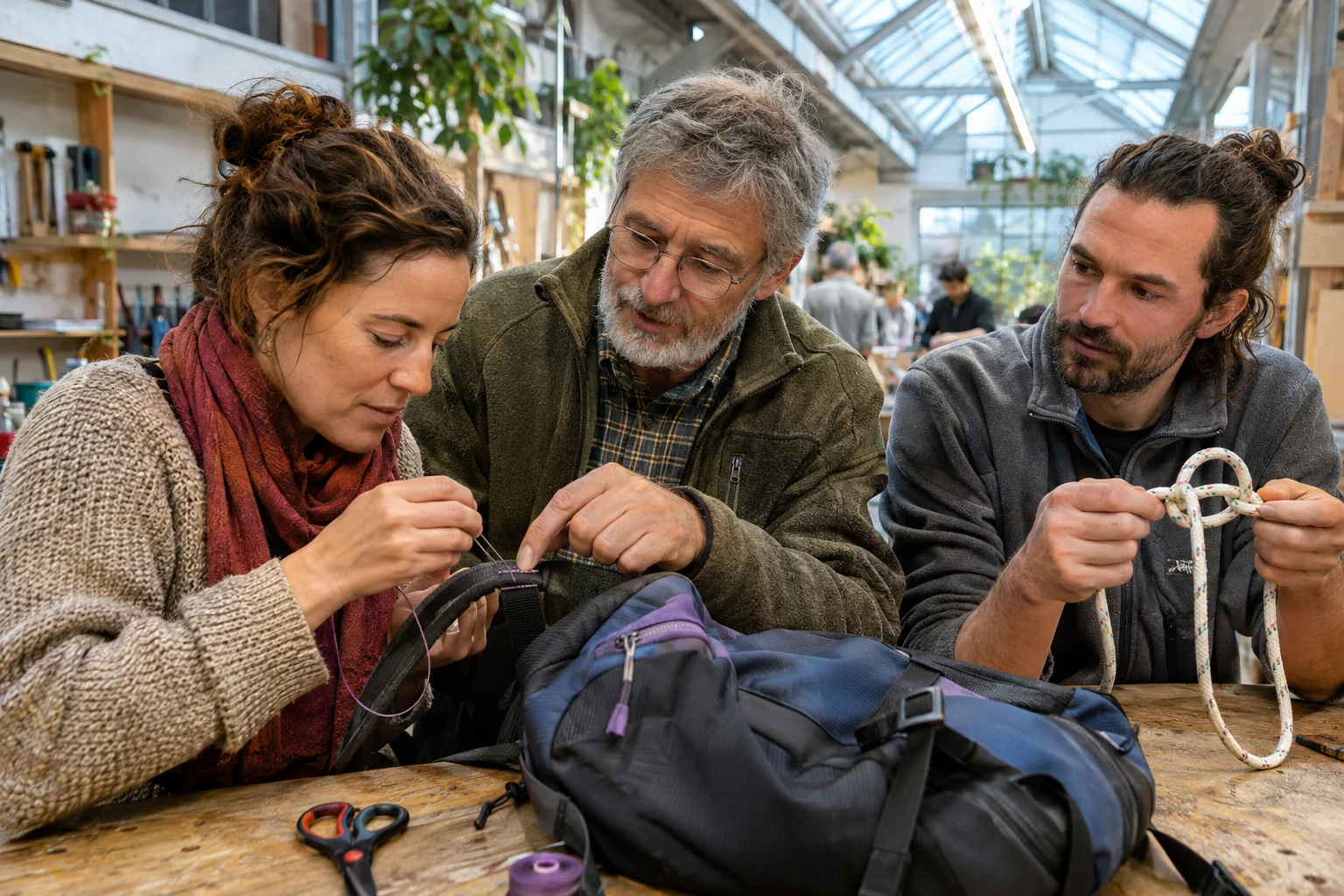
Learn the basics of sewing and mending, carpentry, basic mechanics, simple electrical repairs, food preservation and gardening. These skills make you useful to your group, and they can be traded when money loses its value. They are also skills you can pass on: teaching children to sew on a button or maintain a bike is already resilience. See traditional skills worth relearning and twenty-two self-reliance skills.
4. Learn to work with others
The last lesson may be the most important. People who prepare often tend to be very exclusive, as if sharing anything would threaten their survival. Experience shows almost exactly the opposite. After a disaster, people spontaneously organize on a small scale to help one another: disaster sociology has documented for decades that mutual aid is the most common response, far more than violence.
Television often portrays survival groups as gangs fighting for dominance. In reality, everyone usually agrees on what needs to be done (find water, food, shelter), but no one dares to take the initiative to organize. Be that person: propose a plan, share out the tasks, listen, and you will see a group of neighbours form who work together to improve things for everyone. An organized group, even a poorly prepared one, lasts longer than a single well-equipped person.
Do not expect that refusing to share will keep you safe longer. Setting aside a small supply to give, sharing your skills and encouraging every household to prepare is the best long-term strategy. See household leadership in a crisis, creating a mutual support group and community resilience.
- FitnessBeing able to carry, walk, work and recover.
- SkillsKnowing how to use each item, and how to do without it.
- The right measureThe right amount, maintained, portable and discreet.
- Other peopleOrganize, share, pass on: the group lasts longer.
Taking action
Pick one skill to learn this month, one walk with your pack this week, one sort through your gear to remove useless duplicates and one conversation with a neighbour about how to help each other. Those four steps are worth more than a shopping cart. To see where to focus your efforts, take the preparedness review.
Frequently asked questions
Do you need a lot of gear to be well prepared?
No. A solid base (water, food, lighting, radio, first aid kit, documents) is enough for most situations. The rest depends on your skills and your ability to organize with others.
Which skills should you learn first?
First aid, water management, safe fire and cooking, navigation with map and compass, then practical skills such as sewing, repairs and food preservation.
Is it dangerous to share your preparedness with neighbours?
You do not need to share the details of your supplies. But encouraging your neighbours to prepare and organizing mutual aid ahead of time makes the whole neighbourhood more resilient and reduces tension in a crisis.
Are weapons part of basic preparedness?
No. They are strictly regulated in both Canada and France and are not part of civil preparedness. A household’s safety rests first on prevention, discretion, coordination with neighbours and avoiding confrontation.