
In this article
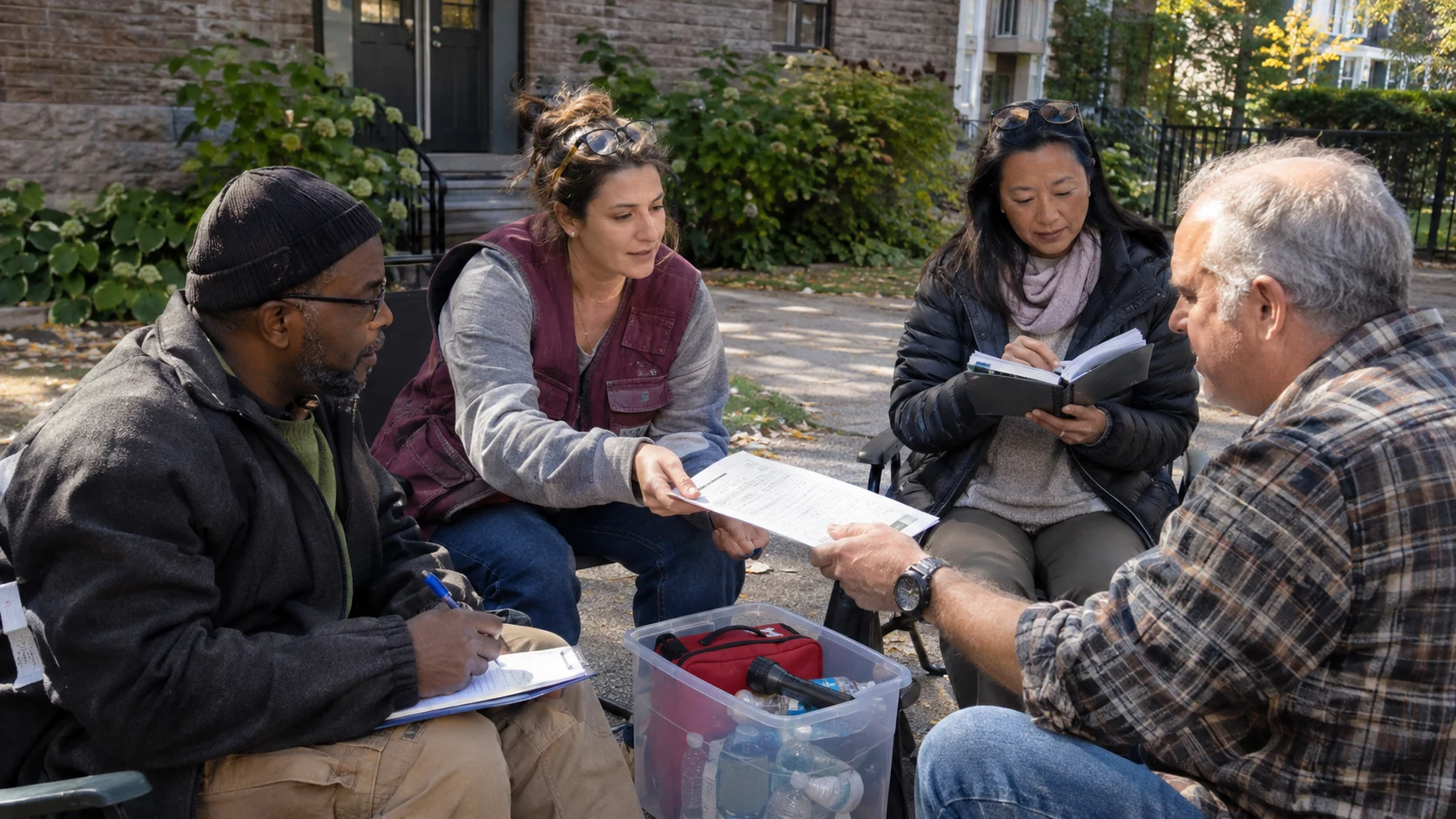
A mutual support group brings together people who agree to cooperate before, during and after a disruption. It can remain very simple: a few neighbors, relatives and a way to join. Its usefulness depends on relationships, organization and tenable commitments, rather than an impressive name or an accumulation of material.
Defining a civil and voluntary mission
Choose a concrete goal: check needs during a breakdown, help organize a trip or share official information. The group does not replace emergency services, health professionals or municipal authorities. It does not give anyone power over the other inhabitants.
Write a few rules: voluntary participation, respect for confidentiality, the right to withdraw, refusal of dangerous interventions and understandable decisions. An aid must not be conditioned on the abandonment of its autonomy or the disclosure of intimate information.
Meet people gradually
Start with existing links and local organizations. For a first meeting with new people, choose an accessible and appropriate place, such as a community room. Discuss a common need before showing your accommodation or reserves.
Trust is built through modest commitments. A skill advertised online or expensive equipment does not prove a person’s reliability. Above all, observe the ability to listen, to respect limits and to recognize what she can’t do.
Replacing Heroic Roles with Useful Responsibilities
| Responsibility | Concrete task | Expected Result |
|---|---|---|
| Coordination | Prepare an agenda and follow decisions | A second person knows the procedure. |
| Communication | Keep authorized contacts and relay verified reviews | A copy accessible in case of breakdown |
| Logistics | Arrange an agreed loan or transportation | An alternative solution if the resource is missing |
| First aid | Act within the limits of training and call for help | Several people trained |
| Support and mediation | Facilitate a discussion and identify a need for help | Ability to use an external resource |
| Maintenance and food | Sharing an adapted know-how | Compliance with safety and health rules |
The functions of “soldier”, improvised carer or unauthorized resource collector have no place in this context. A skilled person must not perform electrical, medical or structural work beyond his qualifications. The group protects people by recognizing its limitations.
Organize activities that really prepare
A short meeting can be used to check contacts, test a breakdown scenario or prepare first aid training with a recognized organization. Announce the topic in advance, make the venue accessible and schedule a report limited to the necessary information.
A first aid kit can support an appropriate intervention, but its contents must be known, maintained and adapted to users. It does not replace training or rescue instructions.
For a group purchase, set the property, storage, maintenance and access conditions before paying. Don’t promise simultaneous sharing of a resource that can only be used by one person.
Predict communications and absences
Choose a main channel, a means of relief and a news frequency adapted to the situation. If a person does not respond, do not immediately conclude that they are in danger. Agree on steps: try again, contact for relief, then ask for help according to the observed facts.
Do not send anyone to a dangerous building and do not delay an evacuation to reunite the group. The place of assembly must remain a safe, accessible and compatible option with official instructions. Each household retains a minimum of its own organization.
Taking stock without looking for a manager to blame
After an exercise, identify what worked, the tasks that were too heavy and the information that was missing. A person may be unavailable for a legitimate reason. Adjust commitments and schedule relays rather than requiring permanent availability.
First step : Gather a few volunteers, choose a single scenario and write a one-page procedure. Test it before expanding the group.
Canada - Emergency Family Planning · Norris et al. - Community Resilience Capabilities