
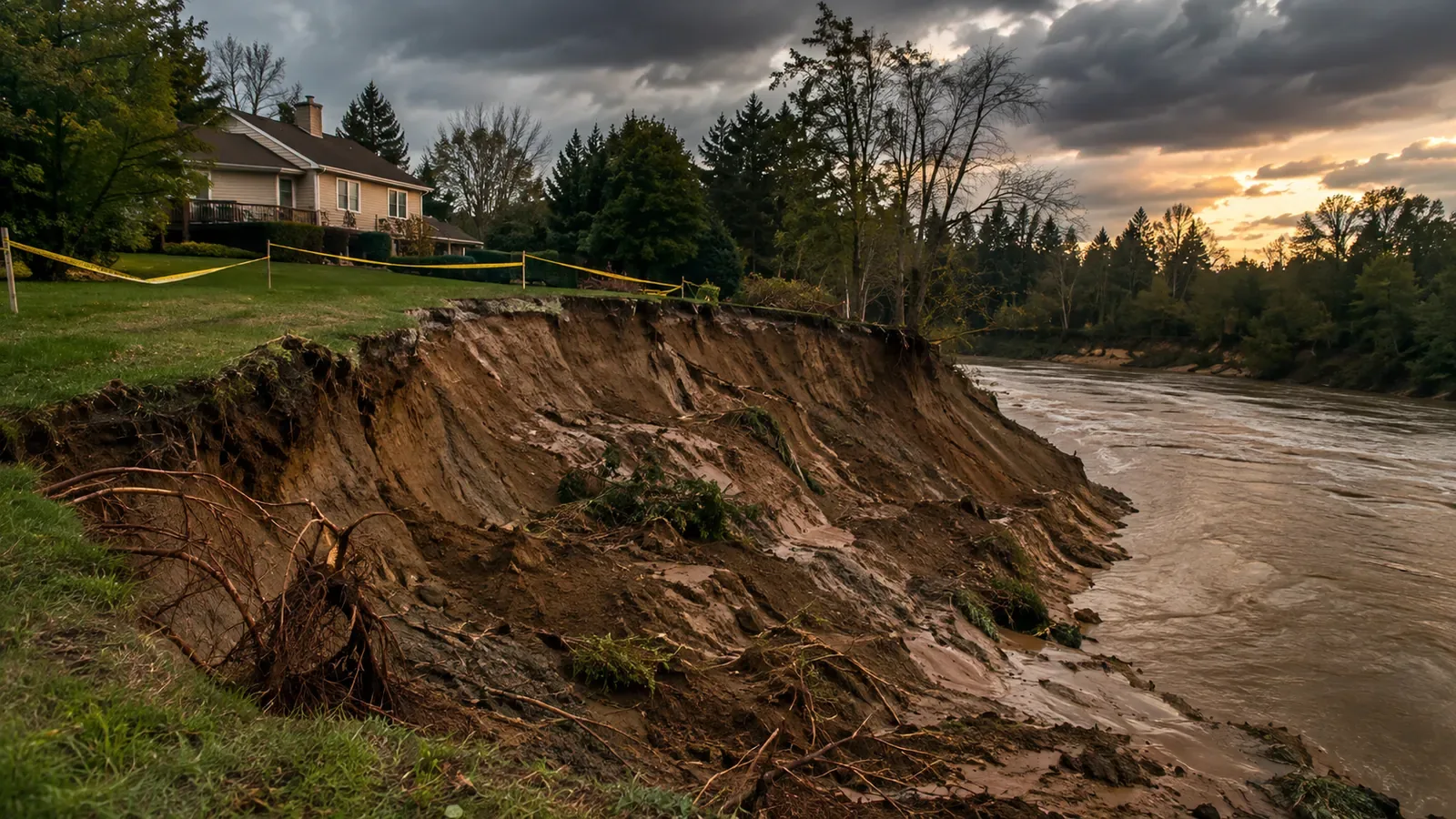
Natural · Risk index 6/9 (Quebec) · 7/9 (France)
Avalanche
An avalanche sweeps away whatever is on a snowy slope within seconds. In Quebec as in France, most are triggered by the victims themselves, while skiing, snowshoeing or snowmobiling off-piste.
Quebec / Canada
France
If you only do three things
- 1Check the avalanche bulletin before any off-piste outing
- 2Carry a transceiver, probe and shovel, and know how to use them
- 3Never go alone and tell someone your route
Lasting collapse?
Key figures
A danger we often trigger ourselves.
Understanding the risk
A slab of snow breaking loose.
An avalanche happens when an unstable layer of snow slides down a slope, often between 30 and 45 degrees. The weight of a skier, hiker or snowmobile is enough to break a weak layer: that is the most common cause of accidents.
In Quebec, the Chic-Chocs in the Gaspé, parts of Northern Quebec and the Lower North Shore are avalanche-prone. In France, Météo-France publishes a daily avalanche danger bulletin (BERA) for 35 massifs in the Alps, Pyrenees and Corsica.
Severity
Victims mostly die of asphyxia under the snow or of trauma. Survival chances drop sharply after about fifteen minutes of burial: companions, not rescuers, most often save lives.
Villages and roads can also be hit during exceptional snowfalls.
In detail
What to do depending on the situation.
| Situation | What to do | Avoid |
|---|---|---|
| Before leaving | Read the bulletin, choose a suitable route, tell someone | Leaving without a bulletin or gear |
| In the field | Cross steep slopes one at a time, watch for signs of instability | Bunching up below a loaded slope |
| Caught in an avalanche | Try to move to the side, drop your poles, protect your airway | Fighting the flow without protecting your face |
| Witnessing a burial | Mark the last-seen point, search with the transceiver, probe, dig, call for help | Leaving to get help while the victim is buried |
| After the rescue | Keep the victim warm, monitor breathing | Giving drinks to an unconscious person |
Assess your exposure
Are you more exposed than average?
Tick what applies to your situation.
Get prepared
Your preparedness checklist
Tick items as you go: your progress is saved on this device.
Suggested kits and plans
Before, during, after
The right actions, before, during and after.
Before
- Bulletin checked
- Transceiver, probe and shovel checked
- Route left with someone
- Trained group
- Phone charged
During
- Caught: move to the side
- Protect nose and mouth
- Witness: mark the last-seen point
- Search with the transceiver, then probe
- Call for help
After
- Keep the victim warm
- Monitor breathing
- Report the avalanche to authorities
- Do not go back onto the slope
- Talk about it, seek support
In Quebec, Canada and France
What changes depending on where you live.
Quebec / Canada
Avalanche Québec publishes forecast bulletins for the Chic-Chocs during the season. Mountain rescue is coordinated by the Sûreté du Québec, with patrollers and firefighters.
- Emergency
- 911
- Bulletin
- Avalanche Québec, Avalanche Canada
- Off-grid
- Satellite communicator or beacon
- Support
- Info-Social 811
France
Météo-France publishes the avalanche danger bulletin (BERA) and can place a department under orange or red avalanche vigilance when roads or villages are threatened.
- Emergency
- 112
- Bulletin
- BERA, Météo-France
- Rescue
- PGHM, CRS mountain units
- Alerts
- FR-Alert, vigilance
Domino effect
This risk often triggers others
Frequently asked questions
Frequently asked questions
Are there really avalanches in Quebec?
Yes. The Chic-Chocs have them every winter, and deaths occur in some years, such as the three snowmobilers killed on Mont Médaille in March 2024.
Is a transceiver enough?
No. Without a probe and shovel, and without practice, you cannot dig a victim out in time.
Does an airbag pack protect me?
It helps you stay on the surface, but it replaces neither the bulletin nor good decisions.
What does “considerable” danger mean?
It is level 3 of 5. Triggering by a single skier becomes possible on many steep slopes.
365 Program
Prepare for this risk, week by week
Data checked on November 23, 2026. Figures come from the organizations cited; consult them for updates.
Sources
Data checked on November 18, 2026. Figures come from the organizations cited; consult them for updates.
- Météo-France, Avalanche dangers and how to react (in French)
- ANENA, 50 years of avalanche accidents in France (in French)
- Global News, Gaspé avalanche, March 2024
- Global News, Canada’s deadliest avalanches
- The Canadian Encyclopedia, Avalanche
This page provides general preparedness information. It does not replace instructions from the authorities: in an emergency, call 911 in Canada or 112 in France.
Start with the basics.
Our free “Be Prepared” guide: 72-hour kit, family plan and your own risk assessment.
Avalanche
Index Quebec/Canada 6/9 · France 7/9
If you only do three things
- Check the avalanche bulletin before any off-piste outing
- Carry a transceiver, probe and shovel, and know how to use them
- Never go alone and tell someone your route
During
- Caught: move to the side
- Protect nose and mouth
- Witness: mark the last-seen point
- Search with the transceiver, then probe
- Call for help
After
- Keep the victim warm
- Monitor breathing
- Report the avalanche to authorities
- Do not go back onto the slope
- Talk about it, seek support
Emergency numbers: 911 (Canada) · 112 (France)
prepacivile.com/en/risks/avalanche/