
In this article
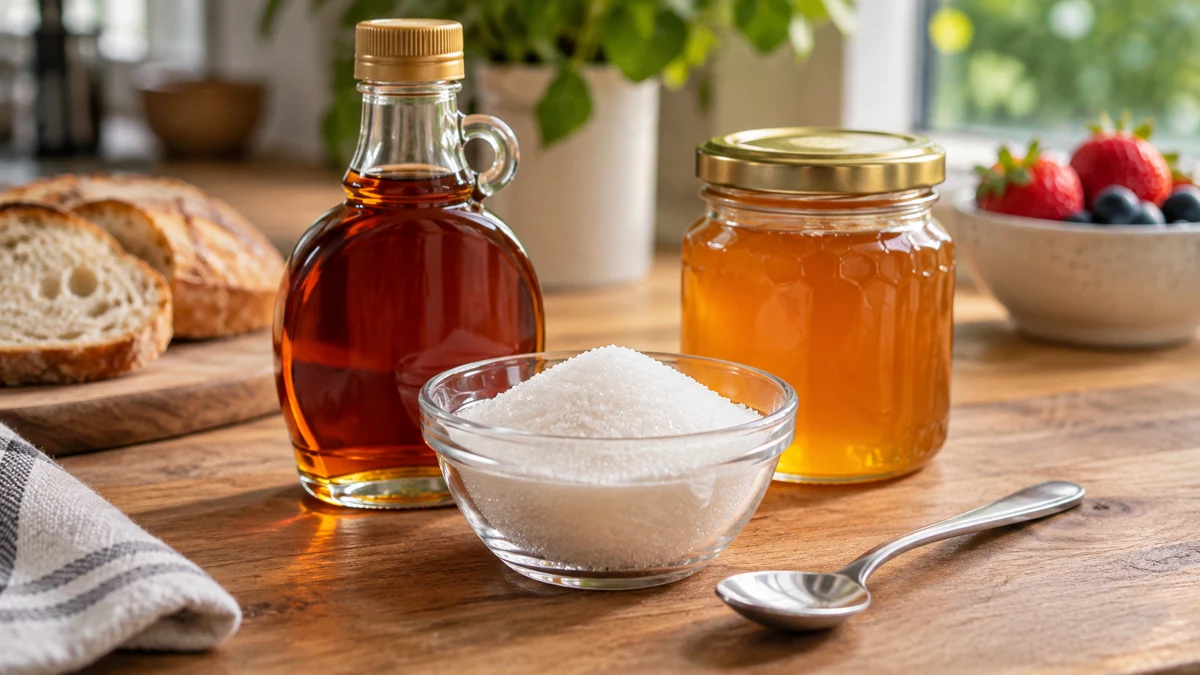
This week, look at the sugars and sugary products in your reserve. They can have a place in recipes and the comfort of the home, without becoming the basis of food. The goal is to choose quantities and formats that are consistent with your uses.
Start with the recipes
Note the sugar, honey, maple syrup or molasses that you actually use. Count the quantities for the planned recipes, and then compare them to the stock. It is not necessary to multiply the varieties or to constitute a reserve for a hypothetical barter.
Consider personal recommendations, especially in the presence of diabetes or other medical needs. So-called natural products remain sources of sugars. A product does not become a treatment because it contains compounds presented as beneficial.
Respect the conditions of conservation
Keep packaging clean, closed and protected from pests. Read the instructions before and after opening. Some syrups and jams require the cold after opening; plan formats that you can use under the conditions of the plan.
Do not retain an indefinite shelf life for all sweet products. The crystallization of a honey and an alteration are not the same, but the appearance alone does not replace the proper indications. A moldy or questionable product does not recover simply by heating it.
Distinguish food and care product
Do not apply food honey, sugar or syrup to an injury as a domestic treatment. Medical products intended for certain care meet other requirements. Seek professional advice for care and follow your first aid training.
Honey should not be given to children under one year of age. Check the needs of infants separately and do not change their diet based on a general formula list.
Keep without improvising the process
In a jam or can, the proportions and method can contribute to health. Do not reduce or replace the ingredients of a validated recipe without proper instructions. Sugar does not automatically make any preparation stable at room temperature.
Fermented beverage recipes and alcohol production require specific knowledge and rules; they are not necessary to carry out this week’s actions.
Evaluate production as a separate project
Beekeeping, maple syrup and sugar crops require land or authorized access, equipment, skills and time. The climate and yields vary. A sweetening plant does not replace all the functions of sugar in a recipe and future production should not be counted as a current reserve.
Actions of the week
- Count the quantities used in the usual recipes.
- Check the medical needs and those of infants.
- Read the conditions after opening.
- Choose consumable formats and a rotation.
- Separate food uses from promises of care or yield.
Your expected result: a proportionate sugar reserve, used as food and preserved according to its indications.
Useful reference
Choosing Food and Beverages - Canada's Food Guide.
Honey and infant botulism - Health Canada.
Put this reading into practice
Perform the action as you wish and then check the result. Your follow-up remains specific to this route.
52 weeks to strengthen your preparation; Week 36
Adjusting the Sweet Products
Your action: Check the actual usefulness of these products in the usual meals and health constraints of the home.
To check: Quantities remain adequate; no food is presented as protection or treatment.
To do