
In this article
Learning to preserve food can reduce waste and diversify the reserve. This week, choose an accessible method and a source of validated instructions. Conservation requires a process adapted to the food; it is not just about closing a container.
Distinguishing the methods
Freezing depends on maintaining the cold chain. Dehydration requires control of preparation, drying and storage. Canning uses a precise combination of acidity, temperature and duration. Smoking or fermentation does not automatically make a product stable at room temperature.
First choose a small preparation that you will consume and can reproduce. A well-controlled method is more useful than a large stock of accessories or ingredients you’ve never used.
Follow a proven recipe for canned food
The method depends in particular on the acidity. Low acid foods, including many vegetable or meat preparations, require proper apparatus and pressure treatment. An ordinary pot or pressure cooker for cooking meals is not automatically a suitable canning device.
Tomatoes also require the precautions of the validated recipe. Do not change proportions, acidification, jar format or treatment based on intuition. Check for altitude and maintenance adjustments in the recognized instructions.
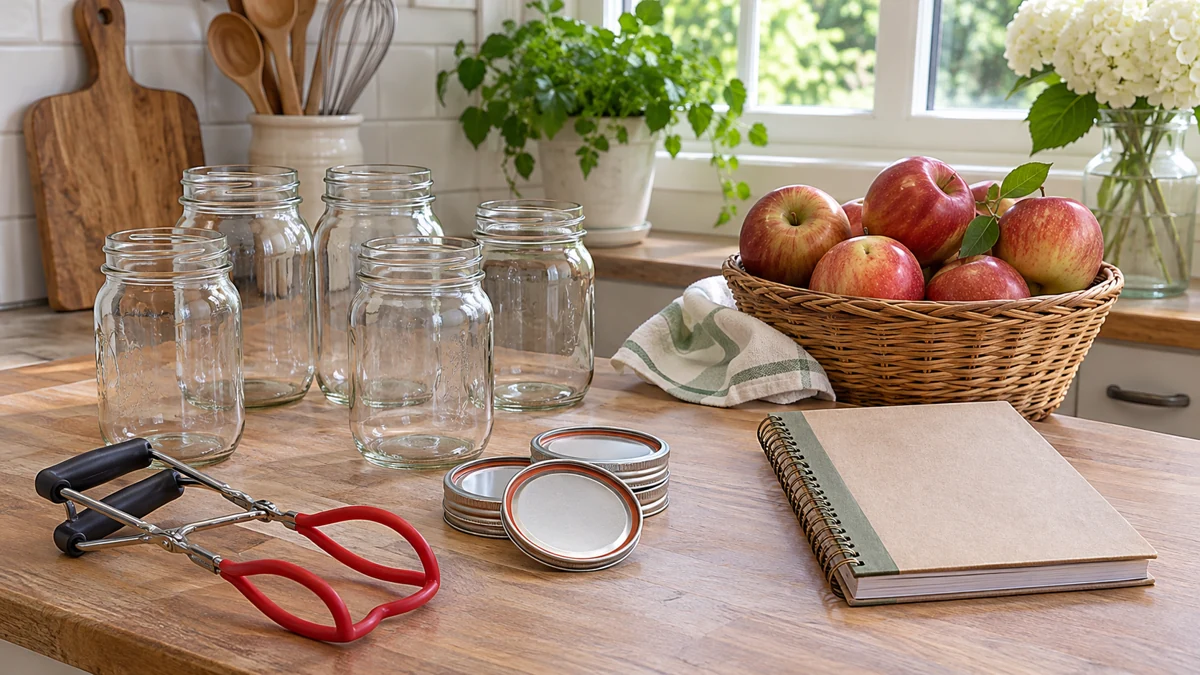
A jar clamp helps manipulate the material; it does not validate the method and does not replace either the device or the recipe. Check compatible jars, lids and gaskets before starting.
Predicting the limits of freezing
Monitor the temperature with a suitable thermometer and know the instructions in case of breakdown. Avoid opening the freezer unnecessarily. A normal smell or reassuring appearance is not enough to judge the safety of a food whose cold chain has been broken.
Do not try to “save” a food that has become unsuitable by then canning or drying it. The conservation choice starts with a healthy food and controlled conditions.
Dealing with drying and specialized processes
A dehydrator should be used with instructions adapted to the product. For meats, the risks and temperature stages require special attention. A car in the sun is not a controlled food drying process.
Salts of salting, nitrites and fermentation cultures are not used randomly. Do not store large quantities to improvise a recipe. Look for training and recognized references before these processes, and then precisely respect the storage conditions obtained.
Actions of the week
- Choose a single method and a simple preparation.
- Read a reliable public reference and the package leaflet.
- Check the ingredients, jars or containers required.
- Make a small amount under normal conditions.
- Label the preparation and plan its consumption according to the instructions.
Your expected result: a first reproducible and documented experience, without promise of universal duration.
Useful references
- Canning: Health Tips - Health Canada.
- Homemade preserves: preparation and prevention - Gouvernement du Québec.
Put this reading into practice
Perform the action as you wish and then check the result. Your follow-up remains specific to this route.
52 weeks to strengthen your preparation; Week 18
Choosing conservation methods
Your action: Classify foods according to their preservation and consult health instructions before testing a method.
To check: Canning recipes are proven; no universal duration is assumed.
To do