
In this article
We recently looked at a few training ideas to improve preparedness at home. However, once your home is ready and it’s time to head out, low-profile camping (often called “stealth camping”) can be a challenging and fun way to improve your fitness and strengthen your fieldcraft and self-reliance.
Camping comes in many styles and forms. Stealth camping, also called tactical camping, means staying for a short time while being as discreet as possible, ideally on land where camping is allowed or with the owner’s permission. It emphasizes strategy rather than simply enjoying nature, blending traditional outdoor practices with strong tactical considerations.
Staying out of sight while resting and resupplying increases safety and saves energy, two essentials in most survival situations. Even if you live in a big city and can’t see yourself leaving, the truth is we never know — and that is why we prepare. Finally, stealth camping is good exercise in itself (especially for those who like being outdoors and active).
Legal and safety disclaimer: camping carries inherent risks, and low-profile camping even more so. This text isn’t legal advice. It is your responsibility to follow the laws and regulations in force: camping on private land without permission is trespassing, and many municipal parks prohibit being there at night. In Canada, most conducted energy weapons and sprays designed for use against people are prohibited weapons. Always favour land where camping is permitted.
Stealth camping in the city
The urban environment offers many places and opportunities for low-profile practice, such as parks, green spaces, bike paths and other public land with vegetation, varied terrain and little foot and vehicle traffic. It is a way to practise tactics and techniques, develop urban skills and discover the best and safest spots in your area without even leaving town.
Be careful: in most Quebec municipalities, bylaws prohibit camping or staying in parks overnight, and you can be fined. In the city, it is therefore better to practise during the day (scouting, fast setup and takedown, noise and light discipline) or on private land with the owner’s permission — a friend’s yard, a family woodlot. Also keep in mind that an unknown camper can worry the neighbours: discretion must stay respectful.
Stealth camping in rural areas
These areas offer a suitable mix of wild and semi-urban features, with more places to camp discreetly and fewer people around. Look for spots in or near wooded areas, pastures, farmland, reforestation areas, small towns and back roads. Roadside strips with good vegetation and favourable terrain can also work. Traditional public campgrounds aren’t stealthy, but they offer a safer option for relaxing, cleaning up and getting ready.
The golden rule in rural areas: ask permission. Most farmland and woodlots are private, and an owner who has been asked is often more accommodating than you might think. Avoid railway rights-of-way (access is prohibited and dangerous), the space under bridges (risk of flash floods) and the surroundings of gas stations. In Quebec, public lands (terres du domaine de l’État) — a large part of the forested territory — generally allow short-term camping, subject to the rules in force; ZECs and wildlife reserves also offer sites, sometimes without services, for an access fee.
Stealth camping in the wilderness
Lower density, more vegetation and varied, rugged terrain mean a more conventional form of camping, with less private land and fewer people. However, wildlife, bad weather and accidents are threats to take into account. Heading into the wilderness alone isn’t recommended, except for experienced people who have left a detailed itinerary with someone close and carry an off-grid communication device.
Where to practise legally in Quebec
| Type of land | Camping allowed? | Notes |
|---|---|---|
| Municipal parks | Generally not at night | Daytime drills only; check the municipal bylaw |
| Private land | With the owner’s permission | Without permission, it is trespassing |
| Public land (domaine de l’État) | Generally yes, for short stays | Follow the rules in force, fire prevention and SOPFEU notices |
| ZECs | Yes, depending on the zone | Access fees and registration required |
| Wildlife reserves and national parks | Yes, at designated sites | Reservation and fees; camping off-site prohibited |
| Railway rights-of-way, under bridges | No | Prohibited and dangerous (trains, floods) |
Rules change: always check with the managing organization before you go. Also apply Leave No Trace principles: leave nothing behind and don’t light a fire when it is prohibited.
Stealth camping gear
Gear should be reasonably compact and light, but there is no need to overcomplicate it. A 40 to 50 litre pack with the essentials is enough for most situations for two days or more:
Shelter
The lightest and most compact options are hammock-and-tarp kits and one-person (1P) bivy tents, such as the Snugpak Ionosphere, Stratosphere or similar. Bivies are low-profile, so they are perfect for staying out of sight and protected from the weather and insects. Hammocks and tarps need trees. If you live where winters are harsh, ask local camping groups about the best gear and the safest practices.
Food and drink
Keep it simple and reduce the need for gear, time and cooking. If protein bars and granola bars are too dry and bland, make a few sandwiches wrapped in aluminum foil for a handy, tasty bite. Chocolate bars and a few candies are perfect for a quick sugar boost. Bring a Nalgene bottle or other container to carry water, a portable water filter and a few iodine tablets for refills. An electrolyte powder mix can mask bad-tasting water and doubles as a recovery drink.
First aid
Always carry an individual first aid kit (IFAK), along with over-the-counter medication for the most common problems such as headaches, diarrhea and the like.
Personal safety
In Canada, civilians aren’t allowed to carry a weapon to defend themselves against people, and stun guns and sprays designed for use on humans are prohibited weapons. Bear spray is legal for protection against wildlife and must be carried and used for that purpose. The best personal safety remains prevention: choose an authorized site, tell someone close, keep a charged phone or a distress beacon, and leave as soon as a place feels sketchy. A whistle and a powerful light are also useful to signal your presence or call for help.
Additional stealth camping gear
- A basic insulated sleep system
- Sunscreen
- Insect repellent
- A decent knife
- A headlamp
- Power bank and cables
- Mylar emergency blanket
- Compressed towel tablets
- A spare jacket and pair of socks
Best practices and tips for stealth camping
Going unnoticed
The goal is to go unnoticed. Getting caught is a possibility and can end in three ways: people ignore you, behave kindly, or don’t. I have been invited for coffee and cornbread a few times, and only once was I asked to leave less politely. In my experience, being mistreated is rare.
Safety is priority number 1
Safety is always a concern, and it would be even more so during a major crisis when emergency services are overwhelmed. Still, predators, ill-intentioned people and opportunists exist everywhere, even now. Thinking in these terms helps develop the right mentality and mindset. Be prepared and take every possible precaution.
Location, location, location
The campsite and its surroundings will dictate the best concealment tactics, such as which camouflage pattern to use.
Finding and choosing a good spot is essential. It should offer concealment and protection. Inspect the area for any potential risk of flooding, fire, storms, wildlife, poisonous plants and insects.
Timing is everything
Arrive at the chosen spot half an hour early to observe the surroundings before setting up camp. That should be enough to pick up clues and decide whether the spot is good or bad. Set up camp at dusk, once traffic has died down, and leave at first light (or just before) to reduce the chances of being spotted. If you are camping with permission, these hours are still a good discipline exercise.
Have an exit plan
This is also the time to set up an exit plan. Spend a few minutes spotting potential escape routes, obstacles, hazards and other risks. Listen to your gut. With time and experience, we get quick and efficient at assessing places.
Ambient lighting
When camping in town, look for a dark spot surrounded by well-lit areas. That way you can stay hidden while still seeing around the site. It also gives you brighter, safer ground to walk on if needed.
Take the high ground
Choose raised ground: set up camp above nearby roads or trails to stay out of sight while still being able to spot anyone approaching. Avoid ridges and ridgelines, which are more exposed to the weather and make it easier to see silhouettes from a distance.
Stay hidden
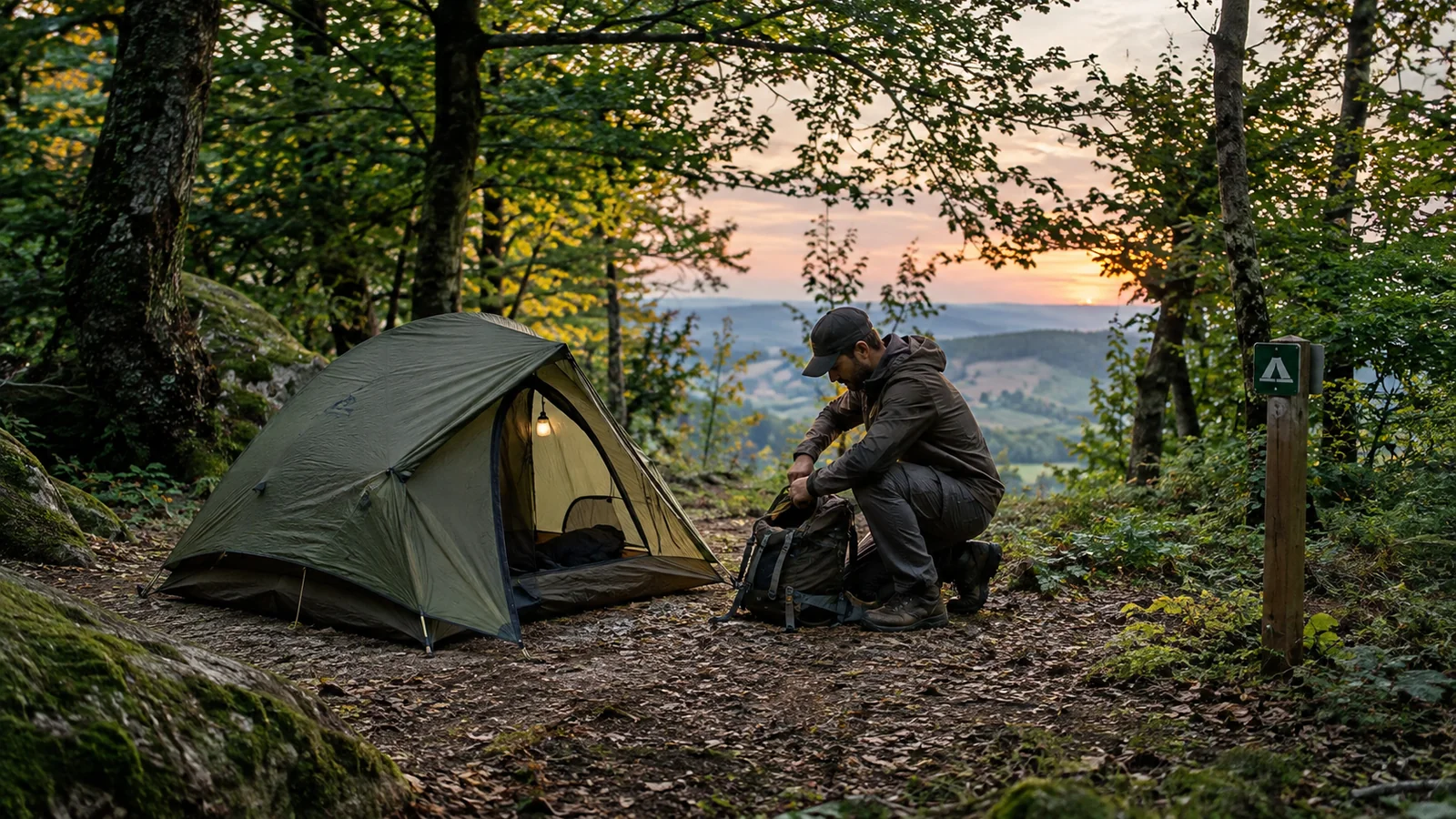
Blend into your surroundings. Use tents, tarps and clothing in earth tones. Dark olive green suits most kinds of vegetation, in the wild or in town. Camouflage generally works best in the woods but draws too much attention in urban environments.
Fire and light discipline
Smoke and light attract attention, especially in rural and wild areas. Alcohol and solid fuels produce blue flames and no smoke, but must be shielded. Canister stoves produce no smoke or bright flames, but can be noisy.
Use lanterns, headlamps, flashlights and other light-emitting devices sparingly, especially in the wild or rural areas where even the glow of a smartphone can be seen from far away. In cities (and depending on where you camp), there are usually other lights around to cover yours, but you still need to be careful.
Stay alert
Keep your senses open and alert. Humans are average compared with animals’ senses, but our sight, hearing and smell are still useful. And practice helps: the more we use and rely on our senses, the better they get.
Practise ahead of time
Get familiar with your gear to speed up setting up and breaking camp. Practise in your yard or bedroom until you feel comfortable enough. Always test gear at home before heading out.
Rotate sites
Changing location is essential. Avoid staying in the same place for two consecutive days or nights. If you are going on a multi-day trip, plan several spots so you have options. If you are caught or even spotted, don’t come back.
Let people know
Always tell someone close (a parent, a friend, whoever) where you are going and with whom.
Frequently asked questions
Is stealth camping legal in Canada?
It depends entirely on the land. On private land, you need the owner’s permission. In municipal parks, being there at night is generally prohibited. On public land, short-term camping is often allowed, subject to provincial rules. This text isn’t legal advice: always check local regulations.
What is the point of low-profile camping for preparedness?
It forces you to travel light, master your gear, observe your surroundings and limit noise, light and traces. These skills are useful during an evacuation, extended travel or a stay outdoors in difficult conditions.
Can you light a fire?
Only where it is allowed and when there is no open-fire ban. In Quebec, check SOPFEU before you go. A small stove is more discreet, faster and often safer.
How do you protect yourself without a weapon?
By choosing an authorized site, telling someone close your itinerary, keeping a means of communication, staying aware of your surroundings and leaving as soon as a situation seems wrong. Bear spray is legal against wildlife, not against people.