
In this article
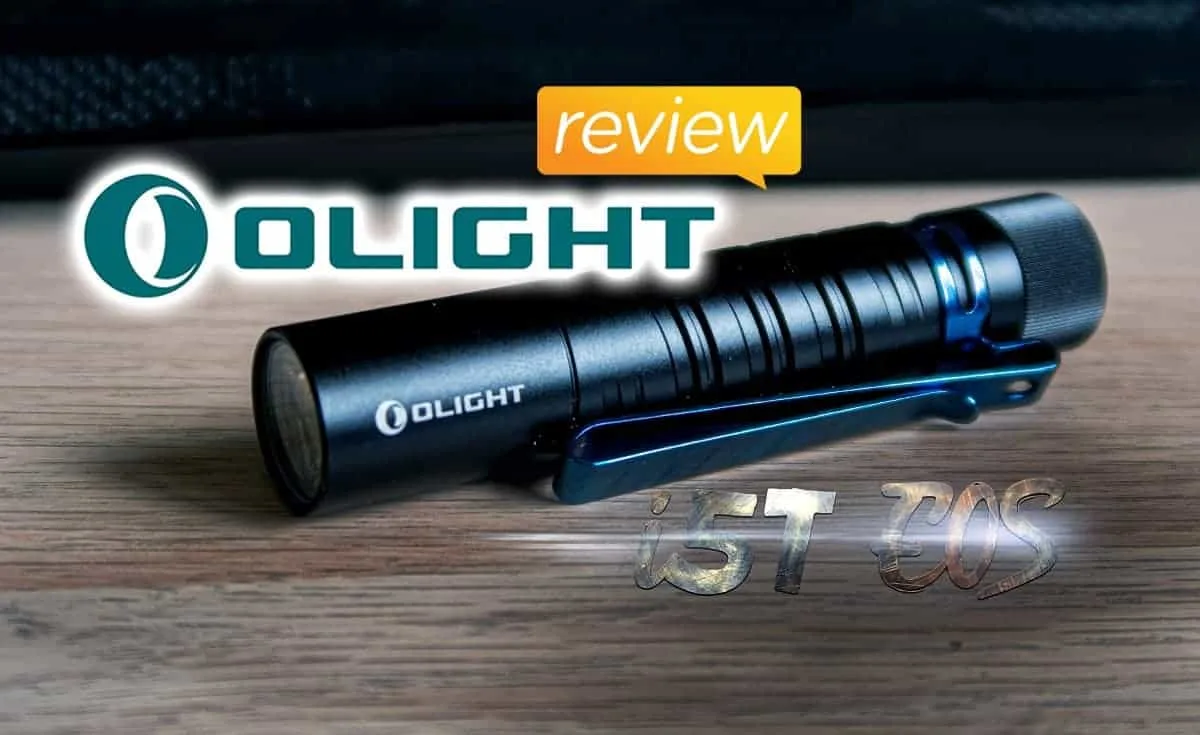
The Olight i5T EOS is a small flashlight that runs on a single AA battery. On paper, it is not impressive: 300 lumens at most, and only for a few minutes. But for preparedness, it ticks a box many modern lights have dropped: it uses a battery you can find anywhere, in any convenience store, and that you can store for years. Here is what we took away from our review.
Our take in short
In short. The i5T EOS is simple, tough and affordable. It takes rechargeable NiMH and lithium AA batteries, it is waterproof (IPX8) and its tail switch allows momentary light. On the other hand, it has only two levels, no very low mode, no lockout, and its cool tint with average colour rendering is not the most pleasant. It is an excellent backup light for a drawer, a car or a kit, precisely because it does not depend on a proprietary battery.
Specifications
| Feature | Olight i5T EOS |
|---|---|
| Emitter | Osram LED, TIR optic |
| Claimed maximum output | 300 lumens |
| Claimed throw | 60 m (197 ft) |
| Claimed intensity | 910 candela |
| Battery | 1 × AA: 1.2 V NiMH or 1.5 V lithium (alkaline works but is not recommended) |
| Charging | none in the light: charge batteries separately or replace them |
| Switch | mechanical tail switch (momentary possible) |
| Water resistance | IPX8 |
| Drop resistance | 1.5 m (5 ft) |
| Length | 95 mm (3.7 in) |
| Diameter | 17.8 mm (0.7 in) |
| Weight | 60 g (2.1 oz), battery included |
At the time of our review, its suggested retail price was about $40.
What’s in the box
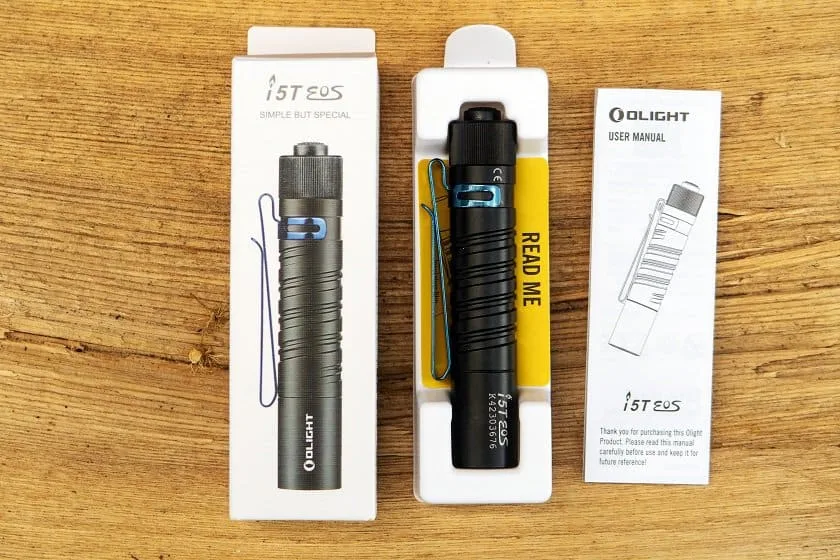
- the i5T EOS with its clip;
- one AA battery;
- the manual.
No holster or lanyard is included, but the clip has a lanyard attachment point. Before first use, unscrew the tail cap and remove the yellow insulating film on the battery terminal.
Build quality
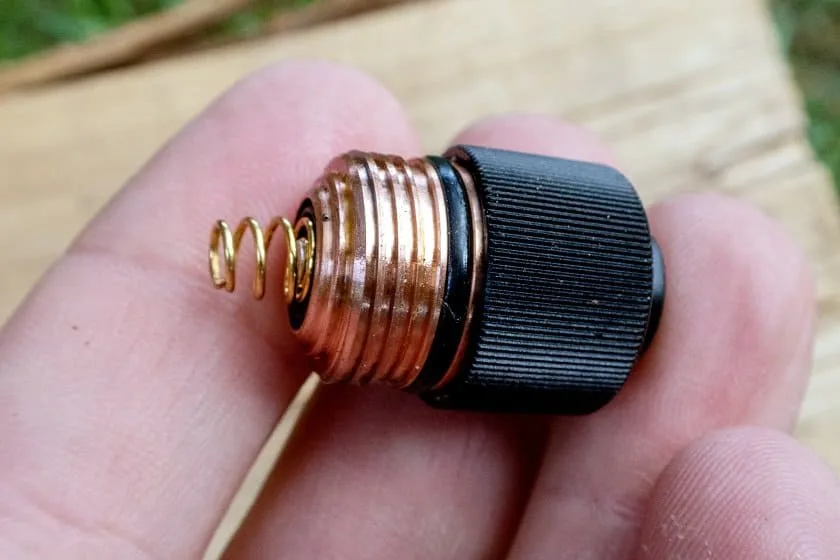
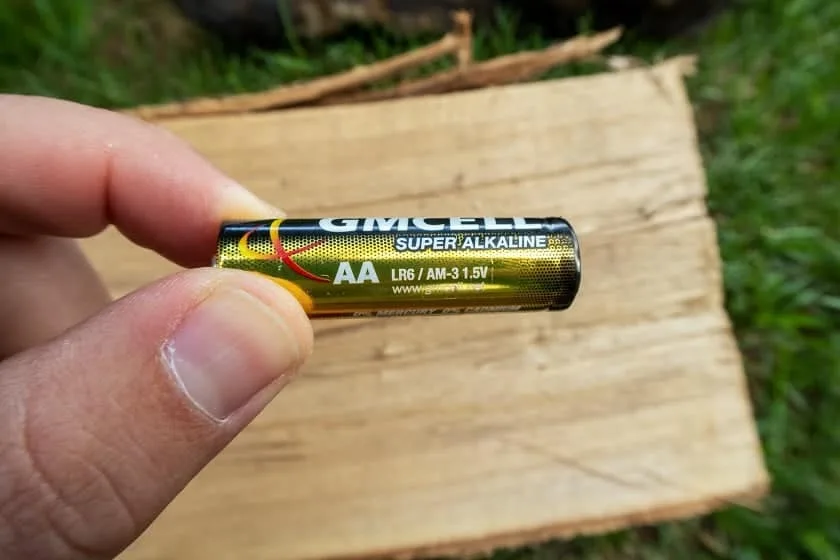
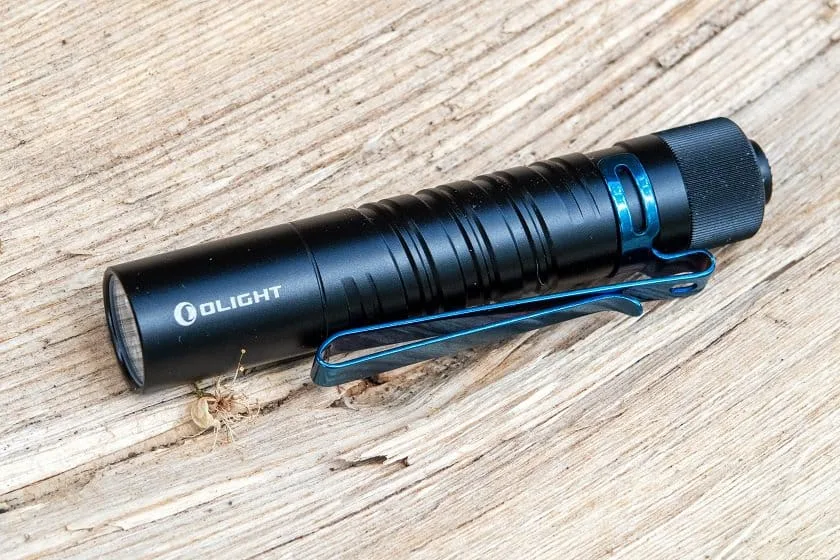
The aluminum body has even anodizing. Olight uses a “double helix” knurling that gives a good grip, even with wet hands or gloves. The tail cap holds a copper-plated spring. In our review, the light took Eneloop, GP ReCyKo+, Energizer Ultimate Lithium and regular alkaline batteries without any fit issues.
We also submerged it: it came out with no water inside, consistent with its IPX8 rating.
Carry
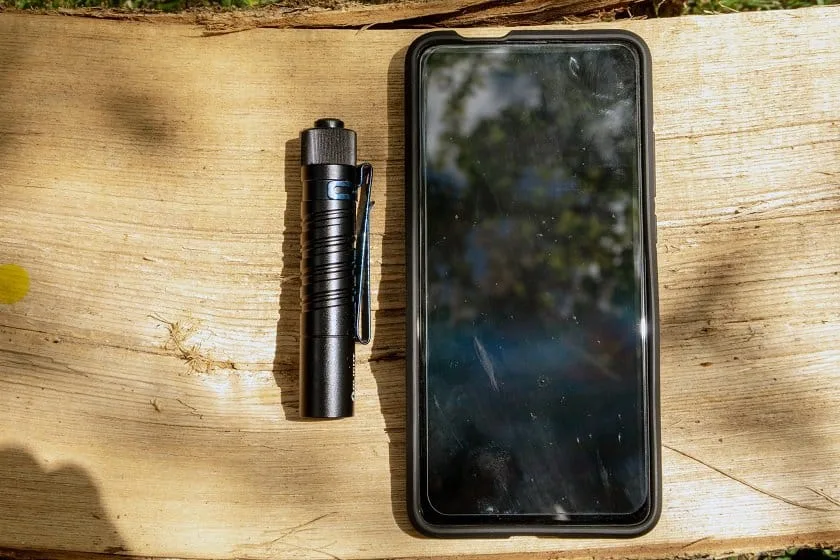
At 95 mm and 60 g, it slips into a jeans or jacket pocket. The two-way clip lets you carry it bezel up or down, and clip it to a cap brim for hands-free use. Its tension is strong enough to keep it firmly in place. The clip cannot, however, be moved from one side to the other.
Batteries: its real strength
For preparedness, the AA format is a major advantage: these batteries are sold everywhere, shared with many other devices (radio, headlamp, detectors) and easy to store.
- Lithium AA (for example Energizer Ultimate Lithium): the best choice for a light stored for a long time, as they keep well and handle cold.
- Rechargeable NiMH: ideal for regular use, charged in a separate charger, possibly solar.
- Alkaline: they work, but Olight does not recommend them. In long storage, an alkaline cell can leak and damage the light; remove it if the light sits unused for months.
Modes and runtime
| Mode | Claimed output | Claimed runtime |
|---|---|---|
| Low | 15 lumens | 20 h |
| High | 300 lumens, then 150, then 30 lumens | 3 min, then 25 min, then 2 h 2 min |
High steps down automatically. Low, at 15 lumens with 20 hours claimed, is the mode that matters during an outage: it is enough to move around a house, cook or read.
The interface
The light is operated with a mechanical tail switch. It needs a fairly firm press, which limits accidental activation.
| Action | Result |
|---|---|
| Half press | Momentary Low |
| Full press (click) | Constant Low |
| Two half presses | Momentary High |
| Two half presses then click | Constant High |
| Two clicks within 2 s | Switch to the other mode |
There is no mode memory: it always starts on Low if it has been off for more than 2 seconds. There is no electronic lockout; to carry it in a bag, loosen the tail cap slightly. The tail switch also keeps it from tail-standing.
The beam
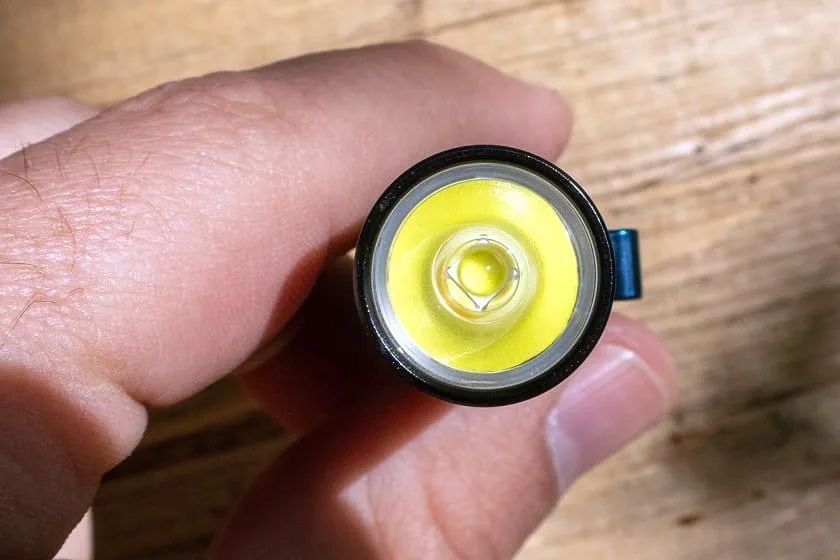
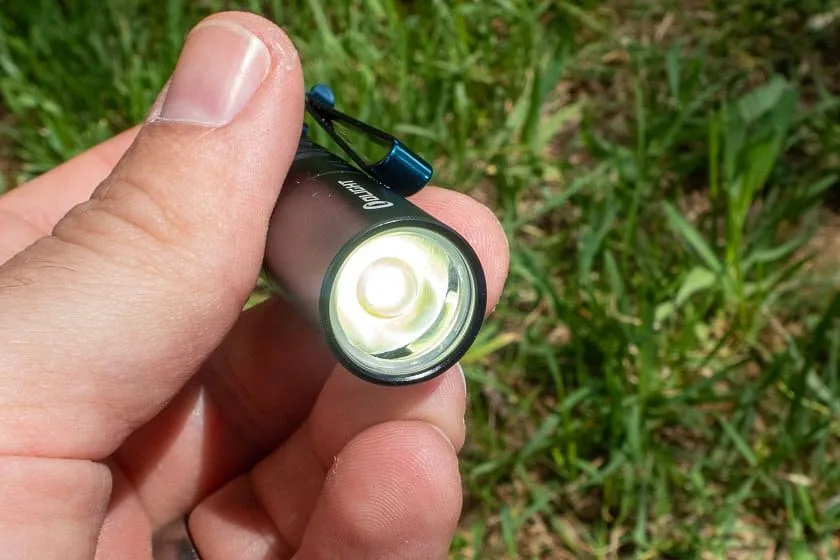
The TIR optic produces an almost circular hotspot with a faint surrounding ring and little spill. The beam is designed for close and mid-range work. The tint is cool, around 6,000 K, with a colour rendering index of about 70 and a slight tint shift across the beam. Nothing that matters for emergency use, but less pleasant than a neutral-tint light for reading.
Where does it fit in a preparedness kit?
- The ideal drawer light: an i5T EOS with a lithium AA can wait in the kitchen, the car or the 72-hour kit with no maintenance.
- Redundancy: it pairs well with a rechargeable light that uses a proprietary battery. If the cable or battery fails, the AA light takes over.
- Standardize your batteries: choose a radio and a headlamp that also run on AA, so you only have one format to store.
Strengths and limitations
- StrengthsA single AA, available everywhere; takes NiMH and lithium; IPX8 waterproof; tail switch with momentary; two-way clip; affordable.
- LimitationsOnly two levels; no very low mode; no lockout; cool tint and average colour rendering; cannot tail-stand; no holster included.
The verdict
The i5T EOS won’t win any output contests, but that is not its job. It is simple, sturdy, waterproof, and runs on the most common battery there is. For a preparedness kit, that is exactly what you want from a backup light. If you only store one in a drawer with a lithium battery, it is a very good choice.
Frequently asked questions
Can I use alkaline batteries?
Yes, but Olight advises against them. For a light stored a long time, prefer a lithium battery, which does not leak and handles cold better.
Does it charge over USB?
No. It has no charging port: you replace the battery, or charge a NiMH cell in a separate charger.
Does it work in extreme cold?
With a lithium battery, yes; it is the best choice for a Canadian winter. NiMH and especially alkaline cells lose a lot of capacity in the cold; keep the light in an inside pocket.
Transparency. The light and battery were provided by Olight for this review, with no other compensation. The observations are our own; specifications and prices may have changed since. Check the manufacturer’s page before buying.
Sources
- Olight, i5T EOS manual (specifications, modes and interface).
- PrépaCivile, review of the supplied unit: photos, battery compatibility and immersion test.
Go further: our reviews of the i3T Plus and the Baton Pro, the Power outage fact sheet and the emergency equipment builder.