
In this article
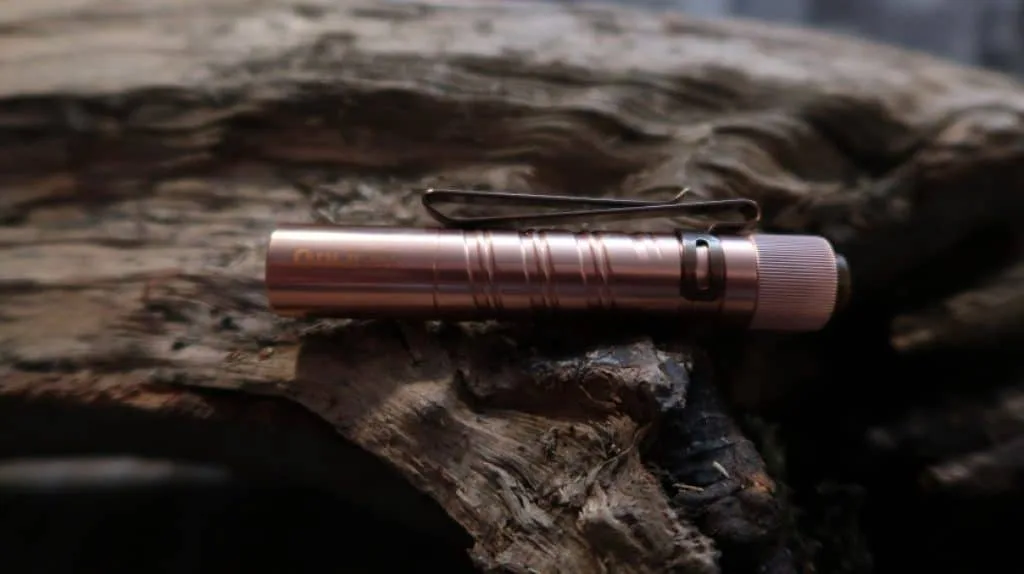
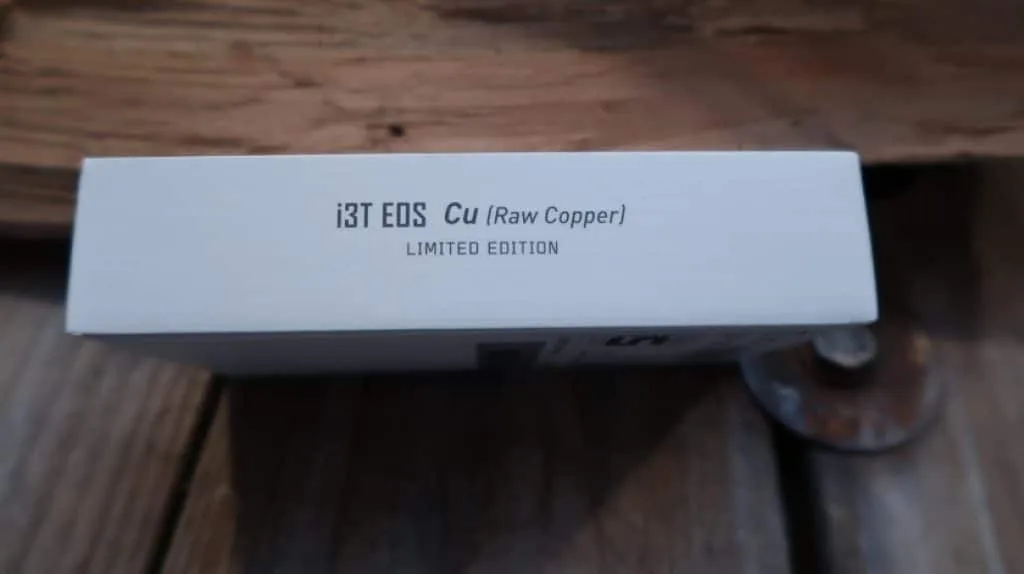
The Olight i3T EOS Cu is the limited-edition copper version of the i3T EOS. It is a small 89 mm light that runs on a single AAA battery, the kind found in remote controls and in any store. Two levels, a tail switch, a clip: nothing more. For preparedness, that simplicity is exactly the point. Here is our review.
Our take in short
In short. The i3T EOS Cu is a simple, reliable backup light: one AAA battery, two levels (5 and 180 lumens), a tail switch with momentary light, and IPX8 water resistance that our underwater test confirmed. On the other hand, it has no lockout, it can’t tail-stand, and copper makes it heavier than the aluminum version. For a kit or a keychain it is a very good choice, as long as you remove the battery when carrying it in a bag.
Specifications
| Feature | Olight i3T EOS Cu |
|---|---|
| Emitter | Philips Luxeon TX, TIR optic |
| Claimed maximum output | 180 lumens |
| Claimed intensity | 900 candela |
| Claimed throw | 60 m (197 ft) |
| Battery | 1 × AAA |
| Charging | none in the light (battery charger optional) |
| Switch | mechanical tail switch with momentary half press |
| Water resistance | IPX8 (2 m) |
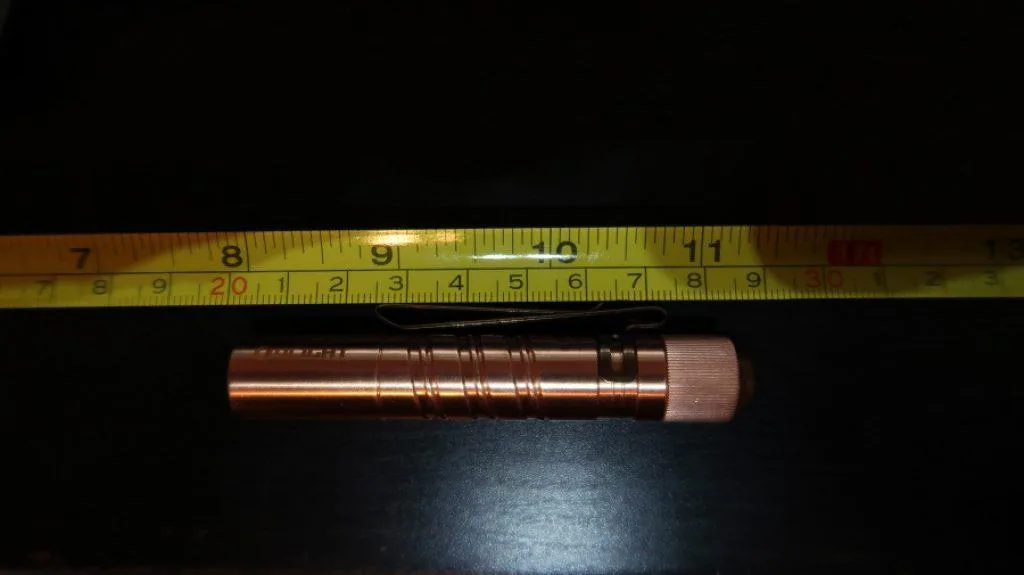
| Length | 89 mm (3.5 in) |
| Diameter | 15 mm (0.59 in) |
| Weight | 76.5 g (2.7 oz) |
| Body | copper, limited edition |
What’s in the box
- the i3T EOS Cu with its clip;
- one 1.5 V alkaline AAA battery.
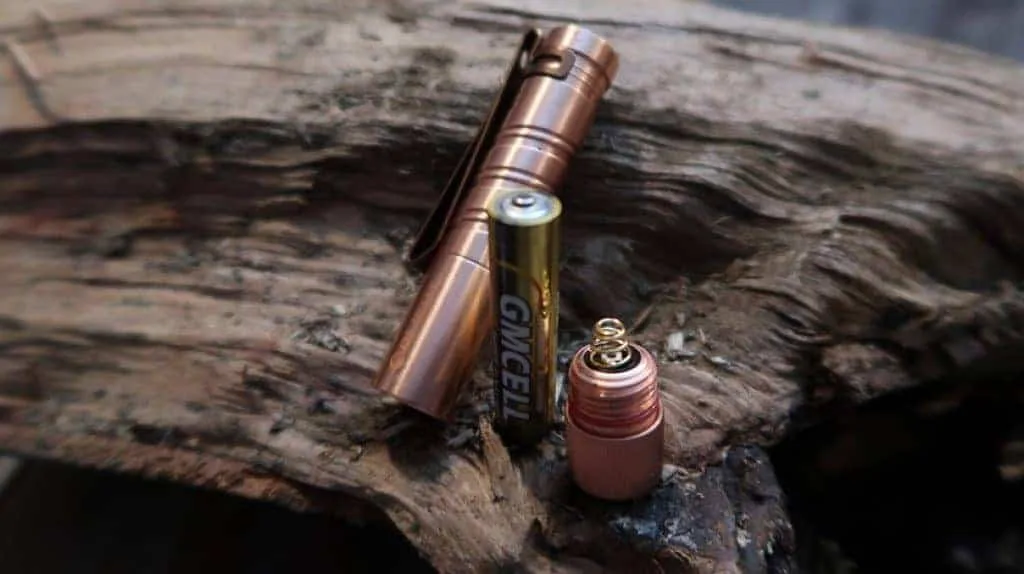
Before first use, unscrew the tail cap and remove the yellow insulating film on the battery terminal.
Build and carry
The copper body has Olight’s “dense double helix” knurling, which stays grippy even with wet hands or gloves. Copper gives it a distinctive look and more weight than the aluminum version: 76.5 g. Like any copper object, it will develop a patina over time.
The light almost disappears in a closed hand. The two-way clip lets you carry it bezel up or down, or attach it to a cap or a bag strap. Carried in a pocket, the top sticks out slightly so you can grab it quickly.
Batteries
The AAA battery is its big advantage: it is sold everywhere, and you probably already have some at home. For a light stored a long time, choose a lithium AAA, which keeps better and doesn’t leak. For regular use, a rechargeable NiMH cell is cheaper. If you keep an alkaline in it, check it regularly: a leaking battery can damage the light.
Modes and runtime
| Mode | Claimed output | Claimed runtime |
|---|---|---|
| Low | 5 lumens | 16 h |
| High | 180 lumens | 21 min |
There is no strobe or SOS. Low, at 5 lumens with 16 hours claimed, is the mode to use during an outage: enough to move around while saving the battery.
The interface
| State | Action | Result |
|---|---|---|
| Off | Half press | Momentary Low |
| Off | Full press (click) | Constant Low |
| Off | Two half presses | Momentary High (click to keep it on) |
| On | Click | Off |
| On | Two clicks within 2 s | Switch to the other mode |
There is no memory: after more than 2 seconds off, it always starts on Low. The protruding switch is easy to press with the thumb from any angle, but it keeps the light from tail-standing.
No lockout: the precaution to take
The i3T EOS Cu has neither an electronic lockout nor a reliable mechanical one. In a bag, another object can press the switch and turn it on without you knowing. To carry it in a go-bag or kit, remove the battery and store it next to the light in a small bag.
Beam and water resistance
The TIR optic fully covers the LED and produces an almost circular hotspot with a slight halo and very little spill. It is a close-range beam, comfortable for reading, finding an object or moving around.
We submerged it in hot water, then cold water, and left it running under the tap. No water got into the head, switch or body: the IPX8 (2 m) rating holds up.
Where does it fit in a preparedness kit?
- On a keychain or in a pocket: a light that is always on you, running on a battery you can find anywhere.
- In the 72-hour kit: battery removed and stored next to it, with a spare lithium AAA.
- As a backup: it doesn’t replace a headlamp or a lantern at home, but it covers for them if their batteries are dead.
Strengths and limitations
- StrengthsOne AAA, available everywhere; simple two-level interface; momentary light; two-way clip; IPX8 verified; starts on Low.
- LimitationsNo lockout; cannot tail-stand; only 21 min on High; heavier in copper; no strobe or SOS; limited edition.
The verdict
The i3T EOS Cu is a backup light you can take everywhere. Its simplicity, AAA battery and water resistance make it a good preparedness tool. Its lack of lockout calls for one rule: remove the battery when it travels in a bag. The copper version is mostly an aesthetic choice; the aluminum version does the same job and weighs less.
Frequently asked questions
Which battery should I use for long storage?
A lithium AAA: it keeps for several years, handles cold better and doesn’t leak.
How do I keep it from turning on in a bag?
Remove the battery and store it alongside. Loosening the tail cap is not a reliable lockout on this model.
How does it differ from the aluminum i3T EOS?
It works the same way. The copper version is heavier and will develop a patina over time.
Transparency. The photos, water test and observations are our own; specifications come from Olight. This copper edition was limited and may no longer be available. Check the manufacturer’s page before buying.
Sources
- Olight, i3T EOS Cu product page (specifications, modes and interface).
- PrépaCivile, review of the tested unit: photos, beam and immersion test.
Go further: our reviews of the i5T EOS and the i3T Plus, the Power outage fact sheet and the emergency equipment builder.