
In this article
- 1. Plan meals before quantities
- 2. Add gradually to ordinary purchases
- 3. Make rotation visible
- 4. Include ready-to-use foods
- 5. Plan for individual needs
- 6. Combine supply sources
- 7. Grow food at a realistic scale
- 8. Use suitable preservation methods
- 9. Manage the storage space
- 10. Compare the cost of actual use
- 11. Plan for loss of refrigeration
- 12. Try the plan and improve it
- Equipment to assess for your needs
- Continue preparing
A useful food reserve combines popular products, means of preparation and a continuous rotation. It can combine ordinary purchases, local production and conservation, without looking for an identical “ultimate stock” for all. These twelve strategies are used to build a package adapted to the budget, housing and household members.
1. Plan meals before quantities
Choose simple meals that the household already eats. List their ingredients, water and energy. An inexpensive but rarely accepted food can remain unused. Start with a few consistent days before extending the period covered.
2. Add gradually to ordinary purchases
A small additional amount of products used can build up a reserve without massive spending. Set a limit compatible with the budget. A promotion does not justify postponing an essential charge or buying more than the space allows to store properly.
3. Make rotation visible
Place the old lots in front and note the important openings. Keep a short list of minimum amounts to replenish. An app can help, but legible storage and regular checking are still needed if the data is not updated.
4. Include ready-to-use foods
Plan options that require little cooking or preparation, with a manual can opener when needed. Dry foods can be interesting, but their use depends on water, fuel and time. The plan must remain workable during a breakdown.
5. Plan for individual needs
Allergies, adapted textures, feeding young children and medical constraints change choices. Keep information useful and avoid improvised substitutions. A reserve product is not automatically suitable for a person because it is presented as “complete” or “survival”.
6. Combine supply sources
Grocery stores, local shops and producers can offer different possibilities. Identify them before a disturbance and check their access conditions. Multiple outlets may depend on the same distributor; diversifying addresses does not remove all dependencies.
7. Grow food at a realistic scale
A balcony, vegetable garden or community garden can bring fresh produce and learning. Measure actual harvests rather than relying on theoretical yield. In Quebec, season, exposure, water and maintenance availability influence what can be produced.
8. Use suitable preservation methods
Freezing, dehydration, fermentation and canning are not interchangeable. Use proven processes for the precise product. The cost of the material does not validate a recipe, and the appearance of a jar does not prove its safety.
9. Manage the storage space
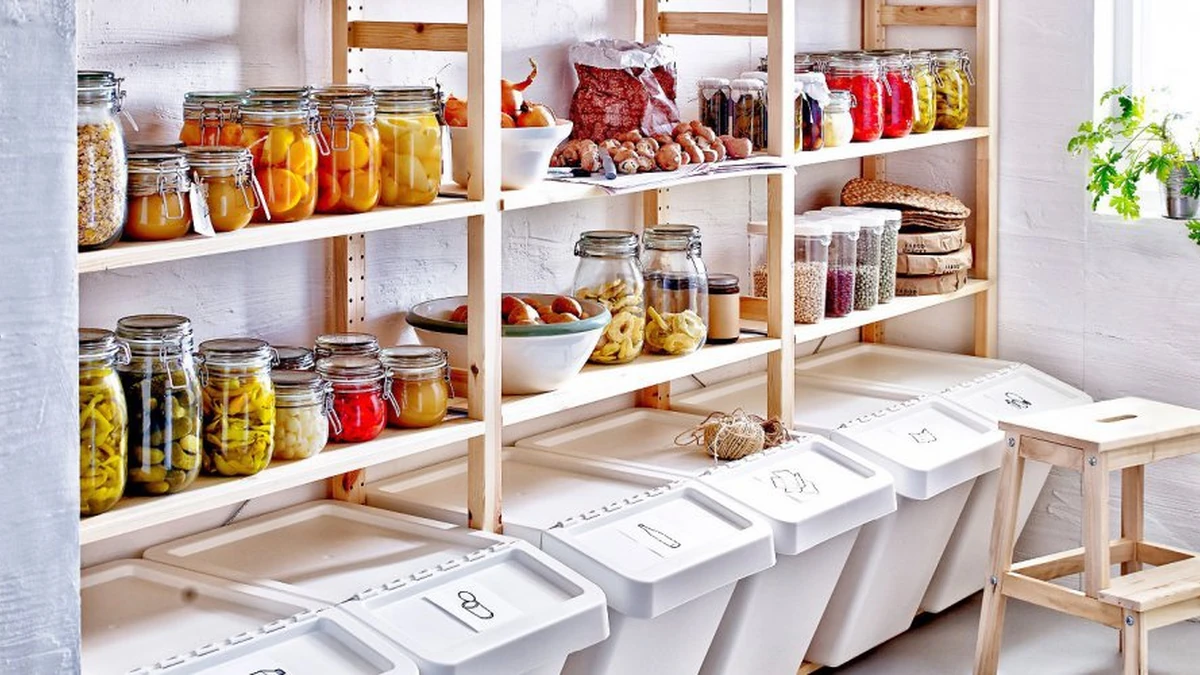
Monitor humidity, temperature, pests and risk of leakage. Foods should not share a contaminated space with chemicals. Small units and reasonable allocation limit losses if a container or area is affected.
10. Compare the cost of actual use
The price per kilogram is not enough: look at the portions, losses, packaging and preparation energy. A large format becomes less economical if it deteriorates after opening. Old prices and returns from the source are not presented as current benchmarks.
11. Plan for loss of refrigeration
The freezer is a resource, but depends on electricity. Know where to find food safety instructions during a breakdown and avoid opening unnecessarily. Do not taste a food to check if it is safe. Maintain a reserve portion that does not require cold before opening.
12. Try the plan and improve it
Prepare a meal from the reserve with the equipment provided. Write down the water consumed, the time, the missing utensils and the portions actually served. The food calculator helps to structure quantities; it does not constitute an individual nutritional assessment.
A well-organized reserve does not need to be spectacular. It must be able to be financed, preserved, cooked and renewed. Choose an improvement this week, check its outcome and gradually expand what works.
Equipment to assess for your needs
Canadian and French listings may differ in model, capacity or package. Check the exact item, instructions and suitability for your use. No price or stock availability is guaranteed.

Contenant Rubbermaid, plastique sans BPA, Brilliance Pantry stockage hermétique des aliments, stock ouvert, cassonade (7,8 tasses)
View on Amazon.ca
Rubbermaid Brilliance Lot de 4 boîtes de conservation alimentaire sans BPA avec couvercles, hermétiques, résistantes aux taches, passent au lave-vaisselle, gris
View on Amazon.frAffiliate links: PrépaCivile may earn a commission on qualifying purchases. Product names and images come from the Amazon listings reviewed. No prices or customer reviews are reproduced.