
In this article
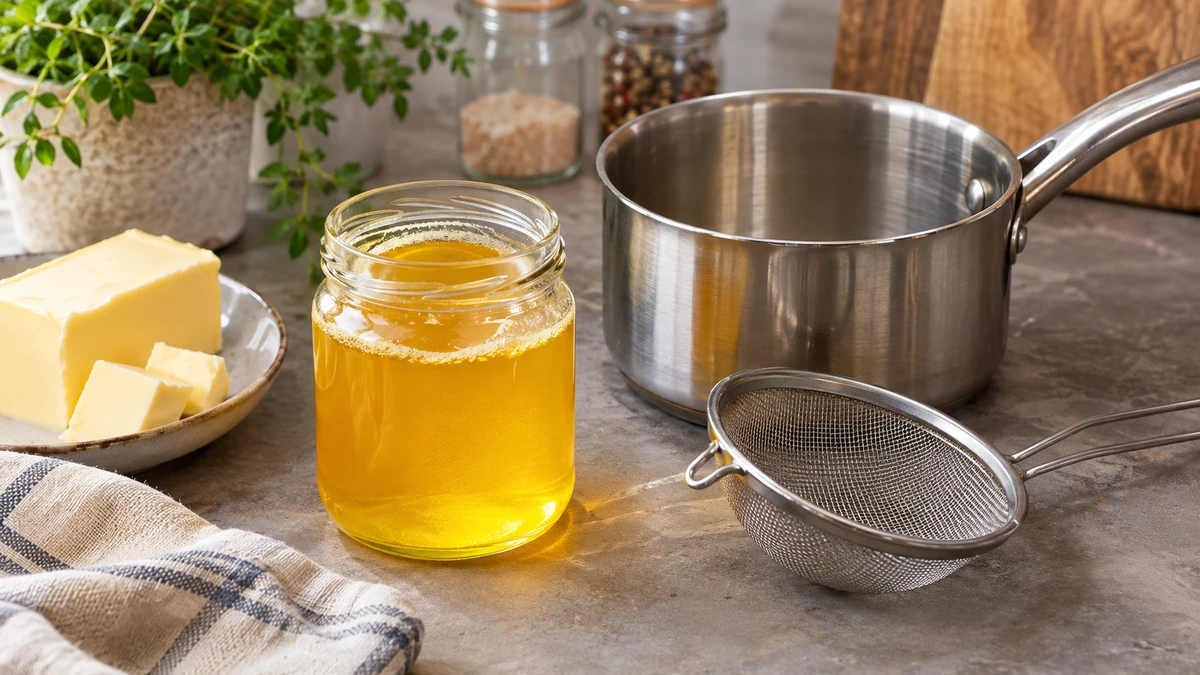
Ghee is a butter-derived cooking fat made by heating butter and separating milk solids and much of its water. Its culinary appeal includes its flavour. A homemade process, however, does not establish a safe shelf life of several years at room temperature or guarantee the absence of allergenic proteins.
Distinguish cooking from preservation
Clarifying a butter and closing a jar is not a validated canning method. A lid that appears sealed does not prove the microbiological safety of the contents. The historical source proposed very prolonged storage and the addition of vitamin C tablets; these instructions are not retained in this adaptation.
For a commercial product, follow its label, especially after opening. For homemade preparation, prefer a small batch, close use and appropriate cold storage. The duration of an industrial ghee must not be transposed to a jar prepared with an unmeasured domestic process.
Prepare equipment and ingredients
Choose butter whose composition you know, a stable saucepan with a thick bottom, a spatula, a sieve and a filtration medium provided for food contact. Prepare a container that is clean, dry and compatible with the temperature of the liquid. Glass can break under heat shock; do not pour burning fat into an unsuitable container.
Start with a modest amount, such as a butter wrapper, to better monitor cooking and transfer. The yield varies with butter composition and filtration losses. The volumes and costs of the historical narrative are not presented as guaranteed results or current prices.
Melt and monitor separation
Warm up slowly and stay present. As the butter melts, a foam appears and the constituents separate. Keep cooking under control without trying to get a violent boil. The size of the pan, the quantity and power of the fire change the duration; a fixed time does not replace monitoring.
The solids deposited at the bottom can brown and burn quickly. For the flavor of ghee, look for a controlled coloration rather than a blackened background. Remove the pan from the hot spring at the appropriate time. Don’t let a hot plate continue cooking that you thought was stopped.
Filter without burns or contamination
Allow the liquid to reach a temperature compatible with the transfer material while remaining sufficiently fluid. Stabilize the container and sieve before pouring. Use the necessary protections and keep children away. Filters can slow down or become clogged; do not press an unstable assembly containing hot fat.
Filtration removes visible particles, but does not measure the final water content or lack of protein. The clear appearance is not a health analysis. Do not add tablets, water or improvised ingredients to try to prolong storage.
Arrange storage and use
Label the lot, prepare suitable portions and keep utensils clean and dry. Do not mix a new batch with an old one. An unusual smell or visible degradation requires not to consume, but their absence is not enough to guarantee that prolonged storage out of cold was safe.
Home ghee should not be presented as automatically compatible with a milk allergy. Separation can reduce certain constituents without guaranteeing their elimination. For an allergy or a medical food need, ask for professional advice and use products with the right composition and traceability.
Try it in suitable recipes
Try small substitutions and write down the result. Butter brings water and solids that play a role in pastry; replacing it entirely with ghee can change the texture. A flavor enjoyed in a dish does not guarantee the same result in a cake or puff pastry.
In food preparation, this skill is mainly used to vary the kitchen. It does not replace storage solutions with established stability. Keep commercial fats adapted to the uses of the home and respect their conditions of conservation.
Reference: National Center for Home Food Preservation, questions on butter canning.