
In this article
Staying home during an emergency is often the most sensible option: a snowstorm, a prolonged power outage, an ice storm, a water shutdown, a public health lockdown or a shelter-in-place order. In most of these scenarios, staying in a familiar environment is safer and more manageable than travelling to an unfamiliar place.
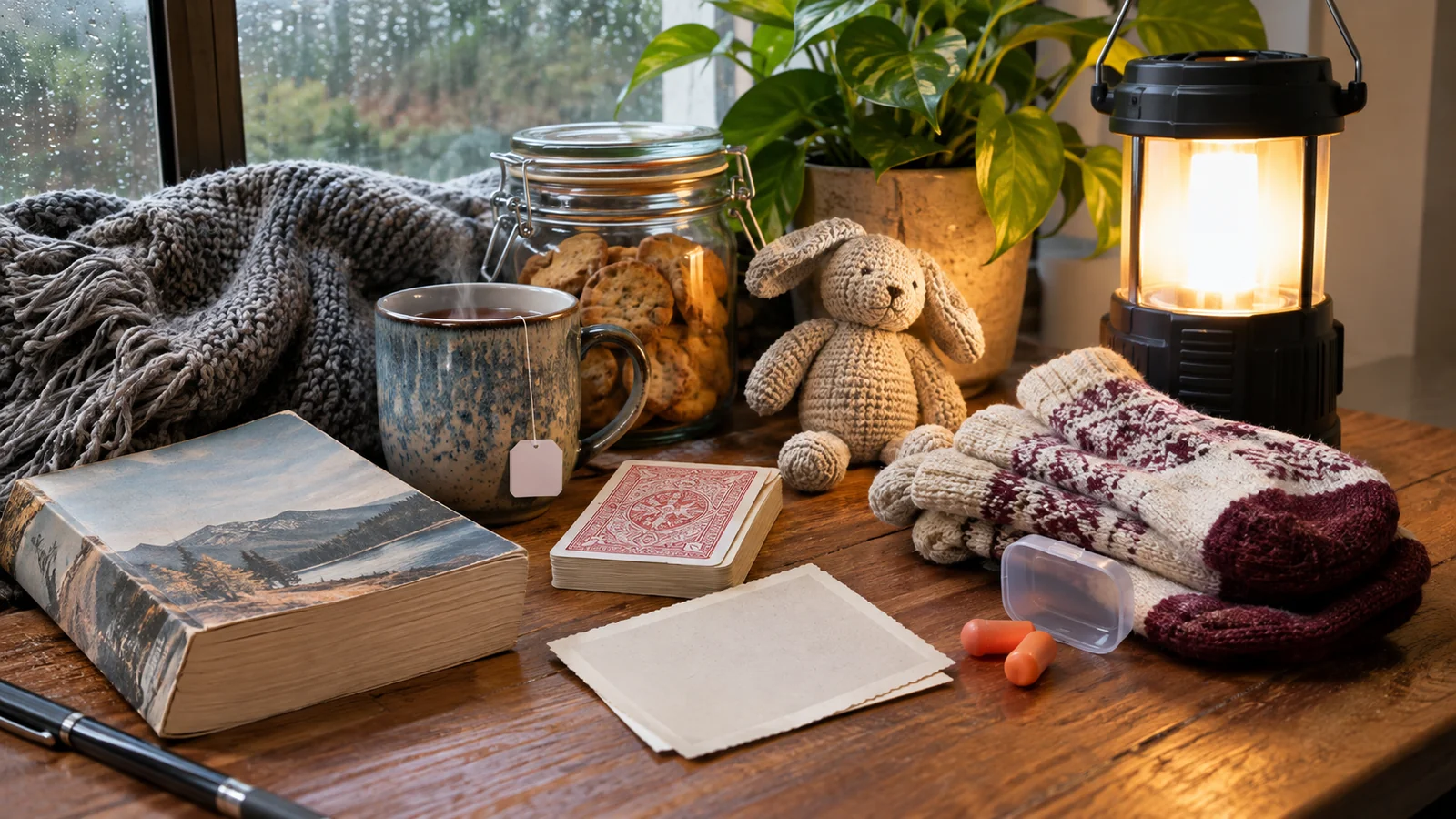
But holding out for a week or two without the usual services is not just about water, food and first aid. Fatigue, boredom, discomfort and psychological strain weigh heavily on concentration, decisions and the mood at home. A comfort kit, put together in advance in a bin, helps keep spirits up and maintain reassuring habits. Most of its items are already in your home: you just need to gather them.
In brief
In brief. A comfort kit complements your basic supplies (water, food, first aid kit, lighting, backup heat). It gathers 16 essentials in a labelled container: hygiene (soap, deodorant, dental care, personal care), hot drinks, small treats, games and books, things to write and draw with, blankets, warm socks, a comfort object and something to create a calming atmosphere. Adapt it to your household and check it once a year.
Why plan a comfort kit?
During a prolonged lockdown, small discomforts add up. Not being able to wash properly, boredom, cold feet, losing your morning ritual: each of these details seems trivial, but together they wear down morale, make people irritable and degrade the quality of decisions. Children are particularly sensitive to them.
Keeping simple habits, good hygiene, moments of relaxation, shared activities, helps preserve the group’s emotional balance. Gathering these items in advance saves you from searching when your energy and attention are needed elsewhere.
Prerequisite: this kit assumes the basics are in place. See the 72-hour kit and the two-week food supply.
The 16 comfort kit essentials
This list is neither exhaustive nor ranked by priority. It is a starting point to adapt to your habits and household.
| Category | Items | Why |
|---|---|---|
| Hygiene and care | 1. Bar soap and washcloths 2. Deodorant 3. Toothbrush, toothpaste, floss 4. Razor or makeup, depending on habits | Staying clean and feeling presentable supports morale |
| Hot drinks | 5. Coffee, tea, hot chocolate | Rituals that structure the day |
| Treats | 6. Chocolate, candy, nuts | A small pleasure, especially for children |
| Entertainment | 7. Board games and cards 8. Paperbacks 9. Colouring books and pencils 10. Notebook and pens 11. Crosswords, sudoku | Passing time without electricity or a network |
| Physical comfort | 12. Extra blanket or duvet 13. Wool socks or slippers 14. Spare cushion or pillow | Staying warm, sleeping better |
| Comfort | 15. A comfort object (stuffed animal, familiar item) 16. Something to create a calming atmosphere (soft LED lantern, music on a battery device) | Emotional anchors in stressful times |
Hygiene and personal care
Hygiene is often the first thing to suffer during a lockdown, especially without running water or heat. Yet washing and taking care of yourself have a direct effect on morale.
- Bar soap: more compact and longer-lasting than liquid soap. A few days without a shower are far more bearable with a washcloth, a basin of warm water and good soap. Add unscented wipes for days when water is rationed.
- Deodorant: a detail that quickly becomes a source of friction in a shared enclosed space.
- Dental care: toothbrush, toothpaste and floss. A neglected dental problem can become serious when access to care is limited.
- Razor, makeup, hand cream: taking care of your appearance is not vanity, it is a psychological lever that maintains a sense of normality.
For a more complete kit, see the evacuation hygiene kit.
Comforting drinks
A cup of hot coffee in the morning or a hot chocolate in the evening seems trivial in normal times. In a prolonged lockdown, these small rituals become landmarks. Instant or ground coffee, tea bags, hot chocolate powder: they are light, keep well and can be prepared with your emergency cooking gear. Use a stove only outdoors or in a well-ventilated area according to the manufacturer’s directions; see portable stoves. A vacuum flask keeps water hot for hours and saves fuel.
Small treats
Beyond functional food supplies, a few treats have their place: chocolate, hard candy, nuts, cookies your family likes. Kept in an airtight jar, they go well with a games night. Their role is not nutritional: it is a moment of simple pleasure. For adults, a small supply of wine or other drinks may have its place depending on preferences, with the moderation an emergency demands, when you need to stay able to react.
Entertainment and activities
Boredom is an underrated adversary, especially with children. Having activities available without electricity or a network is a real asset.
- Board games, cards, puzzles: often stored at the back of a closet, they are perfect for spending time together.
- Paperbacks: no electricity, no connection, and a real mental break. A few varied titles to suit the household’s tastes.
- Colouring books and pencils: not just for children; colouring is a calming activity for adults too.
- Notebook and pens: to keep a journal, make lists, note observations. Writing helps put your thoughts in order.
- Crosswords, sudoku, logic puzzles: hours of occupation in a small format.
Also plan simple physical activities (skipping rope, stretching, equipment-free exercises) to keep moving despite being cooped up: physical activity reduces stress and helps sleep.
Physical comfort
- Extra blanket or duvet: essential if the heat goes off in a Quebec winter. A wool blanket or a well-stored sleeping bag makes all the difference on a night without heat; see the general winter blackout scenario.
- Wool socks and slippers: foot comfort is often overlooked, and a cold floor chills the whole body.
- Spare cushion or pillow: useful if the whole family gathers in one room to keep warm.
Emotional comfort
- A comfort object: a stuffed animal, a favourite blanket, a familiar item, particularly important for children, but not only. Under stress, emotional anchors have real value.
- A calming atmosphere: an LED lantern with soft light rather than harsh light, music on a small battery device, possibly an essential oil such as lavender, used carefully and never near young children, pregnant women, people with asthma or sensitive pets. Avoid candles: they cause fires every winter during outages.
Adapting the kit to your household
| Household | Add or favour |
|---|---|
| Young children | Favourite toys, picture books, simple crafts, snacks they accept |
| Teenagers | Books, card games, a personal notebook, headphones and music on a battery device |
| Older adults | Spare reading glasses, large print, familiar games, a non-electric warm blanket |
| Person living alone | A way to stay in touch with a neighbour, a journal, absorbing activities |
| Pets | Toys, blanket, usual treats |
There is no universal kit: a couple without children, a large family or a person living alone will not have the same priorities. For children, see listening, reassuring and seeking support.
How to organize your kit
- Make your listFrom the suggestions above, to suit your household.
- GatherMost items are already in your home.
- Store in a labelled binSeparate from food supplies and the first aid kit.
- Check every yearRotate food items, adjust for the children’s ages.
A large lidded plastic bin, clearly labelled and stored near your other supplies, gives you quick access when things move fast. Add missing items as you shop; the kit builds up gradually, with no big purchase.
Comfort is part of preparedness
Preparedness is not just about survival in the strict sense. Maintaining comfort, hygiene and mental well-being during a lockdown helps you get through it more calmly, preserves family cohesion and keeps your judgment intact. A well-thought-out comfort kit is a natural complement to your basic supplies, personal, adaptable and easy to build. See also preparedness and mental health.
Frequently asked questions
What does sheltering in place mean?
Staying home rather than evacuating, on the authorities’ instructions or because it is the safest option, for example during a storm, a prolonged outage or a public health lockdown.
Is a comfort kit really necessary?
It is not vital like water or food, but it helps a great deal over time, especially with children. And it costs little, since most items are already at home.
Where should you store the kit?
In a labelled bin, near your other supplies, easy to reach, protected from humidity and extreme temperatures.
Can you use candles for atmosphere?
Best avoided: candles are a frequent cause of fires during outages. A warm-light LED lantern creates a pleasant atmosphere safely.
How often should you check the kit?
Once a year, for example at the same time as your 72-hour kit: replace food items, adapt games and clothing to the children’s ages.