
In this article
A starting reserve can be established with ordinary food and a progressive organization. For day 6, start with a few meals that your household knows how to use, then adjust the amount to the number of people, their needs and your means. No universal budget guarantees complete autonomy.
Watch the pantry before making a list
Identify what is already present, consumable and compatible with your habits. Write down the meals you can prepare, not just the number of boxes. A significant amount of an ingredient does not necessarily constitute several balanced meals accepted by each.
The Food Reserve Calculator It can help organize that thinking. Then check for allergies, textures, special diets, the needs of children and those of animals. The advice of a professional takes precedence when a medical regimen is at stake.
Add gradually according to the available budget
Set an amount that you can actually spend on the reserve, even irregularly. Compare the price per useful quantity, the duration of use and the preparation conditions. Historical prices for an example should not be used as a current promise to purchase.
A promotional product is not economical if no one eats it or if they ask for a way of cooking that you do not have. The goal is not to systematically add a number of items to each passage: it is to fill an identified need without compromising essential expenses.
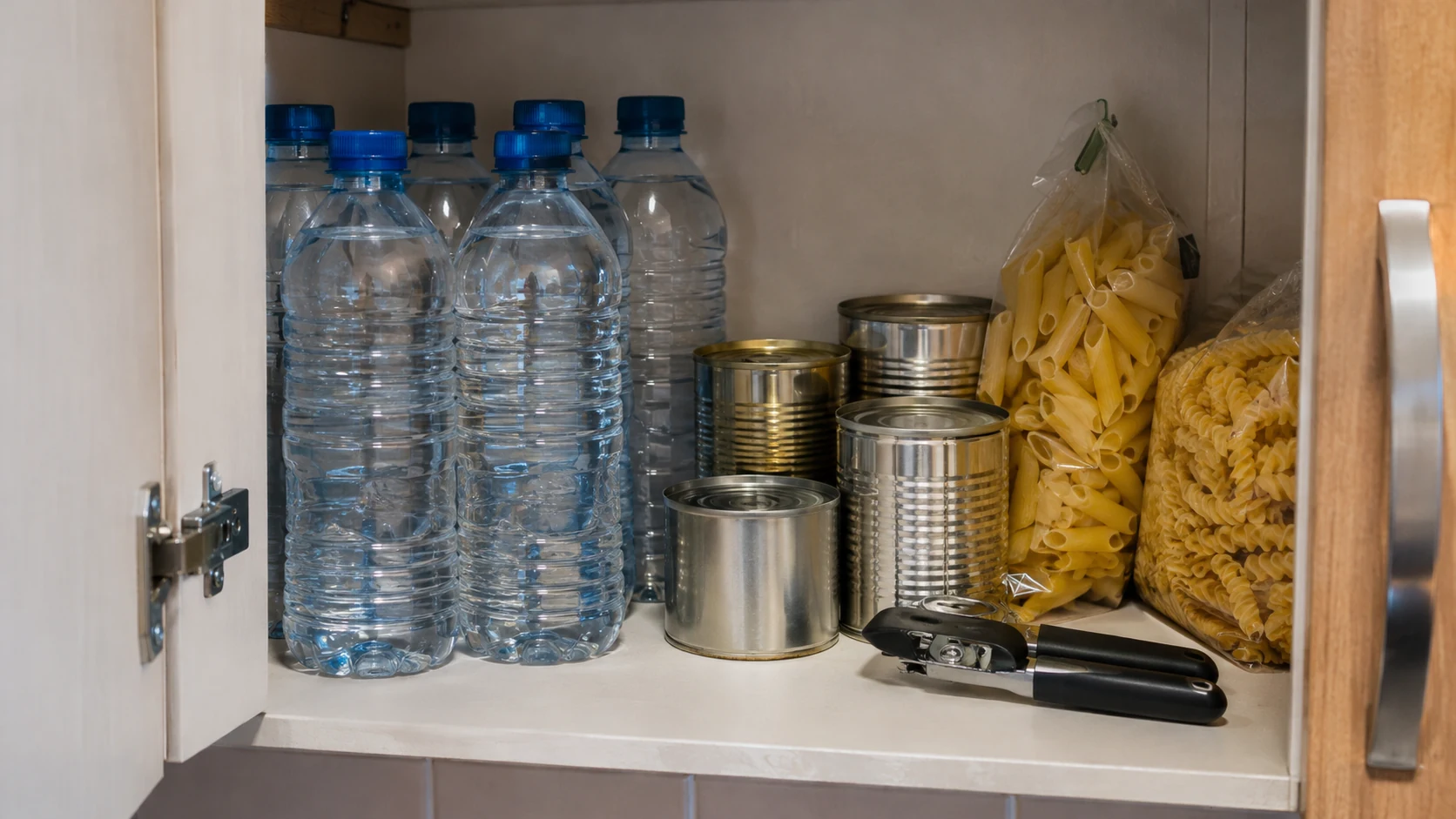
Canned foods, legumes, cereals, pasta, fats, and other common foods may be part of the plan. Freeze-dried specialty products are not necessary to begin with.
Keeping a solution without cooking
Keep some of the meals that can be eaten without cooking, following the instructions in the packaging. Check for a manual can opener and utensils. After opening, a product may require refrigeration even if it was stable in its closed packaging.
If you are cooking during a service interruption, the solution should be tailored to the location. A camping stove or barbecue is not used in the dwelling or garage. Consider another option if outdoor cooking is not possible.
Prepare drinking water in manageable quantities
Beverage needs do not automatically cover meal preparation, hygiene and special needs. Use the Water calculator to distinguish these uses, then adapt to your situation.
Choose suitable containers and a location that supports their weight. A reserve divided into easy-to-handle units can be more accessible than a single large can. Keep the containers closed and follow the corresponding storage recommendations.
Do not reuse a container that has received chemicals. A rain collection or a portable filter does not automatically replace a potable reserve and sanitary instructions.
Rotate what you store
Place the products to be used first in front of the most recent ones. Enter the quantity, location and a verification date. Bring food into regular meals and replace those that have been consumed.
Exercise of Day 6: prepare a meal from your reserve, measure the necessary water and check how you would do without electricity. Your next purchase should address the perceived lack, not a generic list of materials.
Health Canada - Water and food in emergencies
Put this reading into practice
Perform the action as you wish and then check the result. Your follow-up remains specific to this route.
31 days to better prepare; Day 6
Start usable reserves
Your action: Inventory the water and food already available and plan for regular meals that remain achievable during an interruption.
To check: Quantities are adapted to the household; dates and special needs are noted.
To do