
In this article
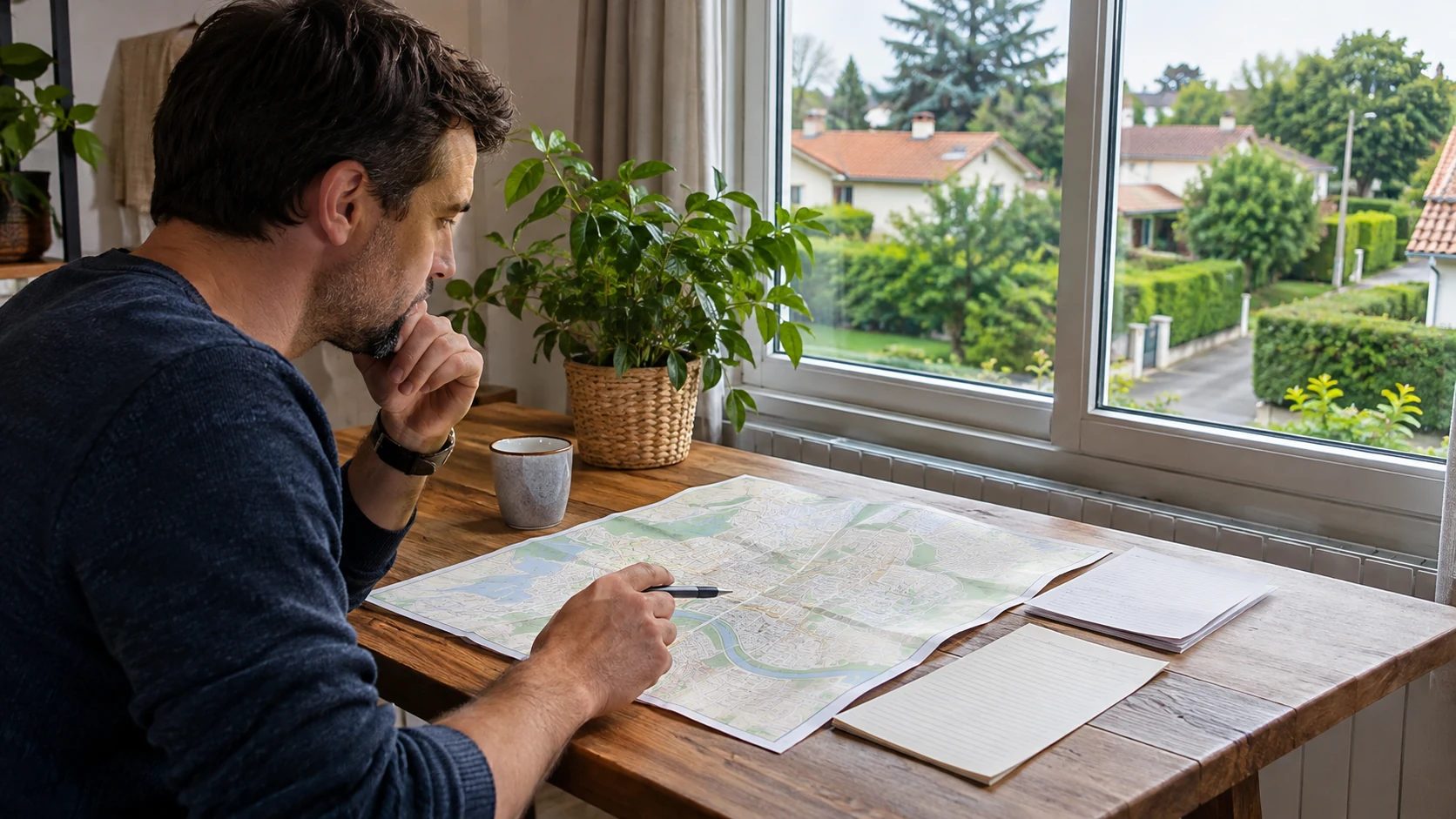
The risks to be considered depend on the location, building, routes and people’s needs. For day 5, start with your daily environment. Spectacular international news alone should not determine all purchases and decisions of the household.
Collecting Local Information
Consult the information of the municipality and the competent authorities: natural hazards, areas at risk of flooding, applicable industrial instructions, alerts and planned places of reception. Also check the rules of your building and your usual establishments.
Weather information and past events are clues, not a personal prediction. A neighborhood that has not experienced an incident recently may remain exposed. Conversely, a disaster image published elsewhere does not show that your home presents the same risk.
Describe a specific scenario
Write a sentence that you can examine: “a breakdown in cold weather would make the dwelling unsuitable after a variable duration” or “a road closure would prevent the usual return”. Add the people involved and the interrupted need.
Avoid overly vague categories like “everything collapses.” They make it difficult to choose an action and promote the accumulation of material that does not respond to a defined problem.
| Question | Example of information to look for |
|---|---|
| What are we exposed to? | Location, access, building and route characteristics |
| Who would be most affected? | Person dependent on a device, child, animal or person alone |
| What function would be interrupted? | Care, water, temperature, communication or transport |
| What protection is already working? | Known procedure, equipment tested, contact confirmed |
| What is really missing? | Accessory, reception, training or alternative |
Compare without inventing a probability
You can categorize topics by household importance, but a personal score doesn’t become a scientific probability. If you lack information, write “to check” rather than an arbitrary number.
An official instruction or critical health need may justify immediate action even if the event seems infrequent. Other measures cover several scenarios: having paper contacts, usable lighting and a home solution helps in different interruptions.
Note the source and date of your information. A notebook or chart can support the follow-up, provided you distinguish the confirmed information, the hypothesis and the decision you make.
Turn the list into actions
Remember three topics to deal with and, for each, a task with a manager and a deadline. For example: confirm the assistance to go down a staircase, test a recharge or check the place of reception with a loved one. A purchase is not the only type of action possible.
After each test, check if the protection works and within what limits. A generator that is not properly installed or a contact that ignores its role does not reduce the risk in the manner envisaged.
Review when the situation changes
Resume the assessment after a move, change of treatment, trip, household composition or local deposit. An annual appointment can help you not forget about this update.
To go further, use the method of risk analysis and compare your findings with the official resources of your territory. The desired result is a list of useful actions, not an overall rating that would promise that the home is “safe.”
Quebec - Emergency situations and natural hazards
Put this reading into practice
Perform the action as you wish and then check the result. Your follow-up remains specific to this route.
31 days to better prepare; Day 5
Prioritize the risks of the home
Your action: Identify three plausible situations for your home and neighborhood, then associate each with a useful first step.
To check: The choices are based on your actual exposure; an official source is identified.
To do