
In this article
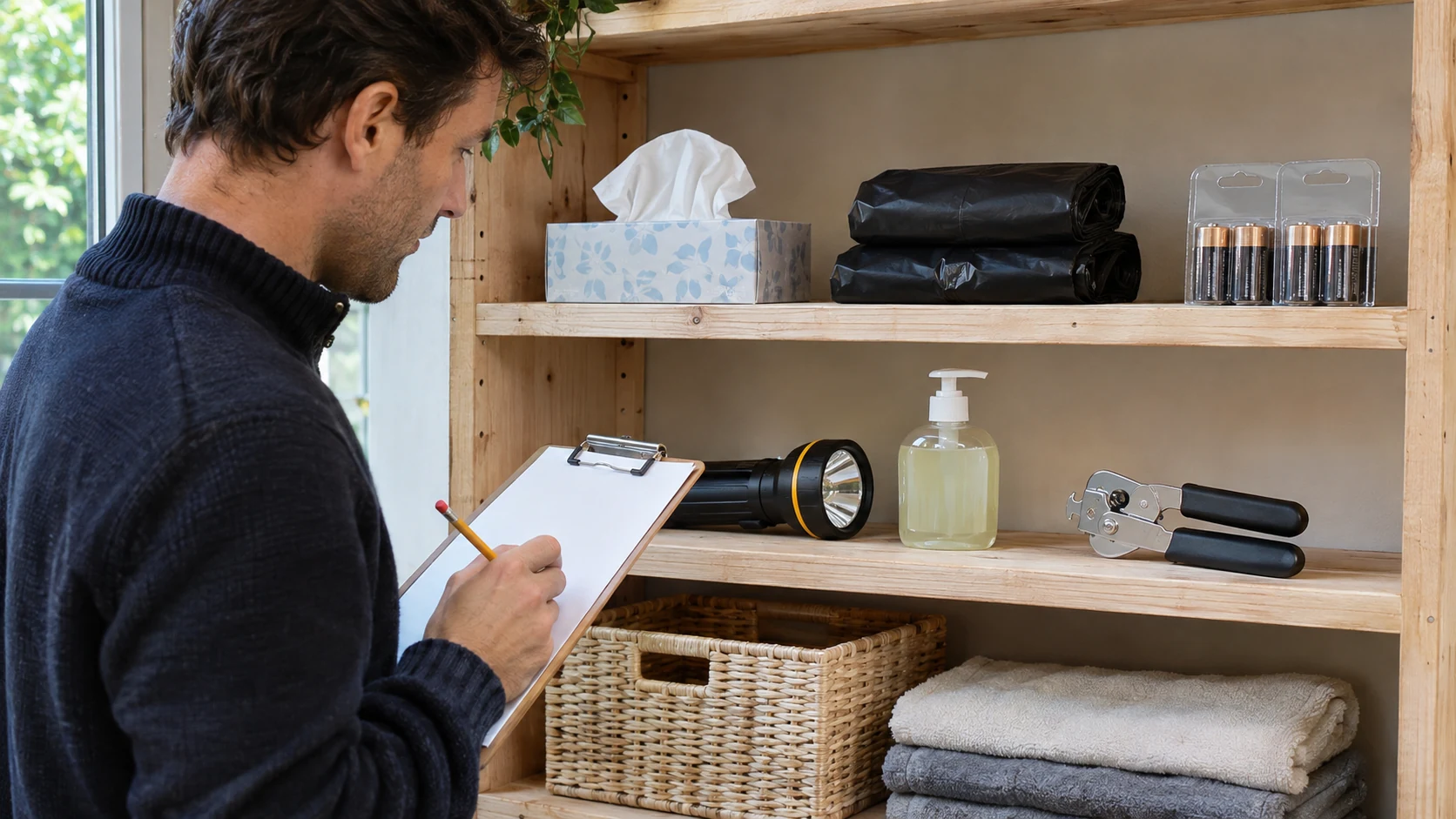
The reserves are not limited to meals: opening a can, lighting a room, maintaining hygiene or repairing a garment also requires a few simple items. For day 7, check what you already use before completing your storage.
20 Items to Consider, Without Buying Everything
| Article or category | Concrete use | Verification before storage |
|---|---|---|
| Manual Can Opener | Open the chosen preserves | Test it with a real container |
| LED Lamp | Illuminate a task or move | Batteries, charging and access |
| Adapted batteries | Power the retained devices | Formats, condition and storage without short circuit |
| External battery | Recharge a compatible phone | Cable and charging test |
| Battery Radio | Receive local information | Reception and instructions for use |
| Drinking water containers | Arrange and distribute the reserve | Food use, closure and weight |
| Soap | Maintaining Ordinary Hygiene | Product Usage and Instructions |
| Personal hygiene articles | Meeting the usual needs | Sizes, preferences and storage conditions |
| Towels or linens | Clean and dry | Washing, drying and separation of uses |
| Toilet paper | Maintaining daily comfort | Protection against moisture |
| Waste bags | Contain waste according to the services available | Solidity and storage out of reach of children |
| First Aid Kit | Respond to the situations provided by the training | Content, dates and jurisdictional limits |
| Personal treatment | Maintaining the usual care | Plan established with professionals |
| Appropriate gloves | Protect on a defined task | Size and compatibility with the task |
| Repair Tape | Perform a simple temporary repair | Surface, hold and limit of use |
| Small tooling | Routine maintenance allowed | Notice, status and skills |
| Sewing material | Repairing a common textile | Row needles and test pieces |
| Games without screen | Facilitating waiting | Ages, small parts and accessibility |
| Practical documents | Find contacts and instructions | Updating and data protection |
| Usual foods and ingredients | Preparing the planned meals | Rotation, water and cooking required |
This list is an inventory aid. It does not replace the necessary adaptations to a person, animal or medical device. An already present and usable item does not require a new duplicate.
Avoiding unproven “multipurpose” uses
A cleaning product is not automatically a care product. Bicarbonate should not be presented as a universal replacement for toothpaste or skin treatment. Borax, alcohol or a homemade mixture does not become suitable for all uses because it is on a preparation list.
Food honey is not a medical dressing. Drinking alcohol should not be stored as a medicine or as an antiseptic solution. Use the products according to their label and applicable instructions.
Fuels, matches and combustion appliances require special storage and use. Do not place them in a family bin by treating them as ordinary lighting accessories. An LED lamp avoids the risks associated with an improvised candle in many household uses.
Ranger to find and maintain
Group items by task rather than by purchase promotion. An area for lighting, another for hygiene and a general list facilitate the verification. Do not mix food, chemicals and medications in a common container.
Enter the verification dates, battery sizes and accessories required. A complete device but discharged or without cable does not fulfill its function. The products consumed must enter a normal rotation.
Exercise of Day 7: choose a use - light up, open a meal or maintain hygiene - then collect the necessary items and test them. Correct the deficiency before adding another category.
Quebec - Emergency kit for the home · Health Canada - Prevention of botulism and limits of honey
Put this reading into practice
Perform the action as you wish and then check the result. Your follow-up remains specific to this route.
31 days to better prepare; Day 7
Identifying the Small Shortages
Your action: Check the items that make your supplies usable: can opener, lighting, adapted batteries and utensils.
To check: Each object responds to a task; unnecessary duplicates are discarded.
To do