
In this article
Developing autonomy is about reducing some useful dependencies on a daily basis, without promising to replace all networks and services. For this day 18, choose apprenticeships that match your accommodation, your time and your budget.
Start with what’s already in your home
Make a list of interruptions that would complicate your life: impossible runs, breakdown, missed appointments, repairs or delayed delivery. Look for a margin for priority needs. A stock of usual meals, a second means of lighting or a support contact can be more useful than an expensive installation never tried.
The preparation should not aggravate the current budget. Check what you have before you buy, schedule maintenance and keep a fallback solution. You can progress in an apartment or with a small garden; the means chosen will simply be different.
Eight tracks to develop gradually
Grow on your scale. A few potted herbs allow you to learn how to water and observe plants. They complement the diet without providing the food autonomy of the household. Check the constraints of the balcony or the ground before installation.
Cooking with ordinary basics. Try a bread recipe or a pantry meal. Note the water, energy and time required. Distinct a preparation to eat quickly from a food that you can preserve sustainably.
Review the expenses. A financial margin can help absorb a breakdown or repair. Start with a realistic goal; a constrained financial situation does not reflect a lack of willpower. Avoid financing non-priority prep purchases with expensive credit.
Evaluate the backup energy. Connect each device to a specific need and check for compatibility. A solar panel alone does not power all the equipment; battery, regulation, cables and weather conditions count. For a first try, test a phone recharge before scaling a full installation.
Use local resources with their limitations. Rainwater can meet certain non-food uses, according to the applicable rules. It is not drinkable by default. Picking, hunting and fishing require knowledge and permission: do not base the first days of an emergency on an improvised sampling.
Store according to a proven method. Freezing, dehydration, fermentation and canning are not interchangeable. Each method has its own conditions. A low acid canning recipe requires appropriate equipment and process, and changing the ingredient or container may compromise its safety.
Limiting waste. Rotate food, repair a usable object and sort waste according to local services. Burning is not a domestic waste management solution: smoke, fire and prohibitions must be taken into account.
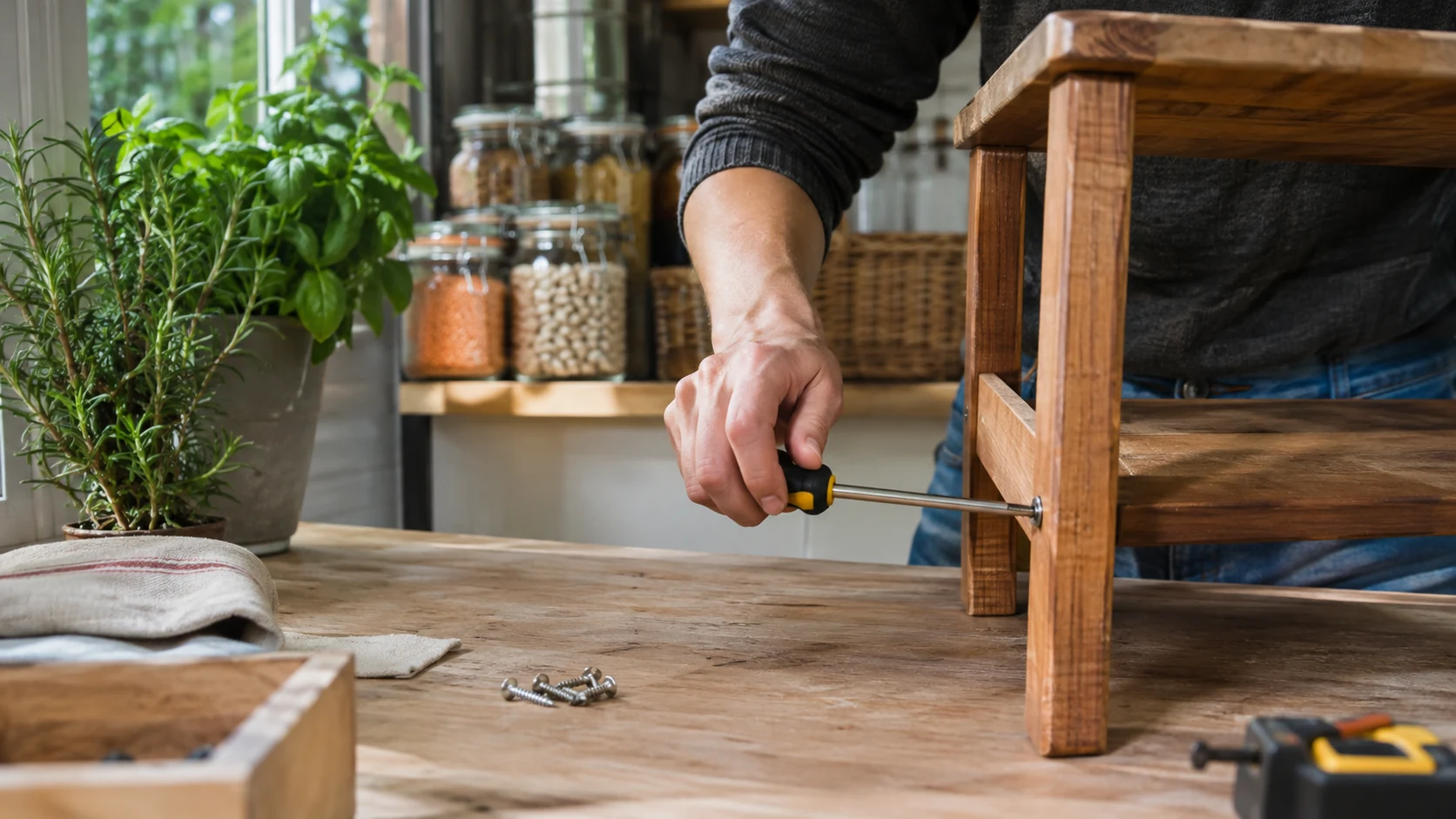
Maintain within the limits of your skills. Learning a small mechanical or textile repair can be helpful. Electrical, gas, heating or high-rise installations require skills and sometimes authorized professionals. Knowing how to identify an anomaly and calling the right person is also part of autonomy.
Avoid substitutions that create risk
Making a decorative soap, disinfectant, remedy or food preparation does not meet the same requirements. Do not consider a homemade product to be equivalent to a drug, antiseptic or stable food without proper validation. The simplest solutions are often to properly use the products intended for the intended use.
Goal of the month
Choose a verifiable result: cook two meals with the reserves, maintain a common tool or organize a backup recharge. Write down the resource used and what the essay teaches you. Share this know-how with a loved one: a preparation that relies on only one person remains vulnerable.
Health Canada - Safe Canning · Quebec - Drinking water advisories
Put this reading into practice
Perform the action as you wish and then check the result. Your follow-up remains specific to this route.
31 days to better prepare; Day 18
Reducing Dependence
Your action: Choose a task dependent on a service and prepare a realistic alternative: paper, refill, meal or welcome.
To check: The solution has been tried; its cost and limitations are known.
To do