
In this article
A child can learn to recognize a gathering point, find his lamp or appoint a trusted person. He must not become responsible for adult safety. For this day 17, family preparation is based on age-appropriate gestures, simple explanations and a reassuring presence.
Explain what is being prepared
Choose a concrete risk that the child can understand: a power outage, a temporary departure or an evacuation exercise. Describe what might change and what adults will do. Avoid repeated disaster images and scenarios designed to create fear.
Let the child ask their questions. An honest answer can be short: “We don’t know how long the breakdown will last; we know where the lamps are and who we can call. » The preparation does not promise that he will never be afraid or that everything will go exactly as planned.
Giving accessible tasks
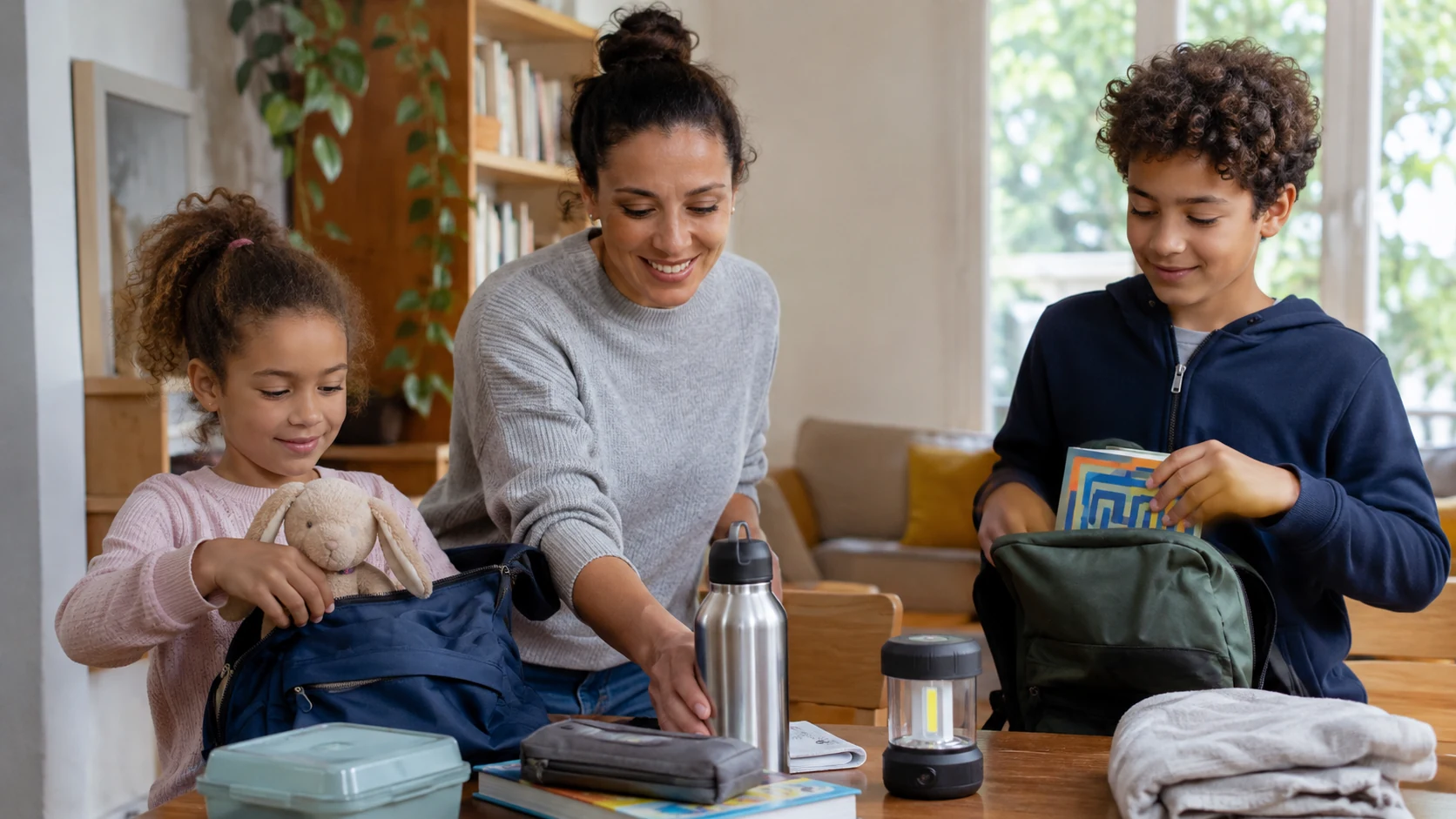
A young child can choose a comforting object or check where his coat is. An older child can help to copy contacts, count gourds or find the way to the gathering with an adult. Tasks should remain achievable without carrying an excessive load.
Prepare a small personal bag if it suits his age, but keep important documents, treatments and essential resources under the responsibility of adults. The bag can contain clothing, activity and a familiar object.
Do not entrust children with the ignition of a cooking appliance, fuel handling, power cuts or the identification of plants to consume. In a breakdown, an activity in the light of an LED lamp is a more appropriate practice than an exercise around a camping stove.
Predicting the needs of everyday life
Check clothing sizes, usual foods, treatments, hygiene items, and sleep needs. A reserve prepared the previous year may have become ill-suited. Also consider a disability, sensory needs or communication difficulties.
Plan simple activities without a screen: pencils, small game, book or comforting object. Meals and bedtime routines can serve as landmarks when the place of life changes. They must not become a rigid requirement impossible to hold during a trip.
Repeat a trip without a trap
Do an announced exercise, day and in good conditions. Show the exit, the gathering place and how to stay with the group. Do not simulate a disappearance, intrusion or surprise fire to “test” the child.
Check who can pick it up at school or daycare, how that person is allowed, and how adults will stay informed. A family deposit does not replace the procedure of the establishment.
Gradually learn the appropriate contact information and call gestures. An old disabled phone can still reach 911: it should not be used as a toy to simulate a call. For an exercise, use a dummy phone or a paper card.
Listen to reactions and adjust
A child can laugh, be silent, ask the same question several times or not want to participate immediately. Go back to an ordinary activity and adjust the pace. If a fear persists or permanently disrupts daily life, ask for the appropriate support rather than multiplying the exercises.
Exercise of Day 17: Find a lamp, travel to the gathering point and let the child choose an object of comfort. End by asking him what was clear and what worries him. Adults retain responsibility for the plan.
Quebec - Helping children during an emergency · Quebec - Use of 911
Put this reading into practice
Perform the action as you wish and then check the result. Your follow-up remains specific to this route.
31 days to better prepare; Day 17
Preparing children for their needs
Your action: Explain a simple scenario with child-friendly words and calmly repeat a grouping point or contact.
To check: The child knows which adult to turn to; the essential responsibilities remain those of the adults.
To do