
In this article
A tool becomes useful when you know what it allows to do, how to use it and when to stop. For this day 16, choose skills that you can practice in your ordinary environment. Preparation does not require knowing how to repair everything, treat everything or live alone off the grid.
Ten skills to relate to concrete tasks
| Jurisdiction | First accessible exercise | Limits to be respected |
|---|---|---|
| Cooking with Reserves | Preparing a meal that the home actually eats | Check water, cooking and leftover management |
| Moving according to your abilities | Browse the rally route with the necessary aids | Do not impose an inappropriate load or effort |
| Make a useful storage | Preparing a contact pouch and its location | Do not expose personal information |
| Repairing a textile | Sewing a small tear on an ordinary garment | Do not repair protective or climbing equipment yourself |
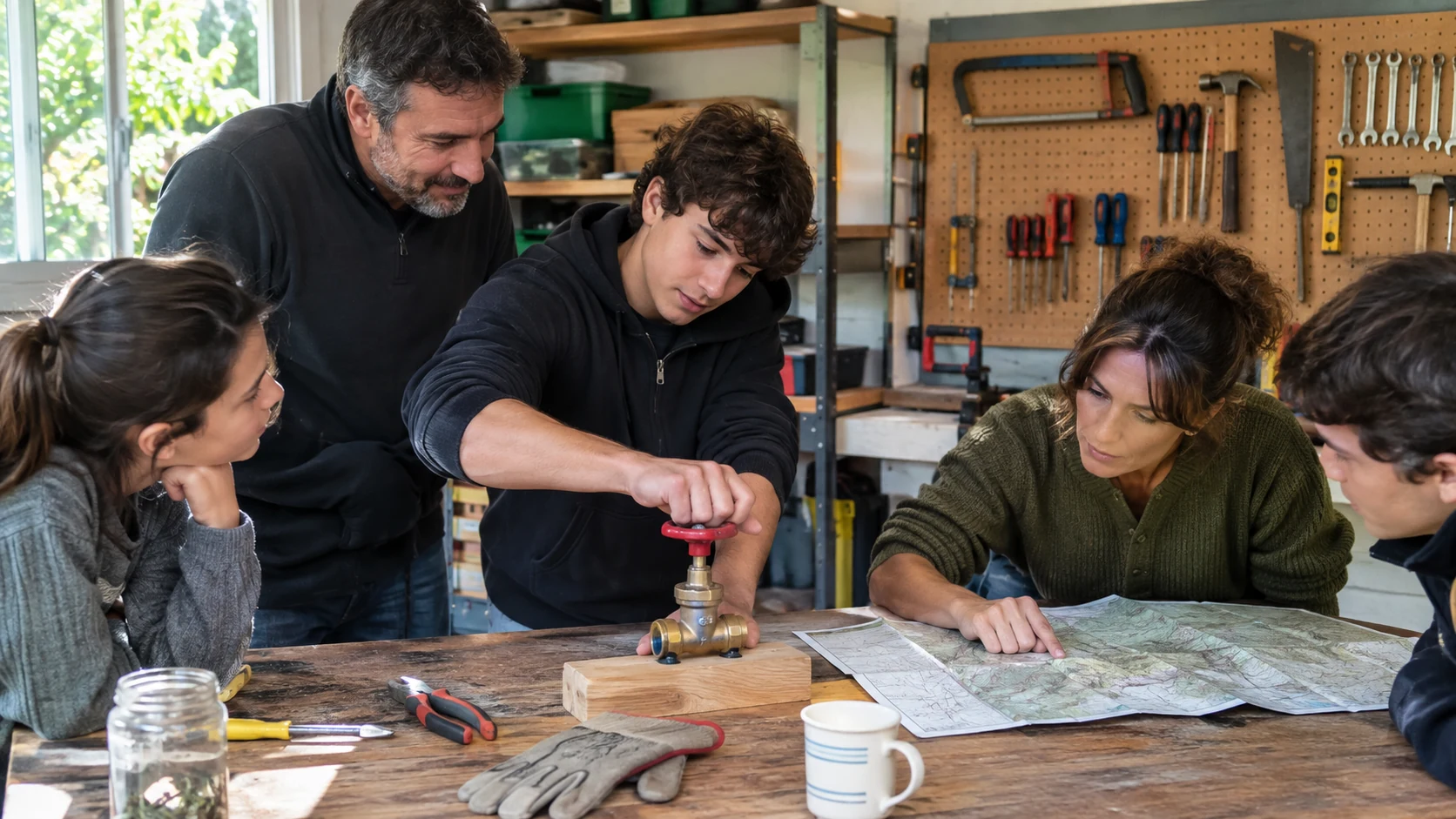
| Maintaining the home | Locate a stop valve and read the package leaflet | Reserve the electrical, gas or height work to the competent persons |
| Giving First Aid | Take recognized practical training and review your achievements | Do not undertake a medical procedure learned only in an article |
| Managing a task under stress | Repeat a short instruction and distribute the roles | Accept a break and ask for a replacement |
| Prevent a confrontation | Find an exit and a place to ask for help | Not trying to control a person |
| Using a source of energy | Check lighting and charging | No unsuitable combustion equipment in the housing |
| Grow or store on a small scale | Maintain herbs or follow a proven recipe | Do not confuse tradition and health validation |
Choose according to the risks of the home
A person who depends on an elevator and a medical device does not have the same priorities as a household that seeks to improve its vegetable garden. Start with the task to reduce a real shortage: call, go out, keep a treatment, drink, eat or join a reception.
It is often more useful to know how to use the can opener already stored in the closet than to buy an additional multifunction tool. The exercise must show an observable result: a legible contact, a prepared meal or a found storage.
Learning with the right resource
A book, video, or notice may present a method. Some tasks also require demonstration and supervised practice. This is especially the case for first aid or the use of equipment whose error can cause an injury.
Check the organization, the date, the conditions of the exercise and the skills actually taught. A trade name as “survival expert” does not, in itself, demonstrate medical or technical competence.
For a small textile repair, prepare yarn, a suitable needle and a test piece. Store the spikes after use and keep the material out of the reach of young children. The goal is to extend the use of a common object, not to guarantee a technical resistance that you cannot verify.
Preparing tests without incident
Exercise before an emergency, with time, light and the means to clean or store. Set what you’re not going to test: Don’t turn off the power to an indispensable device, and don’t disable a detector or an exit.
Learning around fire is not a universal basis to practice at home. First, choose lighting and power solutions that are suitable for the home. Any outdoor activity with a flame depends on permits, weather conditions and local instructions.
The Learning Book of Day 16
Hold only one skill for the month. Write down the task, the resource used, the hardware needed and the expected result. After the trial, write down what blocked and the next correction. Share this knowledge with someone in your network so that the operation of the home does not depend on a single adult.
Quebec City - Family Plan and Emergency Kit · Health Canada - Preventing Carbon Monoxide
Put this reading into practice
Perform the action as you wish and then check the result. Your follow-up remains specific to this route.
31 days to prepare better; Day 16
Practicing a skill
Your action: Choose a safe and useful skill, such as transmitting a specific address, reading a map, or arranging a help call.
To check: You can reproduce it; the gestures that require training remain framed.
To do