
In this article
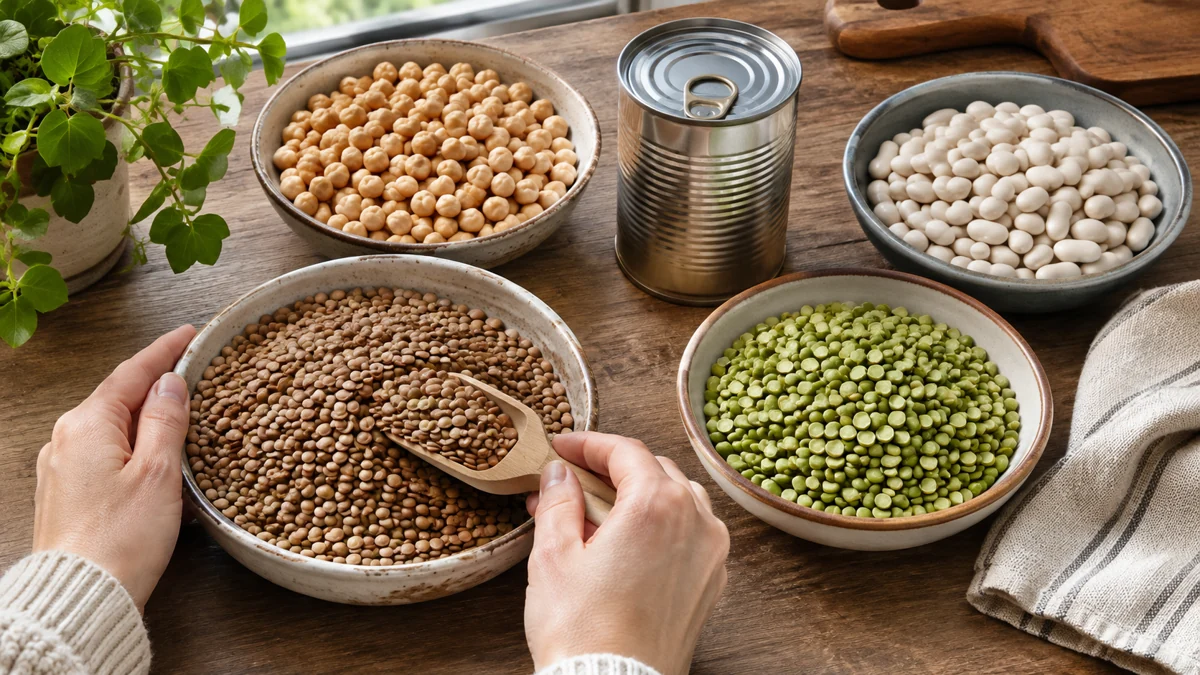
Legumes can bring variety to the reserve: lentils, chickpeas, beans or broken peas, depending on tastes and needs. This week, compare dry products and preserves from their actual use, including the necessary water and energy.
Choosing what the home consumes
Start with a popular recipe: lentil soup, chickpea salad or bean dish. Check for allergies, tolerance and special needs. Introduce changes gradually if necessary, with professional advice for a medical situation.
Legumes are integrated into a varied diet. You don’t need to calculate a universal amount of protein or make every meal the same. The complete menu and personal needs remain the benchmarks.
Compare dry and ready to consume
Dry products can be convenient and economical when you have time, water and a safe way to cook. Canned foods are easier to use without cooking and provide another solution for the first days of a breakdown. Compare cost, weight, portions and storage after opening.
Check the can opener and people’s ability to use it. Easy-opening boxes do not dispense with providing a solution for other containers.
Respect the product preparation
Follow the soaking and cooking instructions. Some legumes, including dry kidney beans, may pose a risk if they are undercooked. Do not assume that a simple soaking, slow cooking at low temperatures or germination makes them safe.
If you don’t have the right conditions during the outage, use a ready-to-eat option. Pulse flour and sprouts are not automatic substitutions: their preparation and risks must be understood.
Store without promising a decade
Keep products dry, protected from pests and large temperature variations. Keep the manufacturer's instructions and allergens. Duration and quality vary according to products and conditions; a barrier bag or an absorber does not guarantee a universal result.
For repackaging, use a validated method and an appropriate container. A rotation of reasonable quantities is often easier to manage than a very large stock of a single product.
Trying a meal with the constraints
Prepare a recipe for the reserve and write down the portions, water and time needed. Also check the cleaning needs and leftovers management. Then adjust the shopping list: the actual result is more useful than a theoretical quantity in bags.
Actions of the week
- Choose two legumes and known recipes.
- Compare a dry option with a canned option.
- Read the cooking and storage instructions.
- Measure the real needs of a recipe.
- Update quantities and rotation.
Your expected result: legumes that you know how to prepare with the means provided, without depending on an unavailable cooking.
Useful reference
Canada's Food Guide - Health Canada.
Lectins and Dry Red Bean Preparation - Health Canada.
Put this reading into practice
Perform the action as you wish and then check the result. Your follow-up remains specific to this route.
52 weeks to strengthen your preparation; Week 34
Integrating legumes
Your action: Choose a regular recipe and check the time, water and energy required to prepare the chosen legumes.
To check: The ingredients are suitable for the household; a simple option exists if the usual cooking is not possible.
To do