
In this article
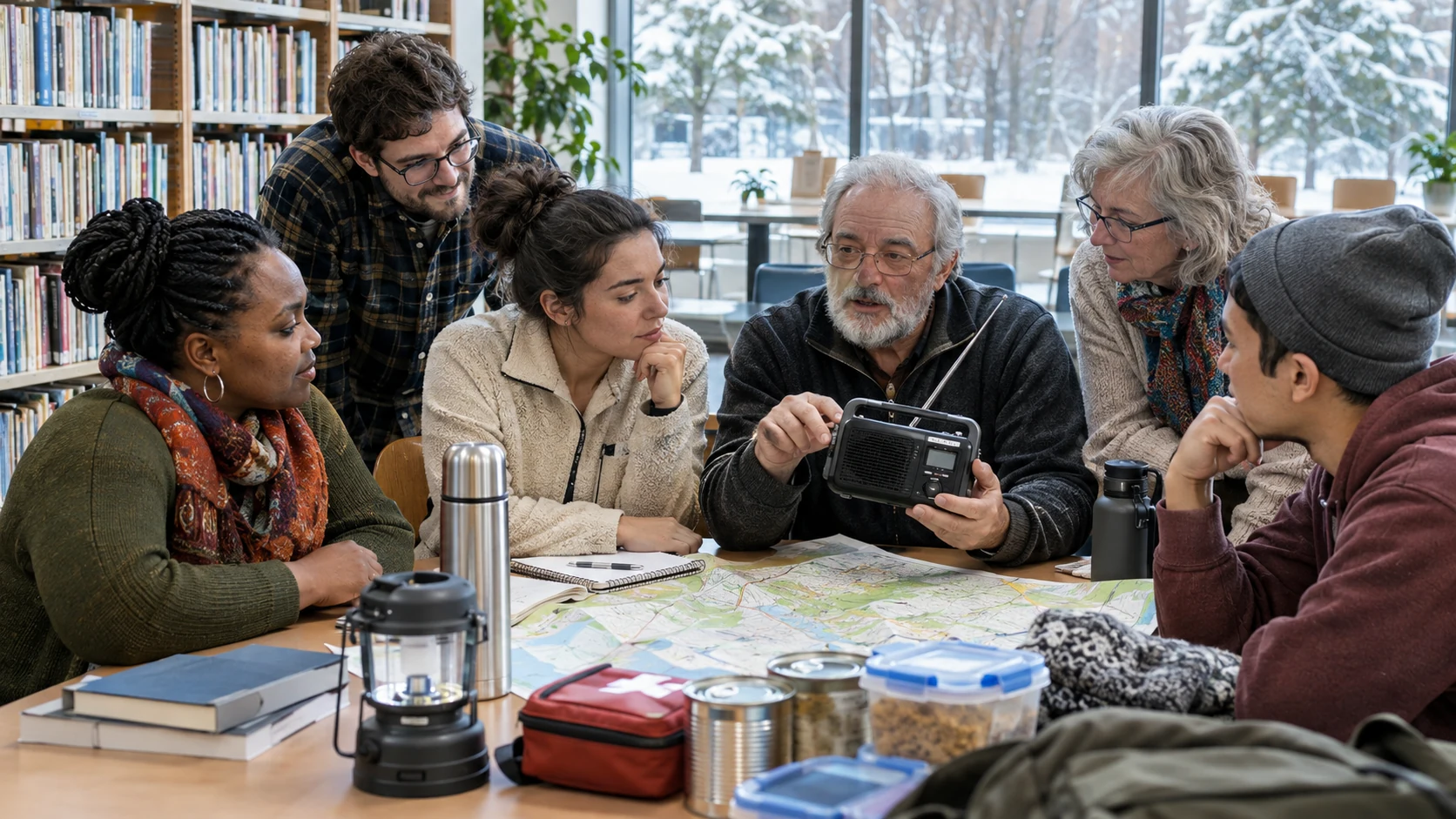
Picture a typical Quebec winter: a white blanket over vast expanses, trees draped in snow and a biting cold that seeps into your bones. This image, familiar to anyone who has lived in Quebec or another northern region, is more than a postcard: it stands for a reality lived every year, one that builds a spirit of preparedness and resilience. Where winters are harsh and unpredictable, preparing becomes second nature: people fill the heating oil or pellet supply, stack firewood and make sure their home stays a warm, safe place in the face of winter storms.
Does this preparation make us “survivalists”? For the author of these lines, the answer is yes, if we mean not a quest for extremes, but the natural extension of preparation practised instinctively. At PrépaCivile, we prefer to speak of citizen preparedness: a pragmatic, down-to-earth approach to everyday preparation, rooted in the reality of each region, rather than an end-of-the-world scenario.
In brief
In brief. The word “survivalist” often conjures extreme images. In practice, it mostly describes someone who chooses not to be caught off guard: basic self-reliance, responsibility towards family and community, critical thinking and practical preparation for local risks (storms, outages, earthquakes, floods, health crises, industrial incidents). It also involves working on fear and morale, carrying basic gear every day and planning for rare but serious events.
Winter as a school of preparedness
Anticipating the rigours of winter is often a first, unconscious step towards preparedness. It is not only about withstanding the cold: it is about adopting a proactive mindset, ready to face whatever nature and life may bring. The same logic applies elsewhere: hurricane season, heat waves, wildfires, floods. Everywhere, people who know their region’s risks already have preparedness reflexes.
Think of the things many households do without thinking as winter approaches: checking the tires and the car kit, having the chimney swept, bringing in dry wood, keeping candles and batteries within reach, stocking up a little before a forecast storm, checking on older neighbours when the cold sets in. Taken together, these actions already form a real preparedness plan. The people who do them rarely see themselves as “preppers”; yet they have taken in the essentials: anticipating, keeping reasonable supplies and relying on mutual aid close to home.
In the sections that follow, we explore this mindset not as an apocalyptic scenario but as a pragmatic approach to everyday preparedness.
Definition and philosophy
The term “survivalist” often brings to mind isolated people ready to face catastrophic scenarios. The reality is far more nuanced and accessible. At heart, it describes someone who chooses not to be caught off guard and who prepares for ordinary difficulties as well as exceptional circumstances.
This preparation goes beyond simply stocking up for winter. It involves a good understanding of possible scenarios, from natural disasters to large-scale outages, and active preparation. Prepared people stand out for their willingness to take charge of their own safety and that of their loved ones, without relying exclusively on infrastructure and public services that could be overwhelmed in a major crisis.
At the core of this approach is self-reliance: the ability to meet your needs when usual resources are unavailable. It comes with a strong sense of personal responsibility: planning, learning and acting, not only for yourself but also for the well-being of your community.
Another characteristic is critical thinking. Rather than accepting every piece of information without question, prepared people assess the situation using several sources and their own judgment. This is not distrust of the authorities, but a realistic assessment of their limits and response times in the middle of a crisis. In an emergency, official instructions (evacuation, shelter in place, boil-water advisories) remain the reference and must be followed; critical thinking is mainly for sorting out rumours. See our article on critical thinking about the media in a crisis.
| Common misconception | The reality of citizen preparedness |
|---|---|
| An isolated, suspicious way of life | An approach rooted in family, neighbours and mutual aid |
| Preparing for the end of the world | Preparing first for the likely risks in your region |
| Piling up equipment | Combining supplies, skills and plans |
| Rejecting the authorities | Following official instructions while keeping a critical mind |
| Living in fear | Gaining confidence and peace of mind |
In short, it is neither a hobby nor paranoia, but a way of life: choosing to be prepared, informed and responsible in a world where the unexpected is part of life. The word matters little; our article on preparedness labels explains why we prefer to talk about practices rather than profiles.
Typical threats and risks
Every region faces particular risks that shape preparedness. In Quebec and much of Canada, several threats come up regularly; elsewhere the list will differ, which is why it is important to consult local risk maps.
| Risk | Possible consequences | Useful preparation |
|---|---|---|
| Winter storms and extreme cold | Extended power outages, impassable roads, risk of hypothermia | Safe backup heating, wood or fuel, warm clothing, non-perishable food |
| Earthquakes | Damage to buildings, loss of power and communications | Securing heavy furniture, knowing “drop, cover and hold on”, an emergency kit |
| Large-scale power outages | Loss of comfort, communications and sometimes drinking water | Flashlights, batteries, power banks, radio, a way to treat water, a generator used only outdoors |
| Health crises and pandemics | Lockdowns, disruption of food and medication supplies | Hygiene, a medication supply, a plan for caring for a sick person at home |
| Industrial and environmental incidents | Gas leaks, chemical contamination | Knowing the risks in your area, knowing how to shelter in place or evacuate as instructed |
These risks call for thoughtful preparation that goes beyond accumulating supplies: knowing your surroundings, understanding your specific risks and planning actions, while staying flexible in the face of the unexpected. For earthquakes, see our immediate actions during and after a quake; for the cold, our article on ice storms and extended outages.
Managing fear and morale
Getting through a crisis is also a psychological test. Managing fear, fatigue and morale is a fundamental part of preparedness.
- Managing fear: fear is a natural reaction to the unknown or to danger. The first step is to accept it as normal, then learn to channel it. Slow breathing, visualizing successful scenarios and routines help calm the mind and reduce anxiety.
- Building mental resilience: the ability to bounce back can be trained, physically and mentally: scenario exercises, meditation, reading accounts of crises to learn from other people’s experience.
- Managing fatigue and morale: fatigue reduces the quality of decisions and increases the risk of error. Good sleep, balanced meals and moments of rest, even in difficult situations, preserve energy and morale.
- Relying on social support: talking with others who prepare, sharing experience and advice, and taking part in preparedness or mutual aid groups offers valuable support. Knowing you belong to a community is reassuring.
Preparedness is therefore not limited to skills and equipment: it includes mental and emotional training. Building resilience, managing fear and stress and keeping your spirits up are as important as the material side. See our articles on fear and preparedness and on mental health.
Basic everyday equipment
Equipment reflects how well you understand your environment and anticipate. A key element is the small kit carried every day, often called EDC (everyday carry), which holds what you need for common unexpected situations. Here is what it can contain, adapted to your climate and local regulations:
| Item | Purpose |
|---|---|
| Multi-tool | Knife, pliers, screwdriver and small saw for quick repairs |
| Fire-starting tools | Waterproof matches, lighter, ferro rod, especially in cold climates |
| Headlamp and spare batteries | Hands-free light; plan a way to recharge (power bank, solar charger) |
| Compact first aid kit | Bandages, antiseptic, basic medication, emergency blanket, whistle |
| Water and a way to treat it | Tablets or a small filter in case of contamination or interruption |
| Energy food | Bars, dried fruit, compact foods |
| Navigation and communication | Compass, regional map, phone and power bank |
| Protective clothing | Toque or hat, gloves, compact waterproof jacket |
| Documents | Copies of ID and important medical information |
Each item is chosen with care. The goal is not just to “survive”, but to keep enough comfort and safety to make thoughtful decisions. Our EDC checklist helps you choose by function rather than by gadget.
Major events to anticipate
Some events are rare but potentially serious for people and communities. In Quebec, as in many regions, several deserve consideration:
- Earthquakes: Quebec is not the most active region, but some areas, such as western Quebec and Charlevoix, have a real seismic risk. A major earthquake can damage infrastructure and cut power and communications. Preparation means knowing the risk areas, having a plan and securing heavy objects to limit injuries.
- Storms and extreme weather: winter storms, blizzards, ice storms and severe thunderstorms can disrupt services and supplies for a long time. Hence the importance of water and food supplies, safe backup heating and backup communications.
- Floods: in spring, snowmelt and ice jams cause flooding in many valleys. You need to know the flood zones, prepare protective measures (sandbags, documents stored high up, backwater valves) and an evacuation plan; see our article on preventing water damage.
- Industrial incidents: living near industrial facilities, railways or routes used to transport hazardous materials exposes you to chemical leaks. The authorities’ usual instruction is often to shelter in place: go inside, close doors and windows, turn off ventilation and listen to the radio, or evacuate if asked. Gas masks are not a suitable solution for the general public without training and the right cartridges. See our guide to evacuating or sheltering in place.
- Pandemics and health crises: COVID-19 showed it. Masks, disinfectants, a medication supply and a plan for isolating and caring for a sick person at home are part of preparedness.
Knowing these events and preparing for them reduces risks and strengthens resilience. It takes supplies, but also skills, knowledge and clear action plans for each type of risk. Well prepared, you can not only get through these events but also help your community get through them.
From intention to practice: four levels
Recognizing yourself in preparedness is not enough: it has to be turned into concrete actions, gradually. A simple way to find your bearings is to think in levels, each building on the previous one.
| Level | Goal | Example actions |
|---|---|---|
| 1. Everyday life | Handle small unexpected events | Everyday carry kit, first aid kit at home and in the car, fuel tank rarely below half |
| 2. The first 72 hours | Stay self-reliant during an outage or storm | Water, food, lighting, safe backup heating, radio, medication, household plan |
| 3. Two weeks | Get through a regional crisis | Larger supplies, evacuation bags, out-of-area contacts, neighbourhood network |
| 4. The long term | Build lasting resilience | Practical skills, food production, backup energy, organized mutual aid |
There is no need to aim for the last level straight away. Most real events can be handled with the first two, and each level reached already improves household safety considerably. What matters is making steady progress, at your own pace and within your budget, starting with the risks specific to your region.
It also helps to take stock once or twice a year, for example in the fall before winter and in the spring before flood or wildfire season: check expiry dates, test the radio and flashlights, update the household plan and contacts. These seasonal check-ins turn preparedness into a habit rather than a one-off project, just as you get your home ready for winter every year.
Finally, preparedness is worth sharing. Talking about what you are doing with the people close to you, without dramatizing, often encourages other households to do the same. A prepared neighbour is one who can help, rather than one who needs help at the same moment you do. That is how individual actions end up strengthening the resilience of a whole neighbourhood.
Conclusion: recognizing yourself in preparedness
One question remains at the end of this overview: do you see yourself as a prepared person, or are you on the way? The answer does not depend only on the supplies you have stored or the skills you have acquired. It is a comprehensive approach that goes well beyond material preparation.
Recognizing yourself in this approach means regularly assessing your environment, your level of preparedness and your ability to cope with the unexpected. It means developing an attitude in which vigilance, responsibility and self-reliance matter, and recognizing that in a world of few certainties, the best security lies in our ability to adapt, learn and bounce back.
Take a moment to reflect: how would you react to a major crisis? Is your household ready for an unexpected emergency? Do you have the knowledge and skills to protect and support your family and community? Our preparedness review helps you take stock.
This is not a path of fear or paranoia, but a journey towards more confidence and better preparation. Every step counts: every skill learned, every piece of knowledge, every preparedness action strengthens your ability to navigate an uncertain world. Choosing to be proactive rather than reactive is a commitment to yourself, your family and your community. As one of the author’s favourite sayings puts it: “Survival is not an accident of circumstance; it is a choice of resilience.”
Frequently asked questions
What is the difference between survivalism and citizen preparedness?
They often cover the same practical activities. The term “survivalism”, however, is associated with extreme or isolated images, whereas citizen preparedness emphasizes likely risks, mutual aid and complementarity with public services.
Should you distrust official instructions?
No. In an emergency, official instructions (evacuation, shelter in place, boil-water advisories) must be followed. Critical thinking is for checking unofficial information and rumours and for anticipating response times.
Where should I start?
With the most likely risks where you live: a 72-hour supply, a first aid kit, a radio, a household plan and a small everyday carry kit. The rest is built gradually.