
In this article
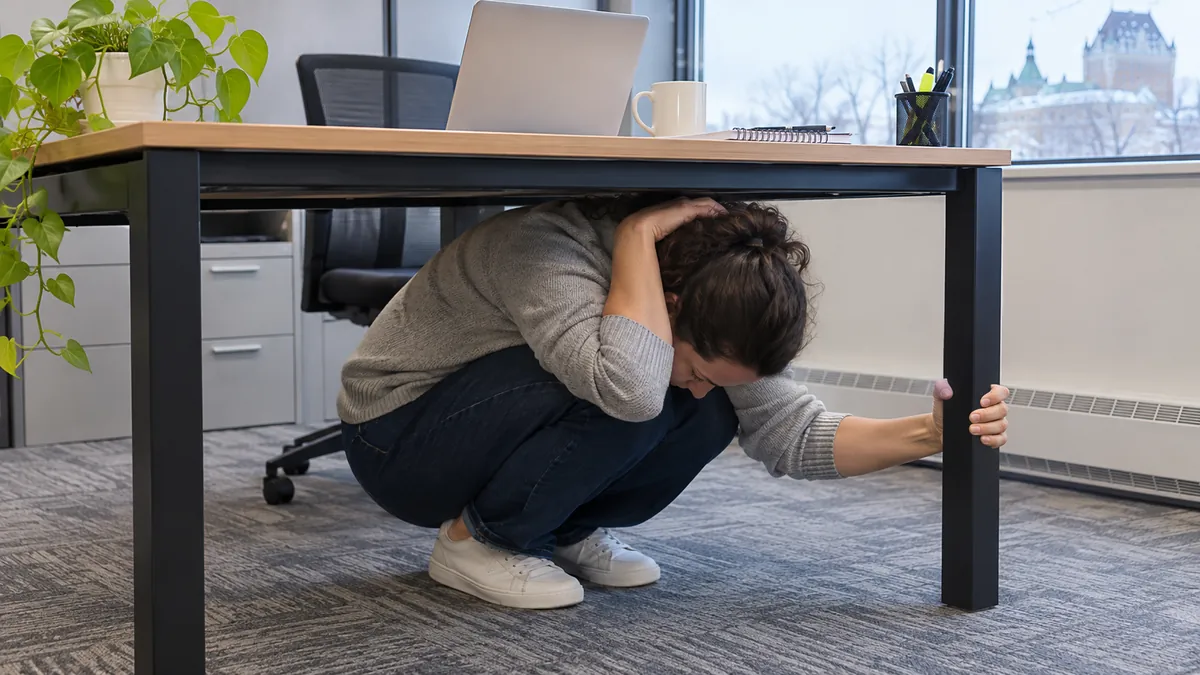
Lower, shelter, and grab, then check for hazards without waiting for an arbitrary delay after shaking.
Understand the risk and its consequences
Earthquakes felt abroad are a reminder of the interest in learning gestures that can be used at home or on the go. A remote event does not allow to deduce an immediate threat in Quebec. The information of Earthquakes Canada and the instructions of the local authorities remain the references.
The early warning system detects an earthquake that has already started; it can offer a few seconds in certain situations. It does not predict the event and a person close to the epicenter may not receive the alert before the shaking. Act as soon as you move or alert, without waiting for further confirmation.
Key lessons for households and communities
Lesson 1: Understanding Local Risks
Seismic risk varies by region and building. Consult the maps and information of Earthquakes Canada for your sector, without qualifying all of Quebec by a single level.
Lesson 2: The Seconds Count
The first actions must be simple and known: lower, shelter and grip, without trying to cross the building during the tremors. An announced exercise makes it possible to adapt these gestures to the abilities of each person.
Lesson 3: Housing environment plays a key role
Improperly fixed buildings, unanchored furniture and unstable objects are major hazards during a jolt. The safe layout of a home – including the anchoring of heavy furniture and the elimination of projection risks – significantly reduces the risk of injury.
Keep in mind: apply protective gestures without running outwards during shaking. After stopping the movements, keep an eye out for dangers, aftershocks and local instructions.
Reflexes to adopt
- Squat immediately: From the first movements of the ground, get into a squatting position to reduce the possible fall distance.
- Protect your head and neck; shelter under a solid table or desk and hold on. If no shelter is accessible quickly, follow the official recommendations adapted to your location, away from objects likely to fall.
- Standing firmly: Maintain this position until the shaking stops completely, even if it lasts for several tens of seconds.
- The basic instructions are to lower, shelter and grip. Do not place yourself in a door frame assuming it is protective. The choice of refuge is prepared by observing the real dangers of the room.
- After the shaking stops, assess the immediate hazards and follow the instructions. There is no universal 60-second delay guaranteeing the absence of a replica. Be prepared to do the protective gestures again if the earth shakes again.
Prepare now
Concrete actions:
- Anchoring heavy furniture: Attach libraries, TVs and heavy appliances to the walls with the help of bolts and appropriate safety cables.
- Securing objects: Place fragile and heavy items (frames, plants, vases) in stable places, outside passage areas or beds.
- Prepare a kit of at least 72 hours with potable water adapted to the home, usable food, lighting, radio and personal needs. For water, count 6 liters per person to drink and 6 liters extra for food and hygiene over three days, plus the needs of the animals.
- Establish a family communication plan: Define a meeting place in the event of an earthquake, identify contact outside the region and practice the plan with the whole family, especially children.
Frequently asked questions
Is Quebec at risk of major earthquakes?
Eastern Ontario and parts of Quebec pose a seismic risk. Cascadia is located in western North America and does not explain the seismicity of Charlevoix or the Outaouais. See Earthquakes Canada for maps and observed events.
Should you sit under a table or stand during an earthquake?
The basic instructions are to lower, shelter and grip. Do not place yourself in a door frame assuming it is protective. The choice of refuge is prepared by observing the real dangers of the room.
How far in advance can an earthquake be predicted?
Earthquakes cannot be reliably predicted at this time. Science makes it possible to identify areas at risk and estimate the probability of an earthquake over several decades, but not to predict the day or time. Therefore, preparation and prevention remain the only effective strategies.
Earthquake preparedness is not a matter of panic, but of responsibility to yourself and your family. Simple and inexpensive actions, implemented now, are an essential layer of protection against seismic risks. Don’t wait for the next earthquake to take action.
Sources and Updates
Document verification: November 3, 2026. The official instructions in force in your area take precedence in real situations.