
In this article
Some links below are affiliate links: we may receive a commission at no additional cost to you. Products are examples by function, to choose according to your needs; buying the entire selection is unnecessary.
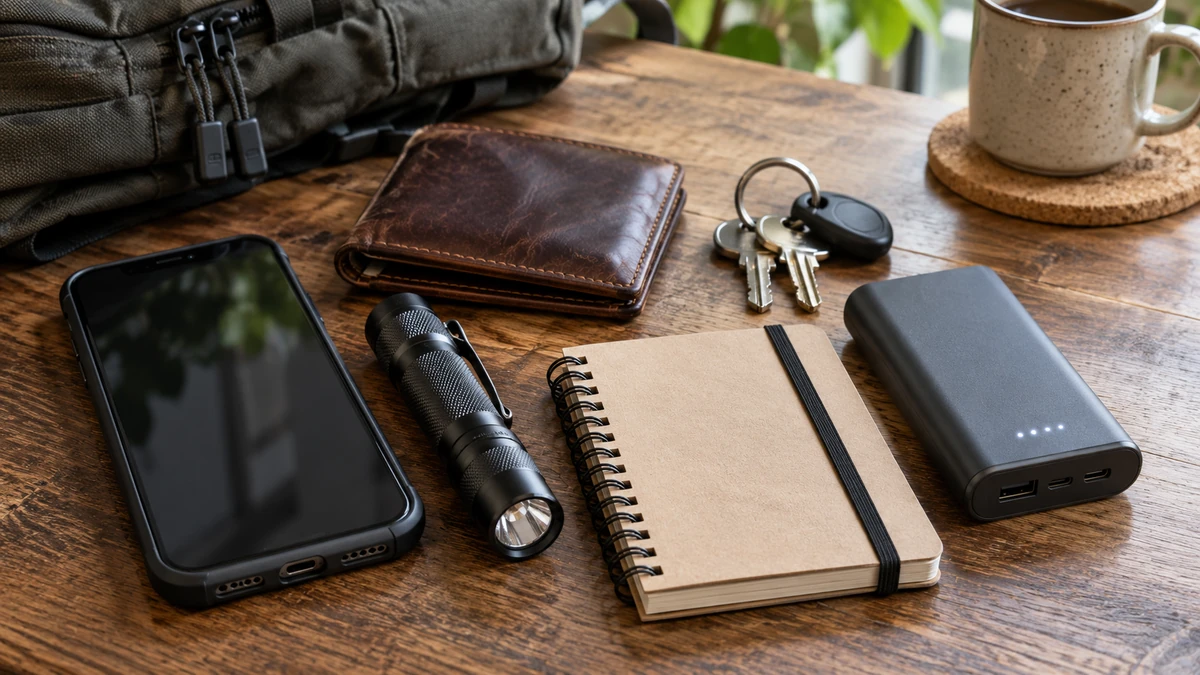
Everyday carry, or EDC, brings together the items you regularly take with you: keys, a phone, a wallet and a few supplies selected for your needs. A useful checklist must stay light enough to accompany you in practice. Start with what you already own, consider your journeys, and add only what addresses a concrete situation: a delay, a flat phone battery, changing weather or a minor first-aid need. Review the selection when the season, your travel or your treatments change.
EDC does not replace your household emergency kit or an evacuation bag. Its role is to support everyday tasks and provide a few options when plans change. Regulated equipment, including firearms, belongs to a separate framework and is not a universal essential. Adapt the contents to your country, activity and the restrictions at the places you visit.
EDC also includes the clothes you choose to wear. Versatility, weight, size and function all matter for EDC equipment.
Everyday essentials
Examine the areas below in relation to an identified use. Owning most of the items does not guarantee readiness for every emergency; being able to find a contact and keep the load manageable may matter more than a long list. Selecting any commercial products remains separate from identifying needs.
EDC essentials to carry
Remember:
- Keys: keep those you need and a way to find them. An overloaded key ring can become awkward; check its attachment and plan a suitable alternative.
- Identification: carry the documents needed for your activities while protecting personal data. Carrying every sensitive document or excessive copies is unnecessary.
- Money: where possible, keep a small amount of cash and suitable payment methods without jeopardizing essential spending. Separating some payment options may limit a single loss, without guaranteeing access everywhere.
- Phone: sufficient charge, contacts and useful information, possibly including offline maps. A so-called survival app does not replace verified instructions or an alternative if the phone fails.
- Charging: a compatible cable and power bank or charger, with known usable capacity. A mains charger alone provides no energy during an outage.
- Mini first aid kit: a small, portable first aid kit.
- Medication: keep necessary treatments identified and under the storage conditions agreed with the pharmacist. An airtight container does not replace packaging, temperature requirements or transport rules; do not routinely transfer all tablets into an unlabelled box.
- Menstrual and personal hygiene: carry supplies that are actually useful, with clean protection and a way to handle waste.
EDC essentials to wear
Choose comfortable clothing suited to the weather and your planned travel. Shoes that allow you to walk, a layer for cold or rain, and visibility accessories may meet more common needs than highly specialized clothing. Check freedom of movement and the weight of filled pockets. A technical appearance does not guarantee protection: examine the manufacturer’s stated features and limitations.
Suggested additions to your EDC
An addition may provide a useful function and also bring cost, weight or a constraint. Examine it in relation to the journey and places you visit before adopting it; no accessory becomes relevant simply because it appears on an EDC list.
Remember:
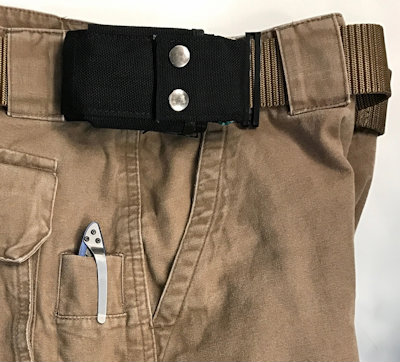
- Firearms: they are not part of a general list of items to carry every day. In Canada, possessing a firearm does not provide general authorization to carry it. Applicable authorizations have specific conditions. For ordinary journeys, prepare your contacts, transport options and ways to request help instead.
- Holsters and firearm accessories: buying an accessory does not make carrying a firearm lawful or appropriate. If an authorized occupational or sporting activity requires regulated equipment, check the framework with the relevant authorities and responsible people; keep that preparation separate from your everyday pouch.
- Ammunition: it is not necessary for the everyday needs described here. Purchasing, storing and transporting it require checks specific to an authorized activity. Do not add it to an ordinary bag simply by copying a checklist from another country.
- Water: a suitable bottle and a quantity of drinking water may be useful depending on the journey. Steel is not mandatory; check weight, closure, cleaning and replenishment options.
- USB drive: authorized instructions, contacts or maps can be kept offline if a reader is available. Protect sensitive files and retain other ways to access essential information; a drive alone is insufficient without a device or power.
- Sun protection: clothing, shade and a suitable product. Health Canada recommends broad-spectrum SPF 30 or higher, applied according to the label; a high SPF does not permit unlimited time in the sun.
- Hand hygiene: an appropriate product can complement access to soap and water depending on the activity. Follow the label and precautions, particularly with children; its use is not limited to a pandemic.
Additional supplies for an EDC kit
The following supplies serve more specific purposes. They can stay home when they are not useful for the planned journey. Consider their space, maintenance and location restrictions. A selection you understand and willingly carry is more useful than an overloaded pouch left behind. Distinguish essential needs, comfort options and items reserved for a particular activity.
Remember:
- Ammunition pouches: these relate to a regulated activity, rather than an ordinary everyday carry kit. Do not confuse a pouch that is useful for organizing small items with a recommendation to transport its original contents; the rules applicable to the items carried still apply.
- Snack: commercial jerky or another suitable food if useful for the journey. Check allergens, storage, water access and preferences; no particular brand is essential.
- Seasonings: an optional comfort item when a meal is planned. Do not attempt to make questionable food edible by masking its taste; packaging and conditions still need checking.
- Multivitamins: they do not guarantee that all needs are met and do not replace an appropriate diet. For medical needs or ongoing treatment, seek advice rather than routinely adding a supplement to an EDC.
- Activity permits: carry documents actually required for an authorized fishing or hunting outing. A permit does not authorize every species, technique, season or area.
- Local maps: print copies of local maps.
- Dental floss: useful for hygiene if it suits your habits. Repurposing it as a light repair thread does not give it certified strength for a load-bearing or safety function.
A checklist to adapt
There is no perfect EDC for everyone. For each item, ask which need it addresses, whether you know how to use it and whether you may take it along your route. Medical, sensory and mobility needs can change priorities. Try the selection on a typical day: note what is missing, awkward or duplicated, then adjust.
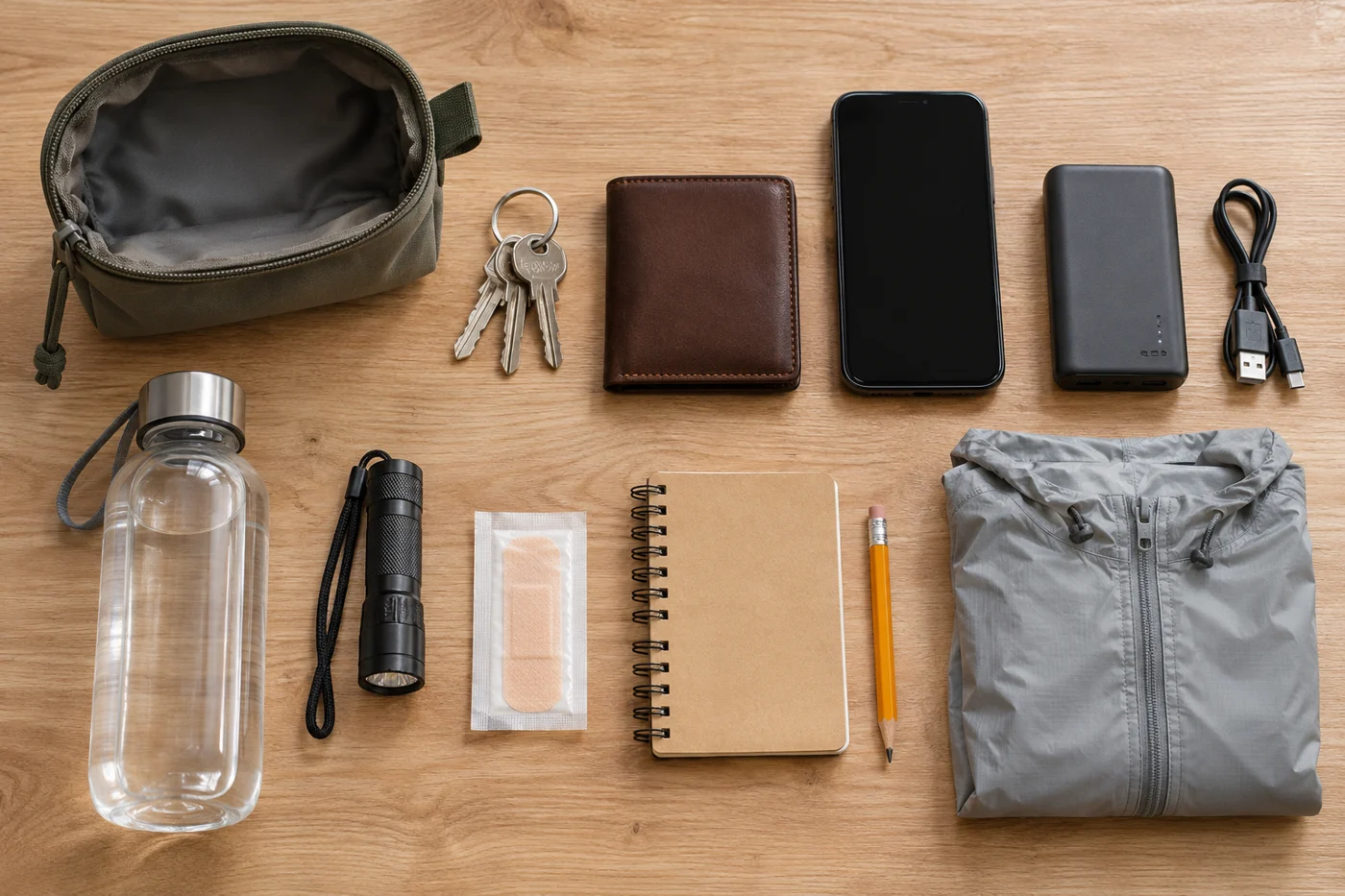
Use the table below as a starting point, then select only what serves your day. Outdoor or specialized activity options need a separate assessment: appearing on a list does not make them necessary or permitted everywhere.
| Function | Items to consider |
|---|---|
| Access and contacts | Keys, necessary identification, charged phone, written contact, payment options. |
| Clothing and visibility | Suitable footwear, weather layer, seasonal hat or gloves, visibility. |
| Power and light | Compatible cable, checked power bank if needed, small light and suitable batteries. |
| Water and snacks | Drinking water, clean container, snack suited to allergies and the journey. |
| Care and hygiene | Identified medication, small first-aid kit, personal hygiene and sun protection. |
| Navigation and notes | Destination address, useful map, paper and pencil; protected offline files if needed. |
| Activity-specific options | Compass or sound signalling if useful, required permits, small repair supplies you can use and are permitted to carry. |
Print and personalize your checklist
For a personal copy, use your browser’s print function, then select the useful pages or the save-to-PDF option provided by your device. Check the preview: margins, paper size and page breaks depend on your settings. No original PDF download is currently offered. Keep a version that is easy to update, record the review date, and check consumables, medication and batteries before leaving.
Guidance: authorizations to carry — RCMP; sunscreens — Health Canada. Workplace, transport and national rules may add restrictions that need checking before departure.