
In this article
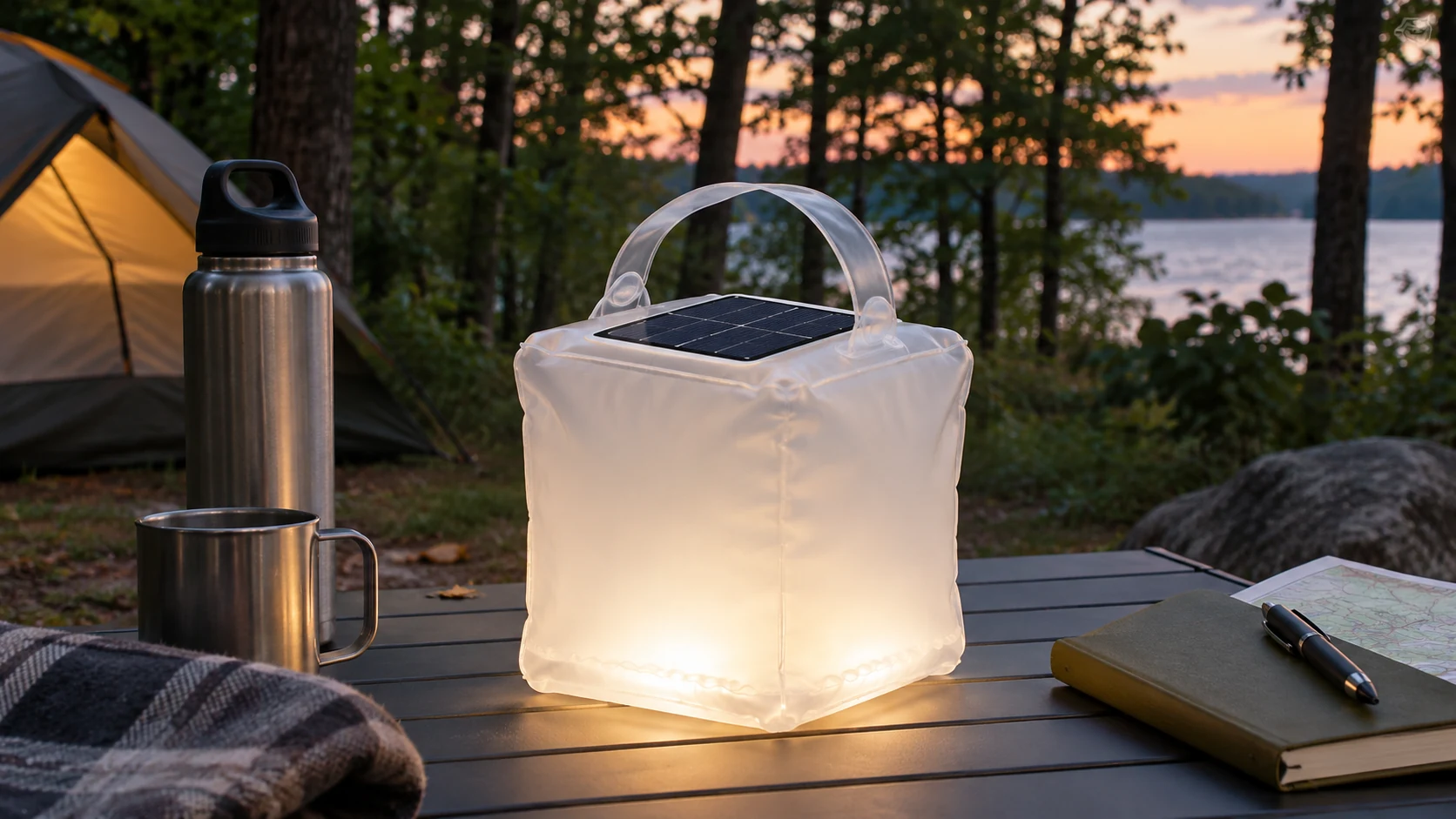
The LuminAID Titan is an inflatable solar lantern that combines lighting, a backup battery and solar charging in a format that packs flat. It appeals both to outdoor enthusiasts and to households wanting self-contained lighting for outages. Here is what it really offers, and its limitations.
At a glance
- 360-degree ambient light, up to 300 lumens, and up to 100 hours on low according to the manufacturer.
- Solar charging is slow (16 to 20 hours of full sun): charge it by USB before a forecast outage.
- It complements a headlamp or flashlight; it does not replace them.
Product overview
The Titan is built on a simple idea: an inflatable LED lantern powered by a built-in solar panel, with an internal battery that can also charge a device through a USB port. The whole thing packs flat.
| Feature | Manufacturer's stated value |
|---|---|
| Weight | About 354 g (12.5 oz) |
| Maximum output | 300 lumens (turbo mode) |
| Battery | 4,000 mAh |
| Solar charging | 16 to 20 hours of full sun |
| USB charging | About 4 hours |
| Water resistance | IP67 (short immersion) |
| Dimensions | About 15.2 × 15.2 × 3.3 cm (6 × 6 × 1.3 in) flat; about 15.2 cm (6 in) per side inflated |
Specifications depend on the product version. Check the manufacturer's sheet and manual before buying, especially lighting modes, charging times and included accessories.
The collapsible format: a real advantage for carrying
Flattened, the lantern takes up very little room in a kit; just protect the shell and ports from objects that could damage them. Its diffuse light is very practical for lighting a temporary living space (a tent, a shelter, a room without power) rather than aiming a beam at a specific point. It is not a work light, but an effective 360-degree ambient light source.
Key point: the Titan is neither a headlamp nor a directional flashlight. It complements that gear rather than replacing it: each has its role.
Runtime and charging in practice
According to the manufacturer, the 4,000 mAh battery provides up to 100 hours on low; in turbo mode, runtime is much shorter. During an outage, low mode is enough to move around safely and handle basic tasks while conserving the reserve.
A 4,000 mAh internal battery does not guarantee two or three full charges of a recent phone: voltage, USB losses, the phone's battery and the energy kept for lighting all change the result. Count on a top-up instead, and test it with your device.
Solar charging: useful, but slow
A full charge from the built-in panel takes 16 to 20 hours of direct sun. In Quebec, with variable sunshine, that often means several days of exposure, especially in fall and winter. Solar charging is therefore for maintaining the charge over time, not for a quick recharge in the middle of an emergency. USB charging, about 4 hours, remains the most reliable when time is short; pairing the Titan with a power bank or a more powerful portable solar panel is a sound approach.
Preparedness tip: fully charge the lantern by USB as soon as a situation is foreseeable (weather alert, risk of a long outage). That is more reliable than counting on the sun during the emergency.
Durability and water resistance
The Titan is made of TPU, a flexible, impact-resistant plastic. Its IP67 rating means it can withstand immersion to about 1 m (3 ft) for a short time. Inflated, it floats, which can be handy near water. It works outdoors in the rain without extra protection.
IP67 is a recognized standard, but the long-term durability of an inflatable shell also depends on its seams and care. Check it regularly, especially if the lantern sits in a kit unused.
Lighting modes
The Titan offers several brightness levels and a red-light mode, which better preserves night vision and uses less power. Adjusting the light to the moment (saving power at night, boosting it for a specific task) is very practical.
| Mode | Use |
|---|---|
| Low | Maximum runtime; enough to move around and find your way |
| Standard | Balance between visibility and runtime |
| Turbo (300 lumens) | Intense light, reduced runtime |
| Red light | Preserves night vision, low consumption |
Its place in a preparedness kit
The Titan does not claim to replace all the lighting in a kit. It adds a light, versatile and self-powered option that combines ambient light, a backup battery and solar charging in a small format.
Strengths
- Very compact when folded
- Three functions: lantern, battery, solar charging
- IP67 water resistance, floats
- Diffuse 360-degree light
- Long runtime on low
Limitations
- Slow solar charging (16 to 20 h of full sun)
- No directional light
- Inflatable shell to check periodically
- Shorter runtime at high levels
- Fast charging by USB only
Well maintained, charged and paired with another charging method, it can light a room for several days without power. Pair it with a headlamp or flashlight. To compare other options, see our guide to emergency lighting and our power outage kit.
Frequently asked questions
Can it charge a phone during a long outage?
It can provide a USB top-up, but the number of full charges depends on the phone and losses, and the same battery has to power the lantern. For a long outage, plan a power bank sized for your devices and another way to recharge.
Is solar charging enough in Quebec?
It works, but needs 16 to 20 hours of direct sun for a full charge. In summer, it helps maintain the battery over time. In fall and winter, USB charging remains the most reliable way to have a fully charged lantern when you need it.
Does it need maintenance if it stays in a kit?
Yes. The battery slowly discharges even when unused: check its level and recharge it periodically, for example when you review your kit. Also check that the shell has no cracks or defects after long storage.
Manufacturer documentation
Where to get the LuminAID Titan
Some links below are affiliate links: we may receive a commission at no additional cost to you. Products are examples by function, to choose according to your needs; buying the entire selection is unnecessary.