
In this article
- Candles: accessible, but requiring careful handling
- Oil, Kerosene, and Propane Lanterns
- Flashlights and headlamps
- Solar-rechargeable lighting
- Crank-powered flashlights
- Summary Comparison Table
- General points to consider
- Summary
- Frequently Asked Questions
- Sources and References
- Related resources
- Equipment to compare for your needs
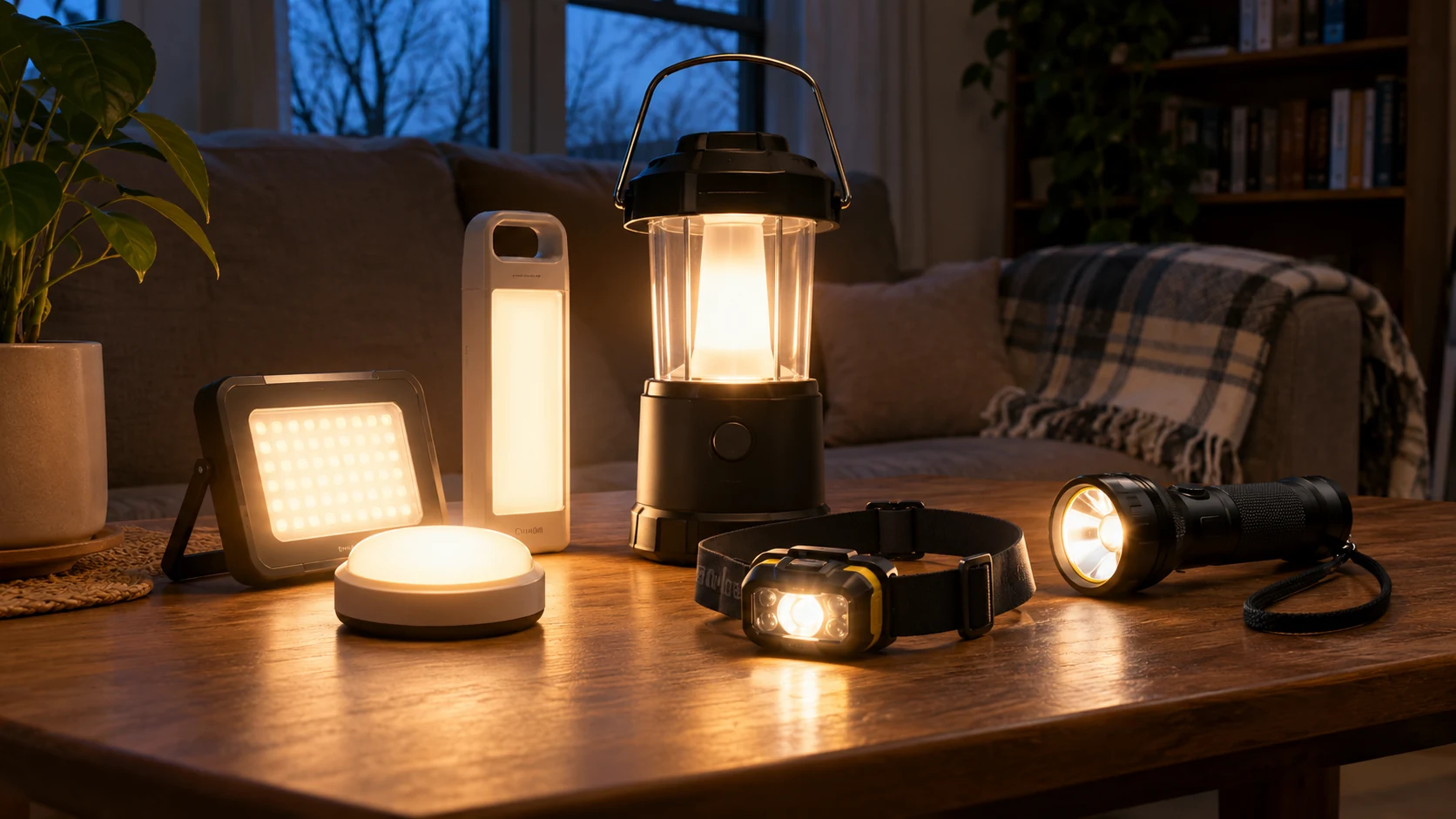
Lighting is one of the first needs that arises during a prolonged power outage—especially in the evening or during the depths of a Quebec winter. While it is often possible to move around a familiar home in the dark, many practical tasks (providing care, cooking, reading, or consulting a map) require a reliable light source. Here is an overview of the main options available, along with their respective advantages and limitations.
There is no one-size-fits-all solution. The most appropriate choice depends on the context: the composition of your household, the expected duration of the power outage, the space available for storage, and your priority needs. Ideally, you should combine several types of light sources to be prepared for various situations.
Candles: accessible, but requiring careful handling
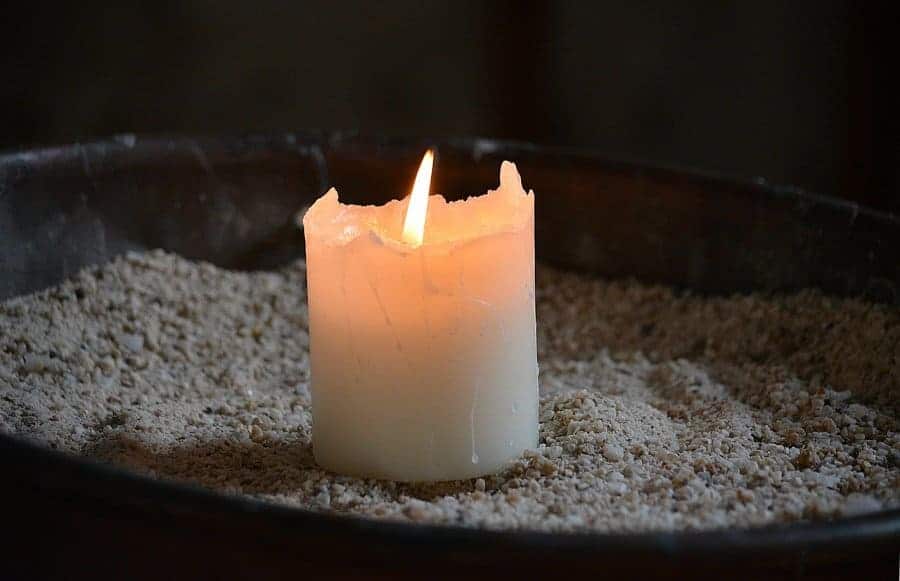
The candle is one of the oldest and most widespread forms of lighting. It requires no infrastructure, is easy to store, and also produces heat—a significant advantage during a winter power outage.
Its main limitation is light intensity: a single candle provides enough light to move around or perform simple tasks, but not enough for reading or working for extended periods without causing eye strain. Placing several candles strategically can significantly improve the situation.
Fire risk: Candles involve an open flame. They should never be left unattended, placed near flammable materials (such as curtains, paper, or fabrics), or left in the care of children without adult supervision. Using a stable candle holder and ensuring there is clear space around the flame are essential basic precautions.
In terms of storage, candles are readily available at a low cost in grocery stores, supermarkets, or online. Larger formats (such as those in glass holders, sometimes called devotional candles) offer a useful burn time of several dozen hours. Beeswax candles burn more cleanly and produce less smoke than paraffin candles.
Furthermore, the smoke and residue from paraffin candles are a drawback to consider in poorly ventilated spaces; if used for an extended period, some degree of ventilation is recommended.
Oil, Kerosene, and Propane Lanterns
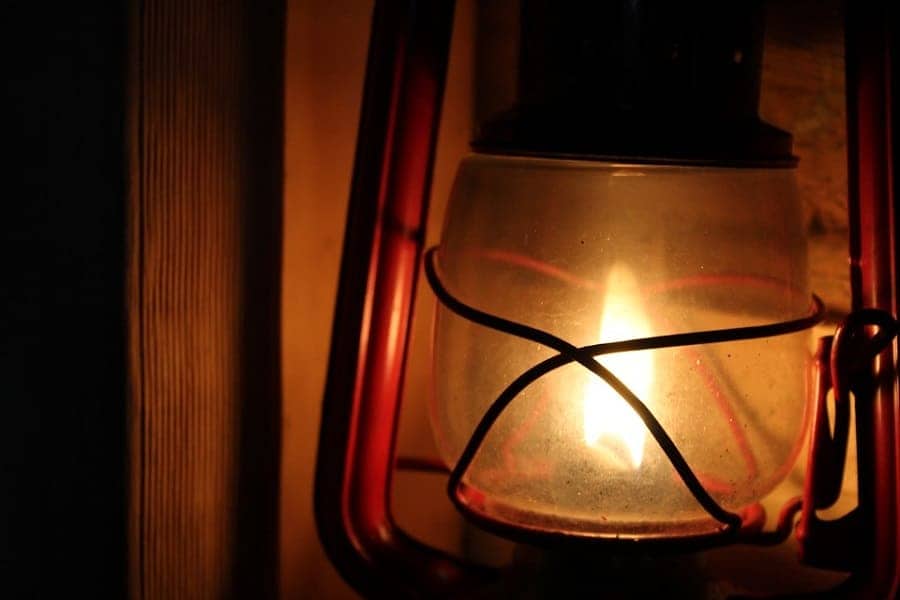
Lanterns generally provide greater light output than candles and offer better portability, thanks to their built-in flame protection. Three types are worth noting.
Oil Lanterns
Classic-style oil lanterns produce a steady, warm light that is significantly better than that of a candle. They are available from many retailers and online. Their base is typically wider and more stable than a candle’s, and a reflector can help extend the reach of the light. They can also be carried while moving about, as the flame is protected by glass.
Nevertheless, they require the same precautions as any open-flame source: there is a risk of them being knocked over or coming into contact with flammable materials, and constant supervision is advised. Particular care should be taken if they are used around young children.
Kerosene Lanterns
Kerosene lanterns produce a powerful light and are well-suited for outdoor spaces or garages. They share the same fuel supply as kerosene stored for a space heater—a practical logistical advantage for those who already keep this fuel on hand. When used indoors, adequate ventilation is essential due to the vapors they release.
Propane lanterns
Propane lanterns are among the most powerful light sources available in this category. They offer remarkable brightness and also generate a significant amount of heat. While versatile—suitable for camping, power outages, or outdoor use—they require proper ventilation if used indoors; propane must never be used in an enclosed space without a fresh air supply.
As with kerosene, the ability to use existing propane supplies—already on hand for other purposes, such as camp stoves or auxiliary heaters—is a logistical benefit. It is wise to keep spare wicks and a few extra fuel canisters on hand to extend your runtime.
A key point for all flame-based lanterns: Keep a fire extinguisher or a bucket of sand nearby. Never leave a lit lantern unattended, especially while sleeping. See the article by *Mouton Résilient* on the role of bottled gas in an energy resilience strategy.
Flashlights and headlamps
Flashlights and headlamps are the safest option for daily use—especially when children are present or when you need to move around. Because there is no open flame, there is no fire risk, and they can be used without the need for constant supervision.
Flashlights
There is a very wide range of options available, from entry-level models costing less than $10 to high-performance tactical flashlights. LED-based models generally offer a good balance: low battery consumption, high light intensity, and durability. Our article on tactical flashlights and our product comparison guide provide useful insights to help you narrow down your choice based on your specific needs.
In the event of a power outage at home, having several flashlights strategically placed (near the entrance, in bedrooms, in the kitchen) allows for a quick response, so you don’t have to fumble around in the dark.
Headlamps
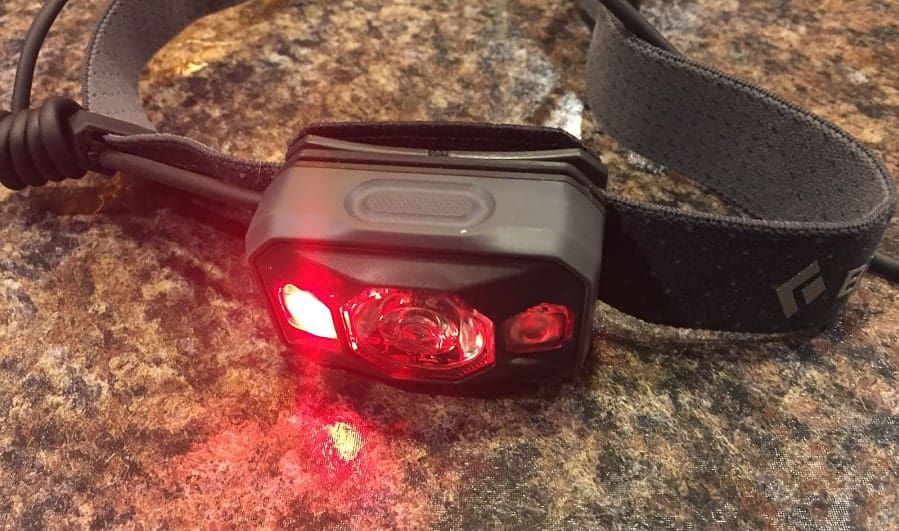
Headlamps offer a significant practical advantage: they keep both your hands free to perform tasks. Thanks to LED technology, today’s models are much lighter and more powerful than those from a decade ago. Most run on standard AAA batteries—a size that is easy to stock up on and simple to find.
Key features to consider include an adjustable head tilt (to direct light downward or forward, depending on the activity), various intensity modes (low, high, strobe), and a comfortable elastic headband for extended wear. A popular choice in this category is the Black Diamond headlamp, which is used for everything from hiking to emergency lighting at home.
The question of batteries
LED lights have very low power consumption, which significantly extends battery life. For greater independence, rechargeable batteries paired with a solar charger offer a long-term, self-sufficient solution.
Solar-rechargeable lighting
Solar-rechargeable lights have the advantage of not requiring fuel or disposable batteries. After a day of exposure to sunlight, they provide several hours of light—typically at a low intensity.
Their main limitation is their dependence on sunlight; during a Quebec winter, with short days and long periods of cloud cover, they may not fully recharge. They are better suited for supplementary use—such as ambient lighting or marking paths—rather than as a primary light source for tasks.
Some models feature both an integrated solar panel and a USB port, allowing you to charge mobile devices as well—a useful, versatile addition to an emergency kit.
Crank-powered flashlights
Crank-powered flashlights—also known as dynamo flashlights—generate electricity when a handle is turned or a lever is pressed. They require no external power source, meaning they are, in theory, always ready for use.
In practice, their main drawback is the physical effort required to produce what is often a modest amount of light. Several minutes of cranking typically yield only a few tens of minutes of dim illumination. If relied upon as a primary light source during a prolonged power outage, their limitations quickly become apparent.
Nevertheless, they remain genuinely useful as a last-resort backup—especially for children, who can operate them independently—or as a supplement to other light sources. Some models also include an AM/FM radio and a USB charging port, which further expands their utility.
Summary Comparison Table
| Option | Intensity | Runtime | Safety | Cost |
|---|---|---|---|---|
| Candle | Low | Long (depending on size) | ⚠️ Open flame | Very low |
| Oil lantern | Medium | Variable (based on reservoir) | ⚠️ Protected flame | Low |
| Propane lantern | High | Depends on canister | ⚠️ Ventilation required | Medium |
| LED flashlight | Medium to high | Long (battery-powered) | ✅ Flameless | Low to medium |
| Headlamp | Medium to high | Long (battery-powered) | ✅ Hands-free | Medium |
| Solar lamp | Low to medium | Limited (depends on sunlight) | ✅ Flameless | Medium |
| Lamp powered by crank-operated | Low | Short-term (requires physical effort) | ✅ Flameless | Low to medium |
General points to consider
Regardless of the solution chosen, a few observations apply across the board:
- Open-flame light sources are not suitable for use at night while unattended. No lantern or candle should be left burning while sleeping unless a dedicated safety device is in place.
- Batteries have a limited shelf life. Standard alkaline batteries typically last for about 5 to 10 years. It is advisable to check them periodically and replace them if necessary.
- Diversification remains the most robust strategy. A household equipped with a headlamp, a few candles, and a self-powered lantern is prepared for a variety of scenarios, without relying on a single type of light source.
- Fire safety takes precedence over comfort. Keep an appropriate fire extinguisher (powder or CO₂) in any room where open flames might be used. Refer to our article on fire response planning.
Summary
Emergency lighting is one of the most accessible forms of preparation—in terms of both cost and simplicity—that a household can implement. A few candles, a headlamp, and a working flashlight provide a solid foundation for getting through a power outage lasting several hours or even days.
A layered approach is generally the most effective: a primary source (a flashlight or headlamp for moving around and performing specific tasks), an ambient source (candles or a lantern to illuminate a room), and an independent backup option (such as a solar-powered or hand-cranked light).
A practical question to help guide your choices: if the lights were to go out tonight without warning, what are the three places in your home where you would most need a light source within the first two hours?
Frequently Asked Questions
How many candles should you have on hand for a 72-hour power outage?
It depends on the size and how they are used. A medium-sized candle (about 20 cm) burns for 6 to 8 hours. For a 72-hour period—assuming 4 to 5 hours of use each evening—a dozen candles of this size would be a comfortable supply. Large, glass-encased candles (like those used for devotional purposes) can provide 60 to 100 hours of continuous burn time.
Can you use a propane lantern indoors?
Only if the room is properly ventilated—at the very least, with a window left slightly open. Burning propane produces carbon dioxide and consumes available oxygen. In a completely sealed space, prolonged use poses a risk of carbon monoxide poisoning. Propane lanterns are primarily designed for outdoor use or in semi-open spaces (such as a garage or veranda). For indoor use, rechargeable LED lanterns are a safe alternative.
Which headlamp should I choose for family use?
For family use, a model that runs on standard AAA batteries offers the greatest flexibility—this battery size is easy to store and readily available. A brightness level of 100 to 200 lumens is more than sufficient for moving around or performing household tasks. A low-intensity mode helps extend battery life. Black Diamond is a proven, reliable brand, but decent models can also be found for under $20.
Do solar-powered lights work during winter in Quebec?
Yes, though with reduced performance. The diffuse light from a cloudy sky allows for partial charging, and cold temperatures do not prevent the panels from capturing energy. However, the short days in December and January limit the available charging time. While solar lights are useful as a supplementary option, they should not be relied upon as a primary light source during the depths of a Quebec winter.
Sources and References
Local guidelines and product manuals take precedence for your specific situation. References consulted for this update include:
- CDC — Using a generator outdoors, away from openings
Related resources
Equipment to compare for your needs
Some links below are affiliate links: we may receive a commission at no additional cost to you. Products are examples by function, to choose according to your needs; buying the entire selection is unnecessary.